
Operator No. 1 Yuna connected the call to Kim Jong-il within 5 minutes.
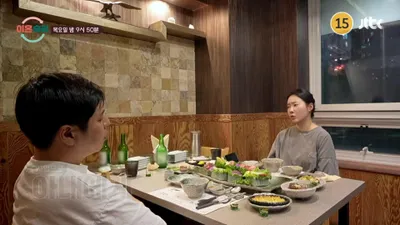
Episode 753 of "Now I'm Going to Meet You" covered the experiences of Yuna, a former exchange agent for Kim Jong-il and a member of North Korea's Department 5.

The story of Department 5, known as the organization dedicated to North Korea's supreme leader, resurfaced in episode 753 of Channel A's 'Now on My Way to Meet You.' At the center of this episode was Yuna, a defector who served as the No. 1 operator responsible for connecting Kim Jong-il's phone calls. While this subject is prone to being reduced to mere sensational revelations, the core message of the broadcast was not the unusual background of a single individual, but rather the closed power structure that sought to manage even the bodies and daily lives of people for the sake of one supreme leader.
Conditions Required for a 13-Year-Old Candidate
Yuna was introduced as having grown up in Pyongyang, coming from a family where her father handled personnel affairs at the Ministry of Railways. She testified that she was selected as a candidate for Department 5 at the age of 13. The selection process went beyond merely looking at height and appearance. Stories emerged that they even checked dental health, scars on the body, and even scent; fellow defector Han Su-ae mentioned that she failed the final screening due to a small scar she had since childhood.
The crucial point here is not the simple curiosity of being "chosen because of beauty." In the broadcast, Department 5 was described as a system that simultaneously filtered for beauty, background, knowledge, and health status. The position, which might have seemed enviable, was simultaneously accompanied by bans on dating, strict management of physical scars, and constant surveillance of daily life. Rather than nurturing people as capable members of society, they were selected as objects deemed fit to be placed in the close proximity of the leader. In this sense, this story is closer to the North Korean power structure's method of human management than to mere entertainment-style surprise.
The Job of the No. 1 Operator was Closer to Control than Privilege
The role of the No. 1 operator held by Yuna was to connect calls between Kim Jong-il and high-ranking officials. According to clips shown in the broadcast, the operator had to memorize the locations of hundreds of jacks, phone numbers, and even the contact networks of people surrounding the officials, and it was reported that they had to connect the person Kim Jong-il was looking for within five minutes. Connecting calls was not a simple guidance task, but a practical duty that upheld the speed and order within the inner circle of power.
There were corresponding benefits. Experiences such as white rice, gifts, and watching performances were mentioned. However, what the broadcast showed at greater length was the control behind those benefits. Even the time spent in the sunlight was regulated, and activities like piercing ears or changing hairstyles could become grounds for punishment. While the title of "No. 1 Operator" sounds like a name for special treatment, in reality, it was a life of being constantly prepared for calls and needing permission even for trivial choices.
Viewing Points Left by This Episode
'Now on My Way to Meet You' is a long-running program that unravels closed scenes of North Korean society by mixing testimonies from defectors with commentary from North Korea experts. Episode 753 follows the same format. However, this subject carries a high risk of being consumed through sensationalist terms. Therefore, viewers should not only look at how strange the selection criteria for Department 5 were, but also consider why such conditions were deemed necessary around the supreme leader.
Another axis at the end of the broadcast is Yuna's story after her defection. The process leading from the crises she faced in China to running a Korean restaurant and finally settling in South Korea in 2021 shows that her unique past as a No. 1 operator does not automatically explain her life after moving to South Korea. The next checkpoint is to observe where Yuna's testimony is presented as personal experience and where it expands into a story about the North Korean regime as a whole in the original broadcast and official clips. The more clearly one sees this line, the more the weight of the episode becomes distinct.


0Comments
Comments are currently disabled.