
Kim Ji-sun confesses to her youngest daughter being bullied… The reason why she went back to school
Kim Ji-sun revealed her youngest daughter's experience with bullying, her transfer to an alternative school, and her school life following COVID-19.
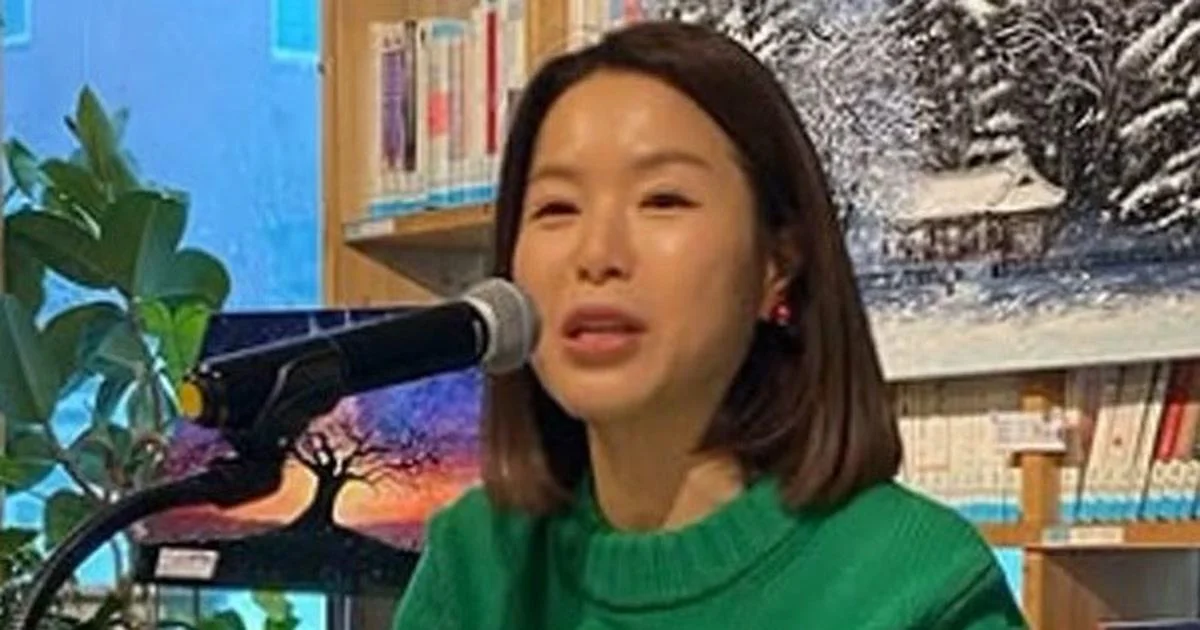
Kim Ji-sun carefully opened up about her youngest daughter's school life wounds and the process of transferring schools. In a YouTube video released on the 22nd, while discussing the education of her four children, she mentioned that her youngest daughter experienced bullying at a regular school and, as a result, moved to an alternative school. Although it is a confession of personal family matters, this story does not end with mere sympathy. It is a scene that asks how far parents should intervene after a child is hurt, and from where they should wait for the child's recovery.
The youngest daughter's transfer: It began with wounds received at school
Explaining the choice of schools for her children in the video, Kim Ji-sun stated, "Only the second child dropped out, while the first, third, and fourth attended alternative schools." Regarding her youngest daughter, she added, "She was bullied while attending a regular school," and "The trauma was so severe that she moved to an alternative school." She did not disclose specific school names or detailed circumstances regarding her child. As the story deals with the experiences of a minor, it is appropriate for articles to cover only the scope directly disclosed by Kim Ji-sun rather than sensationalizing the facts of the damage.
The transfer did not immediately mean recovery. At the time the child was trying to adapt to the new school, the COVID-19 pandemic coincided, blocking the time to rebuild relationships with peers. Kim Ji-sun explained that the child ended up in a floating situation without being able to properly socialize with friends. It was as if the decision to move to an alternative school after the bullying, followed by the disruption of school life due to the pandemic, hit the child in succession.
Currently in a regular school: What the parent held onto was 'time for recovery'
The weight of Kim Ji-sun's additional words lay at the end. She said, "I cannot speak in depth, but she is attending a regular school now." This single sentence conveys the fact that the child has re-entered the daily routine of school without overly embellishing the conclusion of the incident. From a parent's perspective, sending a child who still carries wounds back to a regular school cannot be an easy choice. Therefore, her words are closer to the idea that even if it takes time, the child can return at their own pace, rather than being a success story.
Kim Ji-sun has frequently talked about the reality of raising four children in broadcasts and interviews. Having married in 2003 and having three sons and one daughter, she has been called an 'icon of large families,' but her recent remarks show the actual concerns that existed behind that nickname. Saying one has many children also means there is much laughter, but it also means parents must individually look into each child's different personality, wounds, and career paths.
What should not be missed when discussing educational choices
If this story is read only as a matter of choosing between an alternative school and a regular school, the core point is missed. The more important part of Kim Ji-sun's words is not the type of school, but the process of trying to find an environment where the child could feel safe. An alternative school can be a space to catch one's breath for some families, and a regular school can be a path to returning to peer society. Rather than deciding which side is the correct answer, the center of this confession is the time the parent endured while changing options in accordance with the child's wounds and recovery speed.
Kim Ji-sun has been active as an ambassador for the youth mentoring organization Loving Hands since 2010, and in an interview released in 2024, she expressed the thought that lonely children need mentors. Her experience raising four children and her interest in youth issues are not separate. This is why these remarks, while being a private family story, reach many parents. Wounds in school life are not just a problem for one child, but lead to the question of who stays by the child's side for a long time.
The next point of verification is not Kim Ji-sun's words, but the child's boundaries
While bringing up the story of her children, Kim Ji-sun drew a line, stating she would not speak of deeper circumstances. That line is important. When a celebrity's family history is revealed, interest quickly shifts to the individual child, but what is needed in this matter is not additional exposure or detailed circumstances. The verifiable facts are that Kim Ji-sun directly mentioned her youngest daughter's bullying victimhood, the transfer to an alternative school, the difficulty of adaptation due to COVID-19, and her current enrollment in a regular school. The story after that should be left within the child's life.
Ultimately, this confession goes beyond the parenting story of the broadcaster Kim Ji-sun and shows how parents should speak of a child's wounds and where they should stop. Speaking only as much as one can, and conveying the fact that the child has walked back into daily life. That level of restraint stays with people longer.
0Comments