
Hwang Chi-yeul revealed the reason why he came to Seoul with only 200,000 won
Hwang Chi-yeul revealed his story of moving to Seoul 21 years ago and his father's battle with stomach cancer on KBS2's 'Malja Show'.
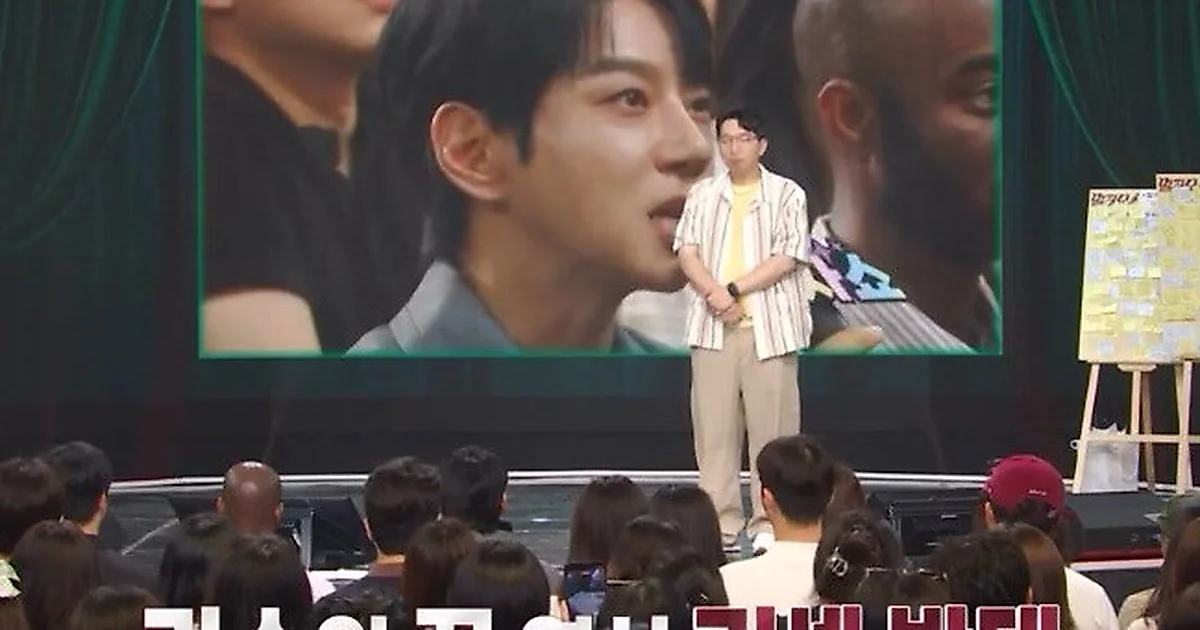
Hwang Chi-yeul revisited the story from 21 years ago when he came up to Seoul with only 200,000 won. The KBS2 variety show 'Malja Show,' which aired on the 22nd, was themed around 'Living in a Foreign Land,' and Hwang Chi-yeul, originally from Gumi, Gyeongbuk, calmly shared his journey from performing locally to enduring a long period of obscurity. The part that resonated more deeply than his simple tales of hardship was his father. His father, who had adamantly opposed his path, suddenly gave him permission to go to Seoul one day, and it was only much later that Hwang Chi-yeul learned his father had been facing stomach cancer surgery at that time.
Life in Seoul starting with 200,000 won and a single outfit
Hwang Chi-yeul said he had been dancing since childhood and made a name for himself in Gumi by performing in front of shopping malls. Recalling the days when he was called the 'Michael Jackson of Gumi' or the 'Rain of Gumi,' he laughed while mentioning that he even had a fan club back when the internet wasn't as active as it is now. However, the atmosphere at home was different. Even when he performed every weekend, his parents did not come to watch, and their opposition grew even stronger when he said he wanted to become a singer after being a dancer.
The moment that changed the flow was unexpected. His father one day gave him permission to go to Seoul, and Hwang Chi-yeul took those words as an opportunity. Without even properly packing his bags, he left wearing only a sleeveless shirt and cargo pants, with only 200,000 won in his hand. Although told amidst the laughter of a variety show, the scene shows how rushed and desperate Hwang Chi-yeol's starting point was. Life in Seoul was closer to mere survival than romance. In his semi-basement room, he had to endure humidity when it rained, as well as exhaust fumes and insects.
He learned about his father's stomach cancer late
The reason for allowing him to move to Seoul was revealed only as time passed. Hwang Chi-yeol said that after settling in Seoul, he learned his father had been facing stomach cancer surgery. He later understood his father's heart when he said, "Run toward your dream." It was a way to push him so that his son wouldn't give up on his dream, and those words became a long-lasting debt and strength for Hwang Chi-yeol.
The reason this part resonates so strongly is that Hwang Chi-yeol's period of obscurity is already part of a well-known success story. He continued his activities as a vocal trainer and singer for a long time without being widely known, and was rediscovered by the public through 'I Can See Your Voice' and 'Immortal Songs' in 2015. Later, he expanded his international fanbase by appearing on Chinese competition programs. Therefore, this confession is not a newly manufactured heartwarming story, but a narrative that makes the preceding part of his already known comeback even clearer.
The words that helped him endure the obscurity were not grand
Hwang Chi-yeol did not grandly package the strength that helped him endure his obscure years. He said it was possible because he loved singing so much and it made his heart race. Although his throat was weak and he had to rest after singing one or two songs, he practiced for 17 to 18 hours a day, and when it was difficult to learn the piano properly, he learned by copying chords from books in bookstores. While it might sound easy because he is looking back after achieving success, his explanation on the broadcast was relatively specific. Home, money, practice, and loneliness were all linked in a single line.
The advice he shared follows that same line. He said that if he had stayed in his hometown, his heart might have become lax because his friends would call him and his parents would provide warm meals, but in Seoul, he had plenty of time entirely for himself. Although these words were spoken within a variety program, they connect with the emotions that Hwang Chi-yeol's fans have long held onto in his songs. It is not just his husky voice and powerful high notes, but the fact that the time of someone who arrived late is embedded behind his songs. The next point of confirmation is not after the broadcast, but on the stage. For fans, the more direct answer will be how Hwang Chi-yeol retells this story with emotion through his new songs and performances.
Related Articles

Seo Yu-jeong and Kim Bu-yong Reunite After 20 Years: 'Mambo Girl' Kim Bu-yong Appears as a Tteokbokki Snack Bar Owner

Running at Musinsa Run Seoul Forest: Yoseobi's Tips on Choosing Running Shoes and the Running Process
0Comments