
"I won't go to jail because I'm a juvenile" — Drama 'True Education' lines vs. reality
Criticism has been raised that the dialogue regarding juvenile offenders in the Netflix drama 'True Education' differs from the actual juvenile justice system.
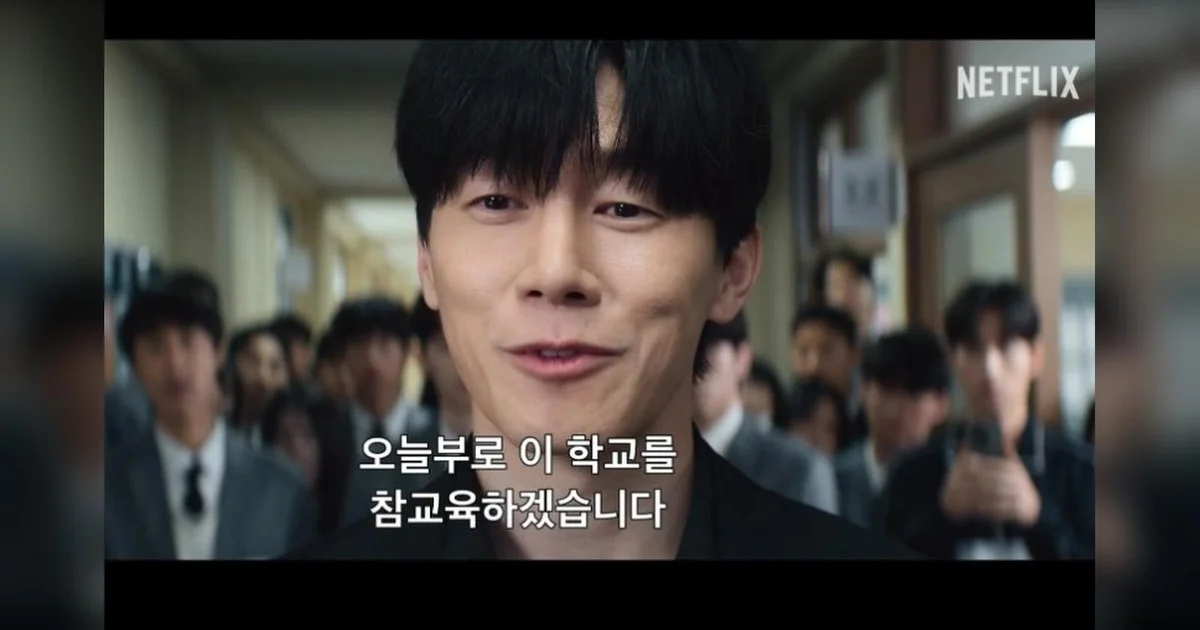
The 'Lawless Zone' of Juvenile Offenders in Dramas: In Reality, They Are Subject to Protective Measures
The Netflix drama 'True Education,' which continues to enjoy global success, has been swept up in an unexpected controversy regarding historical and factual accuracy. This is because a scene features a character mocking the situation, saying, "Thanks to that, we were investigated and let go, right? I guess they thought we'd go to prison or something. But what can we do? We're 'chok-beop' (juvenile offenders under criminal responsibility), so we don't go." This line, which depicts criminals as if they bear no legal responsibility, differs significantly from the actual criminal and juvenile law systems.
Article 9 of the current Criminal Act stipulates that "an act of a person under 14 shall not be punished," meaning no criminal responsibility is assigned to those under 14. While the drama's setting might feel realistic at this point, it does not mean there is no legal consequence at all. While juvenile offenders under the age of criminal responsibility do not face criminal punishment and do not go to prison, they undergo juvenile protection trials and receive protective measures.
Juvenile protection trials are handled by the Family Court, which includes specialized family juvenile judges and professional investigators, based on the perception that the issue of juvenile offenders fundamentally stems from the home environment. It is not a structure where they are simply investigated and released, as depicted in the drama.
The types of protective measures are very specific. They are divided into categories such as entrustment of care, community service orders, probation, entrustment to facilities, and referral to juvenile reformatories. Community service orders are applicable to criminal juveniles aged 14 and older. For those aged 12 and older, community service orders and 'long-term referral to a juvenile reformatory' for up to two years can be issued.
Juvenile Reformatories Nationwide are at Full Capacity; Juvenile Offenders Account for Less Than 5%
Looking at actual statistics, the gap between the drama's depiction and reality is even more distinct. As of the end of last year, among the 1,246 inmates in juvenile reformatories nationwide, only 61 were juvenile offenders under the age of criminal responsibility. This is a level of 4.9% of the total. While the drama portrays juvenile offenders as mainstream criminals roaming through society, their actual proportion among the juvenile reformatory population is very low.
Rather, the problem currently facing juvenile reformatories is overcrowding. The saturation rate of juvenile reformatories has reached 132.6% of their capacity. Due to the overflowing number of inmates, facility operations are being overloaded. The 10 juvenile reformatories currently operating nationwide are divided into three types based on their nature: academic education types where school attendance is recognized, vocational training types where they learn baking, welding, electricity, etc., and medical rehabilitation types specialized for drug addicts or those with mental illnesses. While physical freedom is restricted in juvenile reformatories, they are different from prisons, which are correctional facilities that execute criminal punishment.
The Absence of Police Discretionary Release Authority and the Authority Structure under the Juvenile Act
Contrary to the lines in the drama, the police cannot simply release juvenile offenders with a warning. The current Juvenile Act grants the authority for final investigation and protective measures for juvenile offenders solely to the juvenile division judge. The police perform the role of receiving the case and confirming the necessary facts.
The chief of the police station must transfer the case to the juvenile division regardless of the investigation results. This is known as the 'all-cases transfer' system. However, the government's recommendation for adjusting the age of criminal responsibility includes granting the police the authority to investigate juvenile offenders, leaving room for future changes.
Surge in Sexual Violence by Juvenile Offenders: The Background of the Age Lowering Debate
Cases where juvenile offenders distribute drugs, as set in the drama, are extremely rare. Among the juvenile offender cases handled by the courts last year, the proportion of violent crimes was 1,793, which is about 8.2% of the total. However, the point to note is the increasing trend of sex crimes. In particular, cases of forcible indecent act by juvenile offenders surged by 227.3% in two years, from 77 in 2021 to 252 last year.
This change in crime patterns serves as the basis for increasing social voices calling for the lowering of the age of criminal responsibility. Experts point out that it should not stop at simply lowering the age, but must be accompanied by considerations on how to redesign the social responsibility and protection system for juveniles who commit crimes. There are also concerns that the phenomenon in the media where juvenile offenders are portrayed as beings who perfectly evade the law may instead cause misunderstandings about the system.
Movements for Institutional Improvement and Response to Digital Sex Crimes
The government is accelerating the preparation of various legal grounds to resolve the issue of juvenile offenders. In addition to the age adjustment recommendation, there are active movements to prevent secondary damage from digital sex crimes. The intention is to prevent juvenile crimes from spreading into digital spaces by establishing a legal basis to quickly secure and block illegal recordings.
Ultimately, the controversy over the factual errors raised by the drama 'True Education' has revealed the gap between how our society views the issue of juvenile offenders and actual law enforcement. Voices are growing that a balance must be found between the severity of punishment and the function of protection.
Related Articles

Drama 'A Trap Called Desire' Teases Search for Biological Mother and Decisive Move for Grandson

Kim Na-ri and Yoo Jin-seok's sudden declaration seeking marriage approval... Tension rises in Our Happy Days
0Comments