
Mark Peterson visits Korea with his students for the first time in 27 years
The reunion of Korean Studies students featured in the Professor Mark Peterson episode of 'Welcome, First Time in Korea'.

Korean studies scholar Mark Peterson, Professor Emeritus at Brigham Young University, returned to Korea with his former students 27 years ago. Episode 433 of MBC every1's 'Welcome, First Time in Korea?', which aired on the 18th, captured a scholar's long-standing studies and the reunion of his students within the familiar framework of a travel variety show. It was not an episode that merely followed the surprises at the airport or reactions to travel destinations. Given that the students who first encountered Korea through a summer school in 1999 are walking the same paths with the same mentor again in 2024, this broadcast was a story showing how the time spent looking at Korea from the outside changes a person.
A lesson from 27 years ago becomes a journey again
Professor Peterson is an American Korean studies scholar who has studied Korean history and culture for over 60 years since first visiting Korea in 1965. He earned a Master's in East Asian Regional Studies and a PhD in East Asian Languages and Civilizations from Harvard University, and led the Asian Studies program and Korean-related educational activities at Brigham Young University. Considering that he has continued to give lectures and create videos explaining Korean history easily even after retirement, this appearance carries a deeper context than a simple 'foreigner's trip to Korea.'
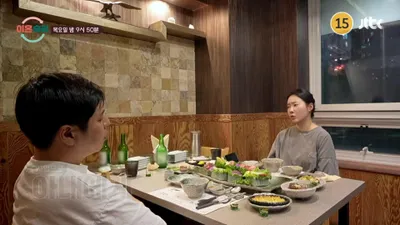
The power of the broadcast came from the time shared between people rather than grand explanations. The scene where the students, who first visited Korea in the summer of 1999, sit face-to-face with their mentor again and witness the changed air and scenery of Korea touched upon an axis that travel variety shows often miss. Korea has grown larger, and the students have aged, but the memory of when they first learned about Korea has not faded. Thus, this journey felt more like an extension of a class rather than a tour of tourist attractions.
A long persuasion that changed two pages of American textbooks
The most striking part was his ongoing work to increase the amount of Korean history in American textbooks. In the process of examining Korean history sections in 82 types of American textbooks in 1994, the problem was not just errors. The space allocated to Korea was excessively small compared to China and Japan, and Professor Peterson recalled, "China had 30 pages, Japan had 20, but Korea had only 2 pages in total." Since then, he has held seminars twice a year, inviting textbook officials to Korea to show them the field, resulting in 52 meetings over 26 years. It is known that the amount of Korean history, which was initially limited to 2 pages, has increased to between 17 and 27 pages.
These numbers are too precious to be consumed merely as a heartwarming story in a variety show. While K-pop and dramas were noticed first in the global market, there were people outside of that who have long been creating the language to explain Korea. Professor Peterson's activities are close to that very foundation. More important than saying he likes Korea is his attitude of constantly asking why Korea was misunderstood and what needs to be explained more accurately.
Why the term 'Korea sickness' is not light
In the preview and the broadcast, Professor Peterson described himself as having "caught Korea sickness." Also, recalling the Korea he first saw in 1965, he said, "Korea was poor back then, but the Korean people were not poor." These words do not sound like mere romantic reminiscence. They are the first impression remembered by someone who has studied a country for a long time, and closer to a conclusion repeatedly confirmed through classrooms, lecture halls, and textbook discussions over the decades.
This is also where the achievement of 'Welcome, First Time in Korea?' lies in this episode. Rather than scenes of being surprised by unfamiliar food, the fact that someone has studied Korea for a long time and returned with their students lingers longer. The next checkpoint is not where their journey through Korea goes, but how easily Professor Peterson's perspective on Korean history can be conveyed to viewers. This episode has clearly established that starting point.


0Comments
Comments are currently disabled.