
Jeongdongjin's last Ttebaekkun, Mr. Jeong Sang-rok, who has protected it for 70 years
KBS Documentary On, which covers the 70-year life of Jeong Sang-rok, the last 'Ttebaekkun' of Jeongdongjin, will be broadcast on July 11.
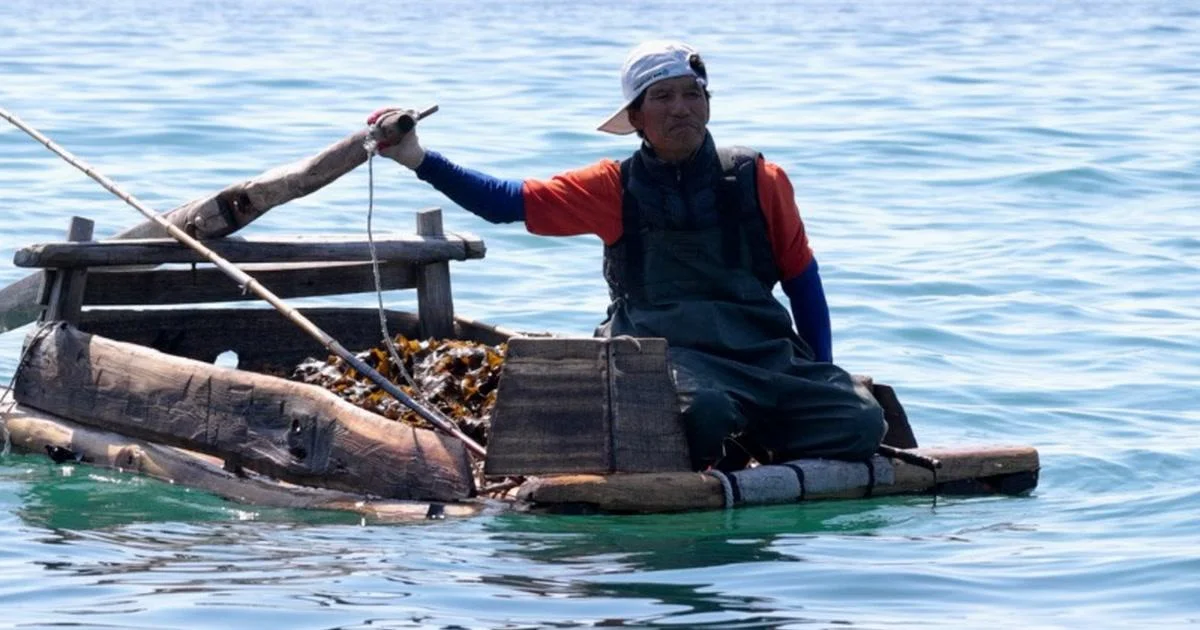
Back to the Sea When Acacia Blooms: The Ttebae of an 81-Year-Old Veteran Fisherman
In the coastal terraces of Jeongdongjin, Gangwon Province, natural seaweed beds spread across the underwater rocky areas from spring to early summer. When the acacia flower buds begin to burst, it is a signal that the seaweed forests have grown lush. During this season, 81-year-old Jeong Sang-rok invariably sets out to sea on a 'ttebae' (a traditional wooden raft). He does this to adhere to 'Changgyeong-bari,' a traditional fishing method that has continued since the 18th century.
Changgyeong-bari is a method of harvesting seaweed by riding a ttebae and looking into the sea using a tool called 'changgyeong.' As times have changed, more fishermen have begun using motorboats or wearing diving suits, but Jeong Sang-rok has held the changgyeong atop his ttebae for 70 years. This method, which requires working near the 'jjam' (underwater rocks where seaweed grows), can only be performed by those with extremely high proficiency. It is a high-difficulty skill that even experienced fishermen do not easily attempt due to the high risk of the ttebae capsizing or breaking, and the so-called 'changgyeong motion sickness' that occurs while peering into the sea through the tool.
To Jeong Sang-rok, the ttebae is not merely a tool for work. Having started riding the ttebae with his father around the age of ten, he is the third generation to carry on the family business, following his grandfather and father. He still cherishes a fourth-place certificate his father received at a seaweed competition in 1939. It contains the traces of a time when, in the days before motorboats, the family's livelihood was carried on a single ttebae to weather the waves of poverty. To him, the ttebae is the life of his family and the portrait of his father.
A Vanishing National Important Fishery Heritage: The Last Remaining Person
Two years ago, Changgyeong-bari was recognized for its value and designated as the 14th National Important Fishery Heritage. In this process, Jeong Sang-rok's role was decisive. However, behind the glorious designation lies a lonely reality. The ttebaes that once filled the port have disappeared one by one over the passage of time, and the colleagues who once roamed the sea together have all left the field. Currently, Jeong Sang-rok is the only person riding a ttebae in Jeongdongjin.
He remains the last ttebae fisherman of Jeongdongjin. A sense of anxiety that the lineage of the traditional fishing method, Changgyeong-bari, might end with him resides in a corner of his heart. He earnestly hopes that the tradition of Changgyeong-bari and the ttebae fishermen will not simply stop with his generation but will be passed down to the next.
KBS 1TV will tell this story on July 11th at 10:15 PM through the episode 'Portrait of a Ttebae Fisherman Father.' Through the life of the last ttebae fisherman, the program will pose a heavy question about what unchanging values we must protect in a rapidly changing era. The program is a documentary that explores the main currents that lead the era and the values that must be preserved amidst the flow of change.
A Vanishing Tradition, Remaining as a National Important Fishery Heritage
Two years ago, Changgyeong-bari, a traditional fishing method continued since the 18th century, was designated as the 14th National Important Fishery Heritage. In this process, Jeong Sang-rok, the last ttebae fisherman of Jeongdongjin, played a key role.
As times changed and more fishermen began using motorboats or wearing diving suits to harvest seaweed, the ttebaes that once filled the port gradually disappeared. Currently, Jeong Sang-rok is the only person riding a ttebae in Jeongdongjin.


0Comments
Comments are currently disabled.