
K-food companies face EU market exit over new packaging rules
K-food companies targeting the European market face a new era of "product regulation" as the EU's Packaging and Packaging Waste Regulation (PPWR) makes environmental compliance a prerequisite for market entry.
South Korean food exporters must prove packaging environmental suitability to maintain access to the European Union market under the new Packaging and Packaging Waste Regulation. Starting August 12, 2026, manufacturers will bear the sole responsibility of providing technical documents and a Declaration of Conformity to ensure products can enter the 27 member states.
For K-food companies targeting the European market, packaging has evolved from simple containers into a critical factor determining "market entry eligibility." As the European Union (EU) implements the Packaging and Packaging Waste Regulation (PPWR), failure to prove the environmental suitability of packaging could make it impossible to sell products altogether.
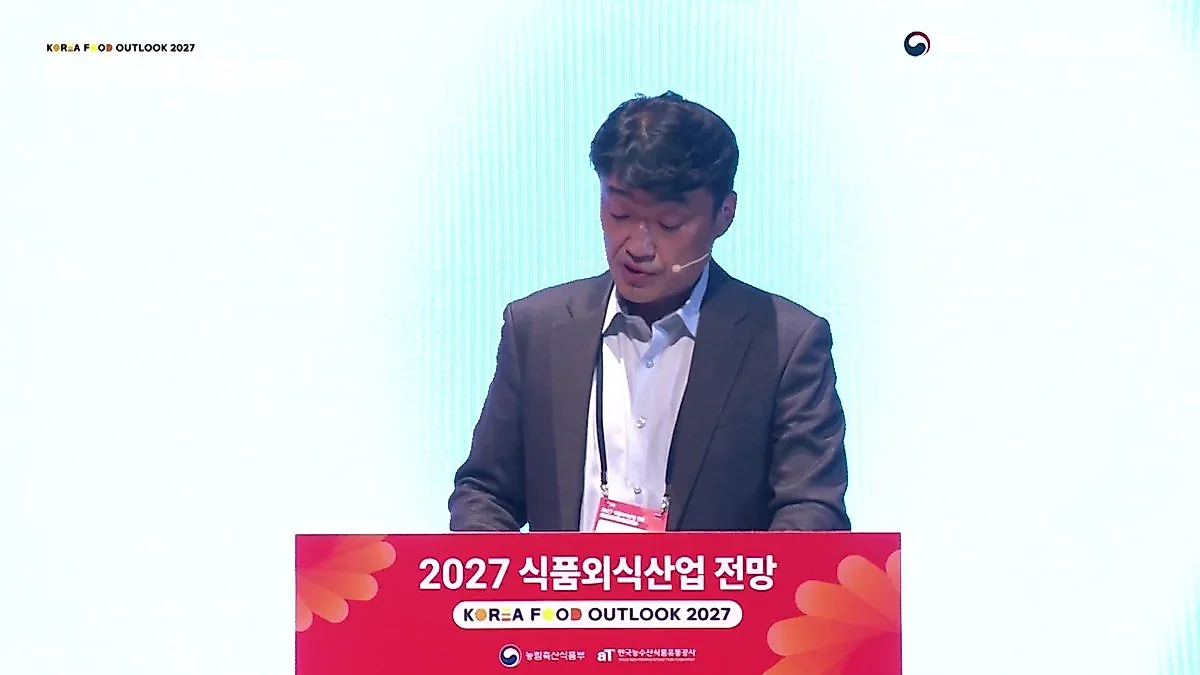
Jeong Yeong-il, head of the ESG Center at the law firm Shin & Kim, shared these details during a lecture at the "2027 Food and Restaurant Industry Outlook" held at COEX in Seoul on November 4. Jeong defined the PPWR not merely as an environmental regulation, but as a "product regulation," emphasizing that companies must go beyond simply replacing packaging materials and instead establish a "system for managing suitability."
Packaging is now a product regulation... market launch impossible without proof
Jeong explained that while tariffs or trade policies affect export unit prices and logistics risks, the PPWR is characterized by its ability to determine whether a product can enter the market. The core question of the PPWR can be summarized as: "Can it be proven that packaging released after August 12, 2026, meets the prescribed requirements?"
A particularly notable point is that the "burden of proof" rests entirely on the manufacturer. Unlike the previous packaging Directive, which was applied individually by member states through national laws, the PPWR is a Regulation that applies simultaneously to all 27 EU member states. Manufacturers must prepare technical documents and issue a "Declaration of Conformity (DoC)" based on them. Rather than third-party certification through an agency, the structure requires manufacturers to prove suitability under their sole responsibility.
"It is not a one-time proof; an internal procedure to re-evaluate and maintain documents whenever packaging design or supplier standards change is essential," Jeong warned. "As secondary legislation will continue to be released through 2030, companies without a systematic management system will find themselves repeatedly responding from scratch every time."
Determining the 'manufacturer' by export scenario is the start of response
The first step for K-food companies is to determine which role they play as an "economic operator" under the regulation. Jeong categorized the division of roles based on export structures into three scenarios.
First is the case where a company exports its own brand through an EU importer. In this instance, the Korean headquarters becomes the "manufacturer" as the trademark owner. All responsibility for preparing technical documents and the declaration of conformity lies with the Korean headquarters, while the local importer has the duty to verify this before launch. Second is supplying products as a private brand (PB) for a local retailer. In this case, the retailer becomes the legal manufacturer, but the Korean company is obligated to provide necessary information as a supplier according to the contract. Third is when a company launches products directly or changes packaging through a local subsidiary. In this case, the local subsidiary bears the responsibility as the manufacturer.
Accordingly, tasks for specific departments become more concrete. Management must confirm whether they are the manufacturer for each export item, and the procurement department must specify in contracts that necessary information can be obtained from suppliers. The R&D department must inspect packaging materials based on the 2030 standards, and the marketing department must comply with labeling and environmental claim standards. The export sales department needs to organize the division of roles for buy-ins through contracts.
2030 brings simultaneous 'recycled content and empty space regulations'... phased response required
PPWR regulations are divided into items already in effect and those that will be strongly applied in the future. Currently, restrictions on PFAS (per- and polyfluoroalkyl substances) in food contact packaging, heavy metal standards, the preparation of technical documents, and the marking of identification numbers are being applied. Additionally, obligations for registration and contribution payments under the Extended Producer Responsibility (EPR) of the country of sale operate in connection with existing laws. Currently, about 40% of plastics and 50% of paper in the EU are used in packaging, and packaging accounts for 36% of municipal waste.
The true turning point is January 1, 2030. From this date, recycling grades, minimum recycled content, a 50% limit on the proportion of empty space in packaging, format restrictions, and reuse targets will all be applied at once. The intensity of the regulation is expected to increase in stages.
"Secondary legislations are nearing their deadlines," Jeong explained. "Legislation related to labeling is expected to be adopted in the fourth quarter, and discussions regarding the verification of recycled content calculation and recycling technology standards are ongoing." Regarding recycled content in particular, the process for gathering preliminary opinions on whether recycled materials collected outside the EU will be recognized at the same level as materials from within the EU (extraterritorial equivalence) closed on September 16.
Analysis suggests that for companies to respond preemptively to regulatory changes, the most urgent task is to go beyond simple packaging changes and establish internal control systems capable of managing and proving data across the entire supply chain.
Source: original video (YouTube)

0Comments
Comments are currently disabled.