
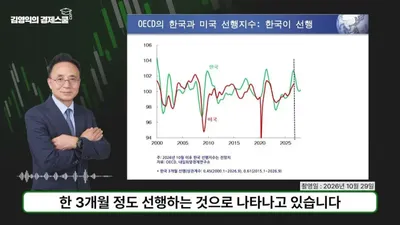
Fed holds rates as Kim Young-ik warns of potential recession
Professor Kim Young-ik analyzes the Fed's decision to freeze interest rates, predicting that a contraction in US consumption could trigger rate cuts and market adjustments next year.

Long-term interest rates rise as Federal Reserve shifts toward market-oriented stance
While the Federal Reserve froze interest rates as expected, long-term rates have risen, prompting Hong Chun-uk to recommend a U.S. Treasury buying strategy for a 6-month to 1-year horizon.

Silicon photonics and CPO could solve AI factory data bottlenecks
The competitiveness of AI semiconductors is shifting from individual chip calculation speeds to the efficiency of data movement through technologies like silicon photonics and Co-Packaged Optics (CPO).

Iran Warns of Military Response Against Sinokor for Violating Strait of Hormuz Order
Iran has signaled potential physical and military responses against South Korean shipping company Sinokor, accusing its vessels of violating transit orders in the Strait of Hormuz.
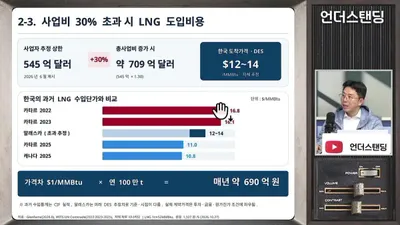
South Korea weighs strategic risks of $50 billion Alaska LNG project
South Korea is weighing the strategic value of the Alaska LNG project against significant economic uncertainties, while Japan has already begun systematic analysis of the venture.

Divided government could boost stock market following midterm elections
An analysis presented by Kim Kwang-seok TV suggests that a "Divide it government" scenario resulting from the U.S. midterm elections could positively impact the stock market by limiting excessive fiscal spending.

KOSPI falls to mid-5,000 level as AI profitability concerns grow
Treasury bond yield uptrend reverses as government reduces issuance

IMF raises South Korea's growth forecast to 3.3% on semiconductor demand
The IMF has raised South Korea's economic growth forecast to 3.3% for this year, driven by surging semiconductor exports, even as energy-driven inflation creates a gap between economic indicators and consumer sentiment.
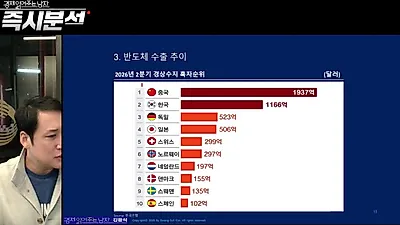
SK hynix surpasses 100 trillion won in quarterly revenue, announces 60 trillion won shareholder return plan
SK hynix has achieved record-breaking quarterly revenue of 104.6155 trillion won and an operating profit of 83.3338 trillion won, marking its sixth consecutive quarter of record results. Alongside these results, the company announced a 60 trillion won shareholder return plan, including 30 trillion won in cash dividends.

Kim Young-ik warns of simultaneous AI bubble and credit crisis
Professor Kim Young-ik warns that the current economic cycle may see a simultaneous collapse of asset prices driven by AI optimism and a credit crisis, suggesting that a significant opportunity to buy stocks at low prices could emerge in the first half of next year.

Net worth of 1 billion won places individuals in top 10% in South Korea, says Dr. Hong Chun-wook
Dr. Hong Chun-wook shares an asset design method and investment strategy to reach a net worth of 1 billion won, noting that such an amount places individuals in the top 10% of South Korea's wealth distribution.

South Korean potential growth rate could reverse 40-year downward trend
Professor Kim Kwang-seok analyzes potential shifts in South Korea's potential growth rate and the mechanisms of bond yields, oil prices, and exchange rates that will influence future inflation.

Youth protests in France triggered by high inflation and fiscal deficit
Analysis from Economics Master Kwak Soo-jong suggests that protests led by high school students in France are linked to a national economic crisis characterized by severe inflation and a fiscal deficit exceeding 110% of GDP.

Digital transition replaces paper receipts with electronic tax invoices and e-receipts
Businesses can receive tax credits of up to 1 million won annually, while consumers are warned that e-receipts do not replace cash receipts for tax deductions.

CXMT challenges Samsung and SK hynix with new 4F² DRAM technology
Chinese semiconductor firm CXMT is signaling its entry into the server DRAM market by leveraging next-generation 4F² technology, potentially challenging the dominance of South Korean leaders.

South Korea faces capital exodus as US leads RWA innovation
A panel discussion hosted by The Man Who Explains the Economy (Kim Kwang-seok TV) warned that South Korea faces massive capital flight to the US if it fails to respond to the global trend of Real World Asset (RWA) tokenization.

NVIDIA to launch $500 billion AI infrastructure financing platform
Financial institutions weigh the future value of GPUs as NVIDIA seeks to pioneer a new era of "Compute Financing"
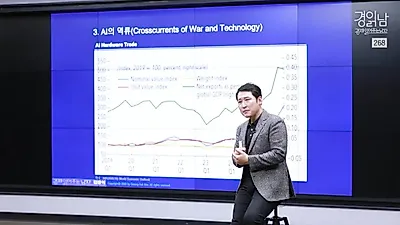
South Korea's potential growth rate to rise for first time in 40 years
South Korea is facing an unprecedented growth rebound as AI-driven technological advancements boost the nation's potential growth rate, a phenomenon not seen in 40 years.
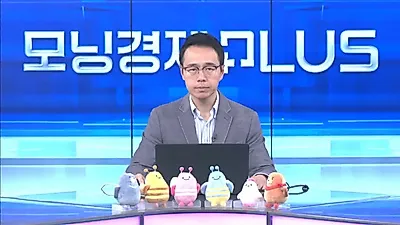
Foreigners exit South Korean stocks for US bonds after 10% currency gains
Foreign investors have shifted capital from the South Korean stock market to US short-term bonds, leveraging a 10% profit from currency fluctuations to defend returns as the KOSPI faces increased volatility.

Big tech earnings this week to determine future of AI investment
The semiconductor market is closely watching the upcoming earnings reports from Alphabet, Microsoft, and Amazon to determine if the momentum of AI investment will continue.

US dollar stablecoin expansion could neutralize Bank of Korea policy
Experts warn that the rapid spread of US dollar-based stablecoins could undermine South Korea's monetary sovereignty and economic governance by absorbing domestic economic capacity into the US economic sphere.

Stablecoins could act as a mechanism to mitigate dollar strength, experts suggest
During a discussion hosted by The Man Who Explains the Economy (Kim Kwang-seok TV), experts analyzed how the rise of dollar-pegged stablecoins might paradoxically weaken the dollar's value despite increasing its utility.

AI market differs from dot-com bubble due to hyper-scaler leadership
Economics Master Kwak Soo-jong argues that the current AI boom is fundamentally different from the late 1990s dot-com bubble due to the nature of the capital and infrastructure involved. Unlike the speculative hedge fund-driven era of the dot-com bubble, the AI market is led by hyper-scalers with significant financial stability.

US pushes stablecoins to attract global capital via AI agents
The United States is strategically advancing stablecoin adoption to capture global capital through AI-driven financial decision-making and the integration of real-world assets into digital networks.
Fed holds rates as Kim Young-ik warns of potential recession
Long-term interest rates rise as Federal Reserve shifts toward market-oriented stance
Silicon photonics and CPO could solve AI factory data bottlenecks
Iran Warns of Military Response Against Sinokor for Violating Strait of Hormuz Order
South Korea weighs strategic risks of $50 billion Alaska LNG project
Divided government could boost stock market following midterm elections
KOSPI falls to mid-5,000 level as AI profitability concerns grow
IMF raises South Korea's growth forecast to 3.3% on semiconductor demand
SK hynix surpasses 100 trillion won in quarterly revenue, announces 60 trillion won shareholder return plan
Kim Young-ik warns of simultaneous AI bubble and credit crisis
Net worth of 1 billion won places individuals in top 10% in South Korea, says Dr. Hong Chun-wook
South Korean potential growth rate could reverse 40-year downward trend
Youth protests in France triggered by high inflation and fiscal deficit
Digital transition replaces paper receipts with electronic tax invoices and e-receipts
CXMT challenges Samsung and SK hynix with new 4F² DRAM technology
South Korea faces capital exodus as US leads RWA innovation
NVIDIA to launch $500 billion AI infrastructure financing platform
South Korea's potential growth rate to rise for first time in 40 years
Foreigners exit South Korean stocks for US bonds after 10% currency gains
Big tech earnings this week to determine future of AI investment
US dollar stablecoin expansion could neutralize Bank of Korea policy
Stablecoins could act as a mechanism to mitigate dollar strength, experts suggest
AI market differs from dot-com bubble due to hyper-scaler leadership