
Yten Plus hits 35 billion won in revenue using software-style food strategy
Startup Yten Plus is achieving explosive growth by launching over 200 new products annually with a team of only 15 people. The company utilizes a "food software" model to rapidly address supply imbalances in the food industry by partnering with social media influencers.
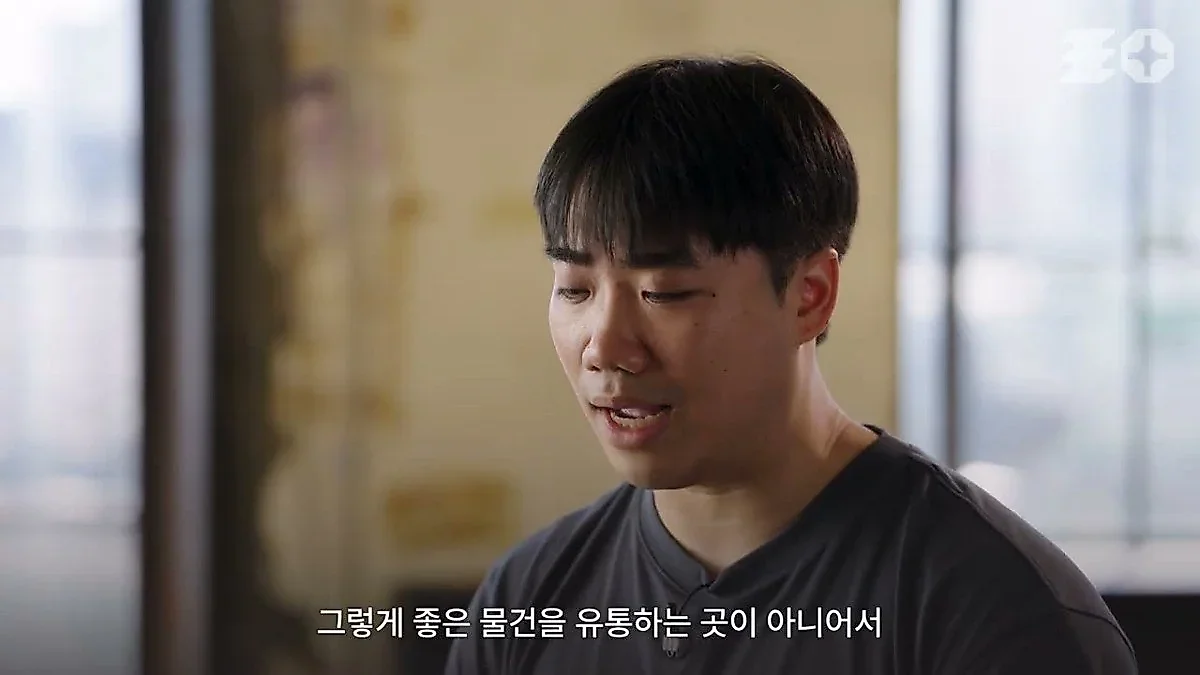
Startup Yten Plus has achieved 35 billion won in annual revenue by launching over 200 new products each year. CEO Lim Hyeong-gyun aims for 250 billion won in revenue next year by leveraging influencer partnerships and rapid prototyping.
The food industry is traditionally a sector characterized by slow change and rigid supply chains. While large food corporations take on massive equipment costs and risks to launch roughly 10 products a year, startup Yten Plus is taking a completely different path. With a team of only 15 people, the company is recording explosive growth by bringing more than 15 new products to market every month, totaling over 200 new products annually.
The story reported by EO Korea details the resurgence of Yten Plus CEO Lim Hyeong-gyun, who overcame severe trials including six years of failure, debt, and the departure of a co-founder. Even in extreme circumstances where he lacked the money to repair his air conditioner and had to work from cafes, Lim constantly scouted the market to find "cracks." Ultimately, he acknowledged a lack of sense of mission and found inspiration in solving problems within legacy industries to launch his new challenge.
"A food company working like software"... targeting the supply shortage market
Yten Plus's business model exploits the chronic "supply imbalance" in the food market. Based on his six years of experience in the software industry, Lim views the food market through a software lens. While software is an industry of assembling code, food is an industry where every product requires its own equipment, equipment takes a long time to build, and minimum order quantities (MOQ) are very large. This difference creates a gap where existing large brands cannot keep up with explosive customer needs.
Lim initially started with a platform model sourcing and selling existing products, but realized that market needs went beyond simple sourcing to "new supply." While sourcing products found on Coupang, Kurly, and Oasis yielded good responses, he faced a "supply shortage" state where there were no more goods to bring in. Consequently, Yten Plus pivoted to a food manufacturing-based business model. They secured the speed to create and test a prototype (MVP) in just 7 to 9 days per product, a sharp contrast to large brands that hesitate to launch new products due to risk management.
In particular, relationships with influencers active on social media, such as Instagram, are a core driver. Lim estimates the market size for women with children purchasing food through social media to be approximately 1 trillion won in Korea. Large brands often find it difficult to maintain profitability when entering influencer channels due to conditions like lowest-price guarantees, and they tend to participate less actively because the sales volume of an individual influencer is not large enough from their perspective. In contrast, Yten Plus builds strong partnerships by growing brands directly and supplying them to influencers. Indeed, the brand 'Meatly' proved its impact in influencer channels by recording 500 million won in sales in its first month of launch. The company is spinning a "flywheel" by creating such strong demand that influencers request more stock.
Achieving 35 billion won in annual revenue, aiming for 250 billion won next year by increasing "at-bats"
Approximately 21 months after launching its service, Yten Plus has achieved 35 billion won in annual revenue and 2 billion won in operating profit. Lim has set a revenue target of 250 billion won for next year. He defines the key to this growth as "increasing at-bats." Since it is difficult to predict which products will be loved by customers, his strategy is to throw as many new products into the market as possible to increase the probability of success. He explained, "There can be no batter who hits above 30 percent in the market, so it is a game of who can step up to the plate more often."
This model also keeps future global market expansion in mind. The company aims to become a "food multi-brand company" that operates thousands or tens of thousands of brands by combining social media-based supply chains with AI technology. This aligns with the business essence of Coupang or Netflix, which supply what customers want most quickly. Lim expressed his ambition, stating, "Since the food supply chain cannot keep up with people's needs, we will become a company that makes the food people want the fastest and in the largest quantities." Furthermore, he dreams of a model that operates thousands or tens of thousands of brands using global social media supply chains.
"People who have experienced pushing against a wall"... the momentum created by team cohesion
Behind the rapid execution of Yten Plus are team members who have "experience pushing against a wall." When hiring team members, Lim places importance on whether they have experience pushing through against social norms or difficult situations until the end. A reunion with a co-founder, who also sought to define and solve problems even in extreme situations, was a decisive factor in the company's resurgence. At the time, the co-founder decided to rejoin Lim, noting that seeing him define and solve problems even in extreme circumstances made him feel, "This person will never die."
Lim describes the entrepreneurial process as "the process of finding cracks in a smooth surface." To see the cracks in the market, one must move around the field extensively and gain conviction in the process. He emphasized that "defining the most important problem and not focusing on anything else—an extreme prioritization—is what moves us," adding that the inspiration gained from solving difficult problems is the strength that sustains the team. He also added, "Most of what we do is not very important. So we try to define what the most important thing is and then try to do nothing else."
Source: EO Korea (YouTube)
0Comments
Comments are currently disabled.