

$200 Billion Investment in the United States and 8 Nuclear Reactors: An Opportunity or a Poison Pill for Korea?
The United States is requesting the construction of eight nuclear power plants in Korea, with $120 billion of a $200 billion investment fund being directed toward this project. However, concerns are rising because the project utilizes the AP1000 modular construction method, which differs fundamentally from the traditional methods used by Korea.

Shift in Renewable Energy Policy: Abolishing RPS and Promoting the Introduction of a 'Contract Market'
The government is planning to abolish the Renewable Portfolio Standard (RPS), which has been used for the past 15 years to expand renewable energy, and transition to a 'contract market' system where the government sets quantities and operators compete on price. This measure aims to resolve the issue of revenue uncertainty in the current RPS system and increase the efficiency of renewable energy deployment.

"Beyond Equipment to Finance and Planning"... Will the Energy Market Become Korea's New Growth Engine?
An analysis suggests that Korea's energy industry must move beyond manufacturing-centered growth to securing business rights in the global energy market. While Korea possesses world-class power grid operation capabilities, it needs to supplement its financial procurement and business planning skills to execute large-scale overseas projects.
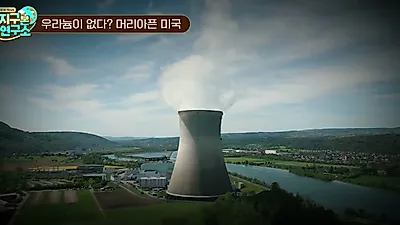
United States aims to quadruple nuclear capacity; uranium supply shortages and overseas dependence are key factors
The United States is pursuing a goal to quadruple its nuclear power plant capacity by 2050, facing challenges such as rising global uranium demand and high dependence on foreign supplies. Discussions regarding technological cooperation between South Korea and the United States, including reactor models and reprocessing technologies, are also underway.

"By 2040, Humanity Might Use All Its Energy"... The Solution to AI Power Shortage Lies in 'Memory Efficiency'
As AI technology advances, the energy consumption of data centers and AI devices is expected to surge, potentially consuming all human-produced energy by 2040 if current computing methods persist. Experts suggest that improving the power efficiency of memory semiconductors is the key to ensuring the sustainability of the AI industry.

The Power of Tesla's 'Shadow Mode'... Driving Data Being Collected Even from Vehicles Without FSD Support
Tesla is widening its technological gap by collecting driving data from vehicles that do not even use its FSD feature through a system called 'Shadow Mode'. This data collection, which includes vehicles without FSD active, fuels the continuous learning of Tesla's artificial intelligence.

2026 GMC Held... Discussions Range from Autonomous Driving Technology to Demonstration
The 2026 GMC was held to discuss the current state and future of the domestic and international mobility industry, focusing on the transition of innovation into daily life. The conference covered topics from autonomous driving technology to the implementation of next-generation mobility like UAM.
$200 Billion Investment in the United States and 8 Nuclear Reactors: An Opportunity or a Poison Pill for Korea?
Shift in Renewable Energy Policy: Abolishing RPS and Promoting the Introduction of a 'Contract Market'
"Beyond Equipment to Finance and Planning"... Will the Energy Market Become Korea's New Growth Engine?
United States aims to quadruple nuclear capacity; uranium supply shortages and overseas dependence are key factors
"By 2040, Humanity Might Use All Its Energy"... The Solution to AI Power Shortage Lies in 'Memory Efficiency'
The Power of Tesla's 'Shadow Mode'... Driving Data Being Collected Even from Vehicles Without FSD Support