
"Semiconductors are half-conductors"... Choi Min-su explains the correlation between Hyundai Motor and Trump's tariff policies
Kwak Beom's "Choi Min-su" explores Hyundai Motor's technological prowess, Trump's tariff policies, and the semiconductor outlook in the era of robotics.
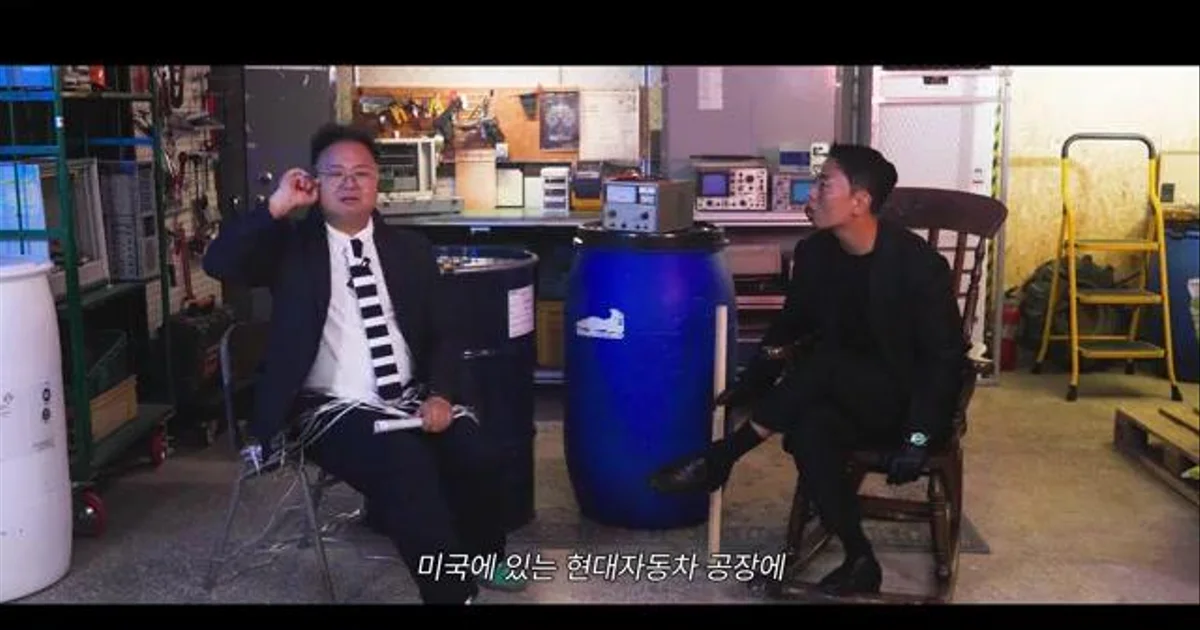
In the second episode of "Kidnapped No. 1 Choi Min-su," a segment from the YouTube channel 'Kwak Beom Is At It Again' featuring comedian Kwak Beom, an unusual conversation unfolded regarding Hyundai Motor Company's future strategy and global economic trends. Set against a kidnapping premise, the guest, 'Choi Min-su,' leads the discussion by explaining stock market trends and the flow of the global economy.
The Real Impact of Trump's Tariff Policies on Hyundai Motor
Choi Min-su analyzed the connection between Hyundai Motor's stock price fluctuations and former President Trump's tariff policies. He pointed to U.S. tariff policies as the underlying reason for the recent volatility in Hyundai Motor's stock. He explained that if the U.S. raises tariffs on imported vehicles, the market landscape shifts depending on who bears the cost.
Choi explained, "If the U.S. raises tariffs, those tariffs are paid by American importers." If a 15% tariff is applied to cars produced in Korea and exported to the U.S., American importers must shoulder that cost, which ultimately drives up product prices. As prices rise, American consumers are more likely to choose American brands over Korean cars. However, Choi emphasized the importance of technological prowess, noting, "If our technology is overwhelmingly superior to American cars and we maintain price competitiveness, consumers will still buy Korean cars."
U.S. Factory Construction and the Integration of Humanoid Robots
He also analyzed that the ultimate goal of tariff policies is to rebuild the U.S. manufacturing base. Trump's tariff policies are intended to induce factory construction within the U.S., thereby creating domestic jobs. Consequently, Hyundai Motor finds itself in a position where it must build local plants in the U.S. to avoid these tariffs.
A particularly noteworthy point is the transformation of future manufacturing sites. Choi mentioned that Hyundai Motor Group's Boston Dynamics is expected to begin mass-producing humanoid robots starting in 2028. These robots will be deployed to local U.S. plants to handle assembly processes. This is a strategy designed to address the chronic shortage of skilled labor in the American manufacturing sector. "The U.S. industry has a high proportion of service sectors and is design-centric, leading to a shortage of manufacturing personnel," Choi remarked, suggesting that the deployment of robots is an inevitable trend.
Ultimately, the discussion concluded that as robots take over manufacturing, the demand for semiconductors used in them will inevitably continue. Toward the end of the conversation, Choi jokingly defined semiconductors as "half-conductor" (ban-do-che) while underscoring the critical importance of the semiconductor industry.



0Comments
Comments are currently disabled.