
Family members share grievances over holiday labor and changing traditions
On the show Dongchimi, family members shared their struggles regarding repetitive household labor and shifting holiday traditions during recent holiday seasons.
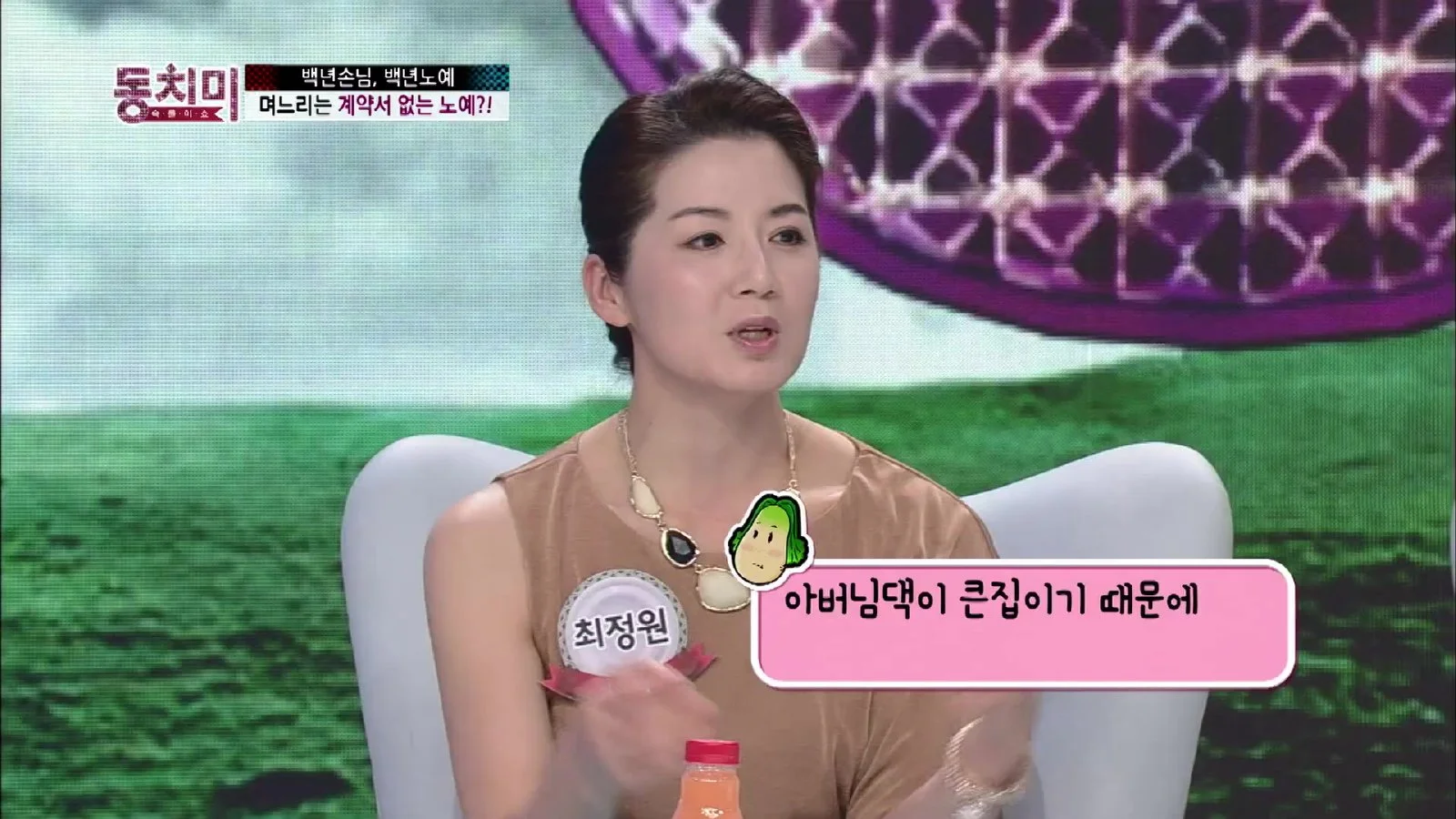
Participants on a recent Dongchimi broadcast discussed shifting holiday dynamics, including a son-in-law who used his children to help stop his wife from frying pancakes after she underwent surgery for a herniated disc.
Repetitive household labor and subtle family relationships during holidays become seeds of conflict across all generations. In a recent broadcast of Dongchimi, family members facing the holidays—including daughters-in-law, sons-in-law, mothers-in-law, and mothers-in-law—unfilteredly poured out their individual grievances and the changing landscape of holiday traditions.
"Feeling worse than a housekeeper" a confession from a daughter-in-law of 25 years
Oh Young-sil, who is in her 25th year of marriage, described the holiday scene at her in-laws' house using the words "slave" and "sinner." She expressed that while she thought she would eventually be treated like a biological daughter after working hard and earning money at her in-laws', she still feels uncomfortable and out of place even after more than 20 years. In particular, she shared her feelings of still feeling like a guest or a worker rather than a daughter when visiting her in-laws, citing the example of how a housekeeper cannot eat the same food at the same table as the family and must walk on eggshells.
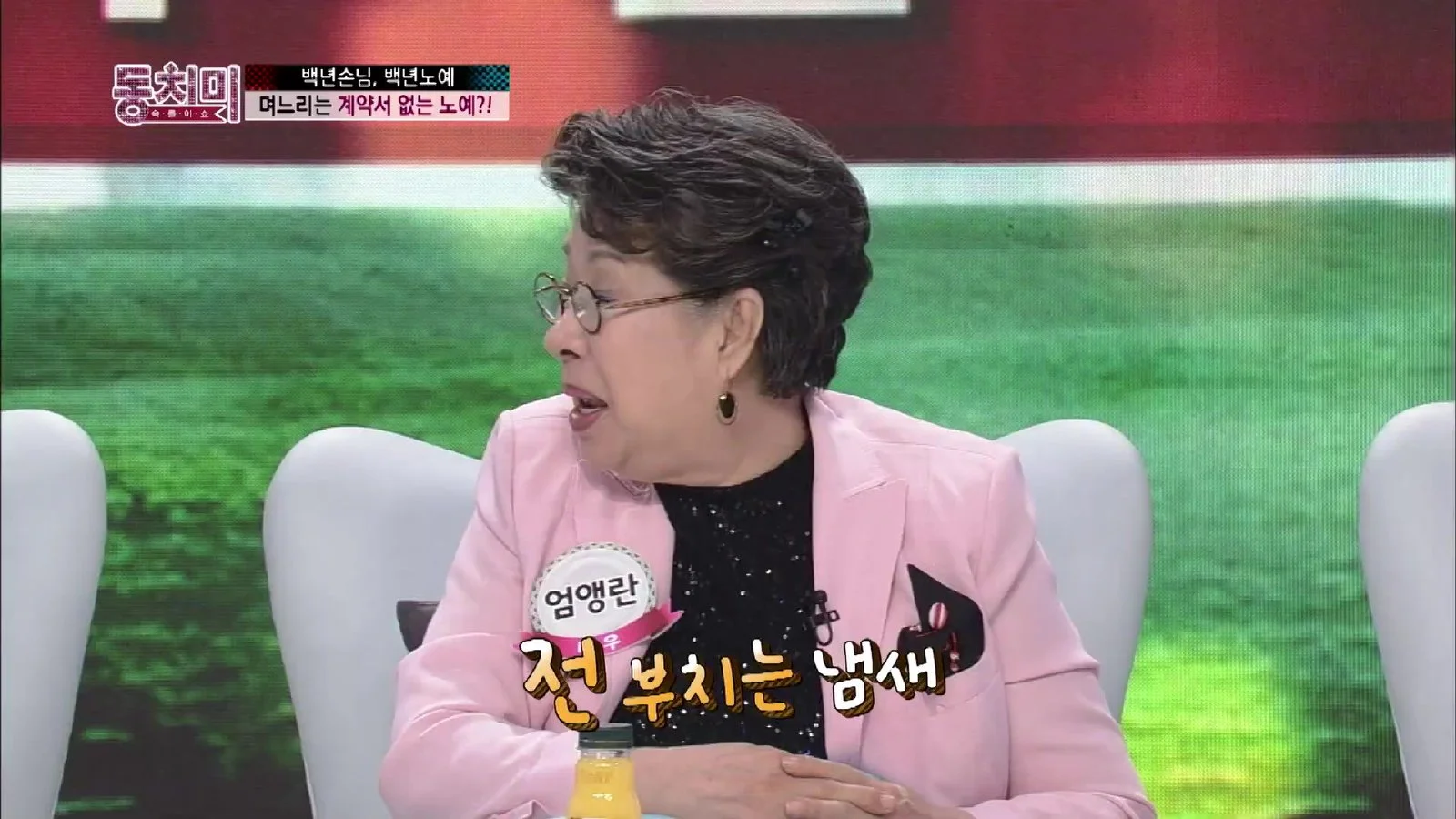
She noted, "If I worked without any compensation, I should be thanked, but I still feel like a sinner, unable to even eat properly and having to watch others' reactions," expressing a desire for an atmosphere where her efforts are recognized so she can visit enjoyably.
"I told them I wouldn't eat" a son-in-law's strategy to move his mother-in-law
Heartbreaking efforts from husbands to avoid holiday labor also followed. One participant revealed that after watching his wife being forced into the labor of frying pancakes (jeon) even though she had undergone surgery for a herniated disc, he eventually called upon their children to carry out an "operation to refuse pancakes." He told the children to unconditionally say the pancakes were not tasty, and as a result, his mother-in-law stopped the pancake-frying because the son-in-law refused to eat them. This was depicted as an unusual case where the refusal of the son-in-law, the "guest of a hundred years," brought an end to holiday labor.
On the other hand, there were many voices complaining about the difficulties of traveling during the holidays. Even when near the metropolitan area, it was mentioned that husbands face fatigue from driving using various applications and traffic information when a two-hour trip takes more than five hours due to holiday traffic congestion, as well as the pressure of awkward conversations with relatives that only occur during holidays.
"I am faithful as an entertainment device" the changing face of holidays
Evidence also appeared that holiday culture is gradually changing. One participant defined themselves not as a "labor device" but as an "entertainment device," stating that rather than working at her in-laws', she focuses on the role of sharing entertainment industry news or livening up the atmosphere. Especially in the case of celebrity families, they spend the holidays by sharing news from the entertainment industry with gathered relatives to feel a sense of belonging. One participant mentioned that instead of working, she spends her time at her in-laws' having pleasant conversations with her sister-in-law or mother-in-law, saying, "I cannot do the work."
Recently, the way holiday food is prepared is also changing. While the whole family used to gather in a small space to prepare food together in the past, a "modern" method is taking hold where three siblings or brothers each bring one dish they are good at to handle lunch and breakfast. One participant added, "Mother-in-laws have their own thoughts as well," noting that there are increasing attempts to reduce holiday labor by considering the feelings of daughters-in-law rather than forcing excessive labor upon them.
Source: original video (YouTube)



0Comments
Comments are currently disabled.