
India's Census After 15 Years: The Political Storm Triggered by 'Caste' Questions
India is resuming its national census for the first time in 15 years, a massive undertaking that could fundamentally reshape the country's social and political landscape due to the inclusion of caste-related questions. The two-stage process, involving millions of workers and a massive budget, aims to provide critical data for both national administration and corporate strategy.
India is resuming its national census, a massive project, for the first time in 15 years. This survey, which had been delayed since 2011 due to the COVID-19 pandemic and administrative preparation delays, will proceed in two stages: a household survey in 2026 and an individual census in 2027. Beyond simple population counting, there are projections that it will become a 'Pandora's box' that could fundamentally shake India's social structure and political landscape.
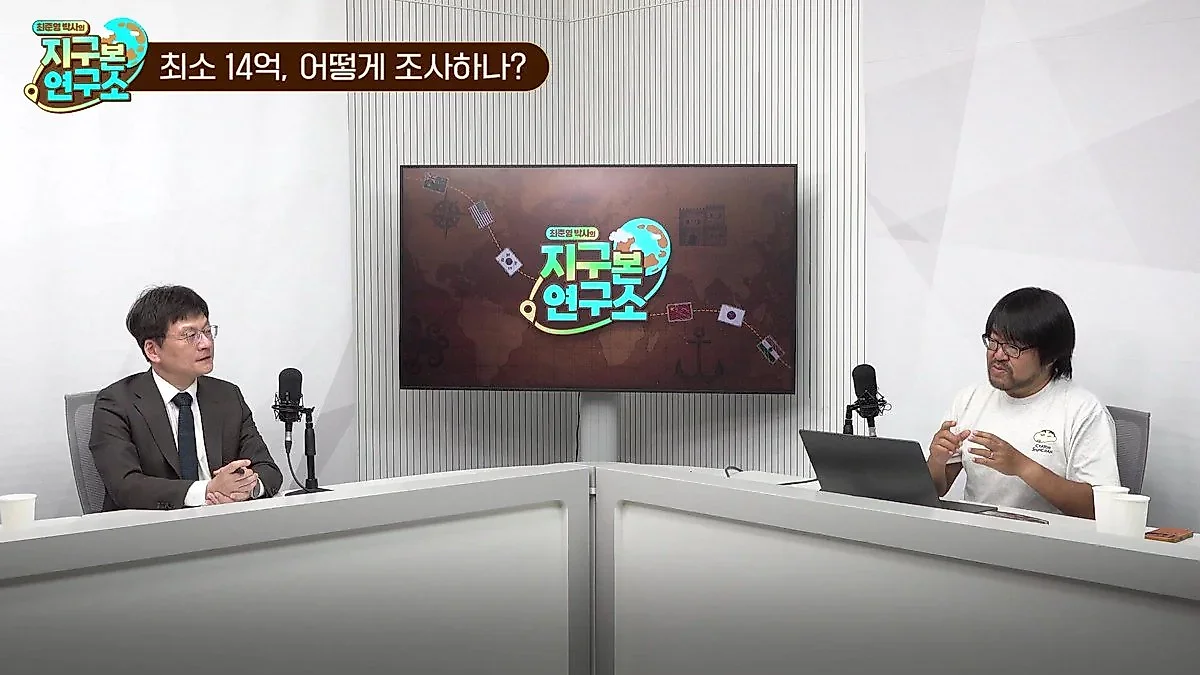
The core of this census, as reported by Dr. Choi Jun-young's Globe Institute, lies in its scale and precision. India has a history of conducting census surveys every 10 years since the British colonial era in 1881. Modern census surveys were established through the first survey requested by the British government in 1872 and the tax surveys during the Mughal Empire. Currently, the UN estimates India's population to be approximately 1.464 billion in 2025, but this is merely an estimate calculated backward by applying population growth and mortality rates to the data from the last survey in 2011, not the result of an actual full-scale survey. In 2011, India's population was 1.21 billion. It is such a massive task that even if you counted one person per second, it would take 44 years to count all 1.4 billion people.
Due to the nature of India's vast territory, the reference dates for the population count also differ by region. In regions like Ladakh, where it snows by October, the reference date is October 1, while in other regions, the reference date is March 1 of next year.
A 1.6 trillion won project involving 3 million teachers
For this survey, the Indian government is investing a budget of approximately 17,018 crore (about 1.6 trillion won). This is about 13 times the size of South Korea's 2025 population census budget of 115.8 billion won. The survey workforce is also beyond imagination. More than 3 million people, including enumerators and supervisors, will be deployed, most of whom are elementary school teachers and low-ranking civil servants. With India's number of households reaching approximately 300 million, the scale requires each enumerator to be responsible for an average of 100 households.
There are practical reasons why teachers were selected as enumerators. They are literate, well-versed in local community affairs, and possess the ability to easily explain complex questions to those with low education or the elderly. Under Article 27 of the Right of Children to Free and Compulsory Education Act, teachers have a legal basis to be mobilized for census, disaster, and election duties. For this survey, 18,600 IT personnel will be separately drafted for digital transformation to handle server management and monitoring for 550 days. Enumerators will enter data in real-time through mobile phone apps, and in areas without internet, they will use a method of saving data offline and uploading it later.
The survey items are very specific. The first-stage household survey meticulously examines water supply methods (wells, tap water, etc.), the presence and type of toilets (pit latrines, flush toilets, presence of shared toilets, etc.), cooking fuel (cow dung, gas, firewood, etc.), and main food ingredients (wheat, rice, etc.). In the second-stage individual survey, age, education, economic activity, and migration status are identified. Reflecting India's characteristic of having many migrant workers, the survey will track even the birthplace and previous place of residence to detail population movement paths into data. In cases where internet use is possible, a method will be introduced where information is entered in advance using QR codes and then verified by the enumerator.
The revival of 'Caste' questions, a variable shaking political quotas
The reason this census is called a 'Pandora's box' beyond simple statistics is because of the 'Caste' question included in this survey form. Until now, the Indian government has not conducted extensive caste surveys, excluding Scheduled Castes (SC) and Scheduled Tribes (ST). In particular, the last time a caste survey was conducted for the entire nation was during the colonial era in 1931. During the 1941 survey, the results were not released due to the aftermath of World War II, and since then, the independent government has avoided extensive surveys that exclude specific classes, operating policies based on 1931 data.
As the caste question is included, concerns and expectations intersect that India's political grammar may change. India operates a caste-based public sector quota system, and if the exact size and distribution of each group are revealed, political conflicts surrounding the expansion or reduction of the quota system could intensify. There is a high possibility that specific caste groups will demand more welfare and benefits based on their population proportion. This is also why politicians react sensitively to this survey.
A blueprint for national administration and a strategic map for companies
According to the information provided by guide Han Dan-im, this data is expected to become a blueprint for national administration and a strategic map for companies. Through this, the government can establish welfare policies and infrastructure construction plans such as water supply and gas pipelines. From a corporate perspective, it also becomes essential information for establishing market entry strategies, as they can identify where consumers are increasing and how much household equipment like air conditioners or washing machines has been distributed in which regions.
Ultimately, this census will serve as a testing ground to see whether India's young population structure can lead to actual economic strength. This is because a practical design of the national system is only possible if education, living conditions, and movement paths are accurately identified. However, since the political sphere and various caste groups may clash fiercely over issues like the quota system depending on the results, the data to be completed in 2027 is expected to be the hottest potato that will decide India's future.
Source: original video (YouTube)



0Comments
Comments are currently disabled.