
Personalized tastes and zero-loss consumption to drive 2027 dining trends
Chae Seon-ae, head of the Macromill Embrain Trend Center, predicted that the 2027 dining industry will be driven by "Zero-Loss Consumption" and "My-Fi," as consumer standards shift from social norms to individual preferences.
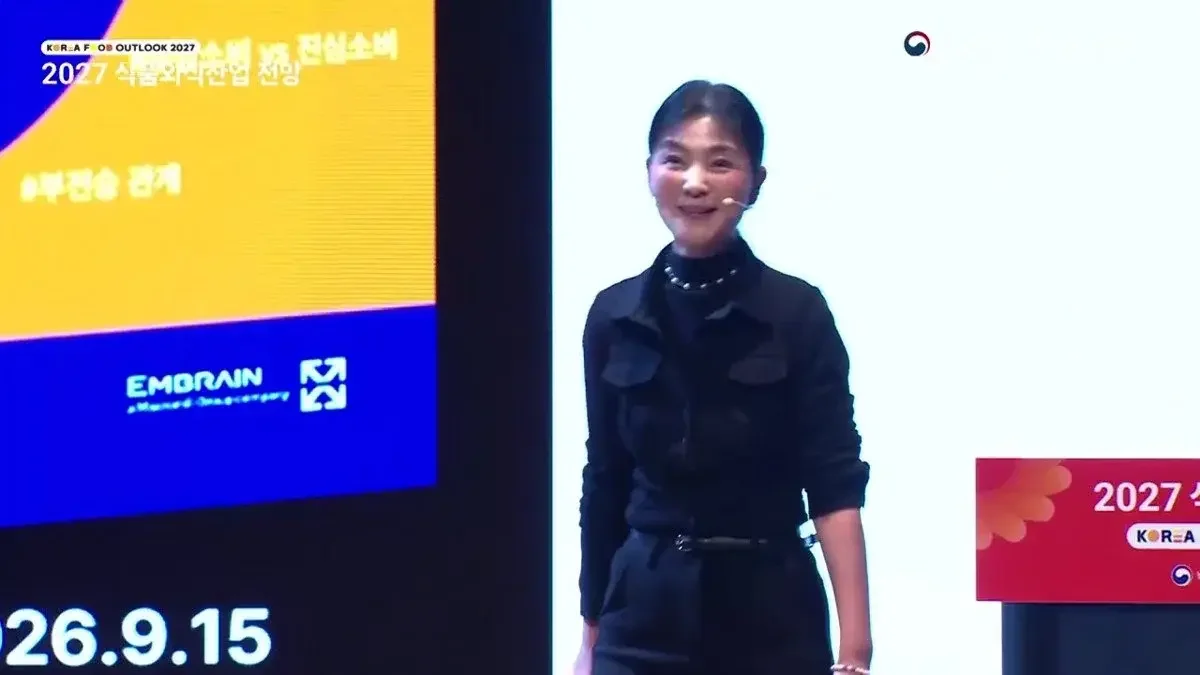
Chae Seon-ae predicted that "My-Fi" and "Zero-Loss Consumption" will define the foodservice industry in 2027 during a lecture in Seoul on November 5, 2026. The trends reflect a shift toward individual standards and rapid product execution, with companies using AI to reduce menu development times from months to just two or three weeks.
Consumption standards are shifting from the "answers of the majority" to "individual standards." While consumption in the past followed socially accepted "national rules," "Zero-Loss Consumption"—an effort to minimize individual loss and failure—is expected to emerge as a mainstream market trend.
Chae Seon-ae, head of the Macromill Embrain Trend Center, presented the core keywords that will penetrate the foodservice industry in 2027 during a lecture held on November 5, 2026, at Conference Room 401 in COEX, Seoul. Chae emphasized that when predicting trends, it is important to read the emotions and attitudes of the public at the time rather than simply looking at isolated events.
"National Rules Have Vanished"... 'My-Fi' Where Personal Taste Becomes the Standard
Chae named "My-Fi" as the first keyword for 2027 foodservice trends. This term refers to tastes centered around "My" (the individual), reflecting a phenomenon where the customs or "national rules" that were once universally practiced in society no longer hold power.
Just as wedding formats are diversifying into forest weddings or "No Weddings," existing formulas are breaking down in the foodservice sector. While alcohol was once the default for company dinners, the "My-Fi" phenomenon is appearing as the number of non-drinkers increases, making alcohol itself a matter of individual choice. Even hangover cures are trending toward repositioning themselves from simple functional products into cultural items enjoyed together.
Even meat-grilling methods are becoming subdivided according to personal preference. Analysis shows an increasing number of consumers who decide for themselves the degree to which they prefer pork belly or thin sliced pork belly and proudly express these preferences. Chae predicted, "These minor changes will lead to practical changes in the foodservice industry, such as altering the shape of grill plates."
Menu composition methods are also changing. The "Light Vanilla Almond Latte" recently introduced by Mega Coffee is an example where a "honey combination" (popular combination) that consumers had been creating themselves on social media was turned into an official menu item. This strategy is evaluated as a way to satisfy the needs of "Zero-Loss Consumption" customers, who desire consumption without failure, by commercializing verified combinations created by consumers. Chae explained that this strategy by Mega Coffee is a specific case of responding to Zero-Loss Consumption.
Chae suggested that the foodservice industry needs to consider diversifying sizes and capacities and viewing menus that trigger polarized likes and dislikes from a perspective where the secondary becomes the primary. She added that strategies to increase the average transaction value through special beverages are also necessary to reduce the revenue gap caused by the trend of not drinking alcohol.
Breaking Expectations: 'Un-cliché' and the Battle of Rapid Execution
The second keyword is "Un-cliché," which refers to unconventional moves that break away from predictable "clichés." Recently, the food and foodservice industries have seen a series of unusual combinations, such as the release of pork belly chips or cafes selling tteokbokki.
In particular, the "Un-cliché" phenomenon, which breaks boundaries between industries, is prominent, such as the collaboration between convenience stores and the semiconductor company SK hynix to present products shaped like semiconductor chips. These unconventional moves serve to accelerate the trend cycle of products. While developing new menus used to take three to six months in the past, large corporations such as CJ and GS are increasing their response speed by introducing solutions that use AI to capture trends and develop new menus in just two to three weeks.
Chae advised that when employing an Un-cliché strategy, "topic generation" and "timing" are more important than "completeness." Unlike the traditional method of aiming for steady sellers, the core now lies in the agility to ride trends briefly and intensely. To achieve this, a sense for trends based on data and the ability to not miss consumer signals are essential.
The case of Baekhwasobok, mentioned as an actual example, demonstrates the importance of capturing consumer signals. The silicone cap promotion released by Baekhwasobok was a commercialization of a behavior pattern where consumers were already using cups as vegetable stick containers or drink covers on social media. It was explained that an explosive viral effect occurred when a company quickly commercialized a need that consumers had created themselves.
AI Divides Wallets... Polarization of 'Emotionless Consumption' and 'Authentic Consumption'
Chae predicted that consumer wallets will be split into two branches due to the influence of AI in 2027. These are the "Emotionless Consumption" area, where AI shopping agents find the lowest prices and optimal specifications, and the "Authentic Consumption" area, where people focus on their own tastes based on the time and money saved through such means.
In the area where AI handles efficiency, consumers do not need to feel emotions, but in the "Authentic Consumption" area where they choose according to their own standards, "BPM (Beats Per Minute)," which makes the heart race, is expected to become a new consumption indicator. Ultimately, the foodservice industry is expected to face the challenge of how to increase the "density of personalized experience" that AI cannot replace.
Source: original video (YouTube)



0Comments
Comments are currently disabled.