
Why Attorney Seo Jae-in Decided to Defend Kim Byung-tae, Who Was Falsely Accused of Murder
The story of Seo Jae-in, who decides to defend Kim Byung-tae, who is facing murder charges, based on their past connection.

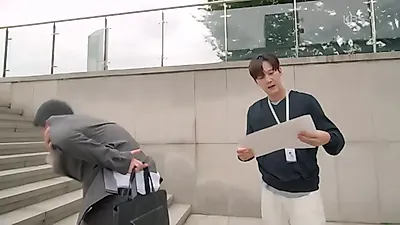
Attorney Seo Jae-in has decided to defend Kim Byung-tae, who is currently facing murder charges. Jae-in is aware of Byung-tae's past; as an elementary school student, he was forced to climb over school walls to avoid being late for class. At the time, Byung-tae had to wait for his mother, a nurse working night shifts, to finish work before leaving home, which left him with no choice but to scale the walls to bypass construction zones.
Jae-in solidified her decision by connecting Byung-tae's current crisis to these memories of his past. Currently framed for murder, Byung-tae finds himself in a desperate situation, suffering from a profound sense of isolation—despite the pitying glances from those around him, no one actually believes in his innocence. Empathizing with his plight, Jae-in, though a novice attorney with limited experience, concluded that a defense must be led by someone who truly believes in his innocence to ensure justice is served.
The Circumstances of a Boy Forced to Climb Walls
In the past, Byung-tae faced difficulties commuting to school because apartment construction sites blocked his usual path. Jae-in discovered that his decision to climb the walls to avoid being late was not a simple act of breaking rules. It was his family environment—having to wait for his mother to finish her nursing shifts at the hospital—that pushed him to climb over those walls. Jae-in emphasized that the disciplinary points he received due to these unavoidable circumstances were fundamentally different from typical rule violations.
The Sole Ally Who Believes in His Innocence
Currently, Byung-tae is facing unfavorable circumstances, including the discovery of his fingerprints at the scene, yet he vehemently denies the murder charges. He is tormented by the reality that even as evidence and forensic results pour in to prove his innocence, no one will believe him. Jae-in decided not to turn a blind eye to his desperate struggle. Stepping forward as his legal counsel, she asserted that in such a difficult fight, the defense must be handled by someone who sincerely believes in his innocence, so that the outcome, regardless of what it may be, feels less unjust.
A Twist on the Subway and Clashing Perspectives
A meeting on the subway, which seems to signal the beginning of the incident, creates a peculiar tension. A confrontation arises between an elderly man and a young person over a subway seat. The elderly man invokes traditional Korean etiquette for the elderly, demanding that the young person yield the seat. However, the young person questions whether they should be unilaterally forced to give up their seat simply because of the other person's age. While the elderly man takes yielding for granted under the assumption that the young person has more strength, the young person counters with the logic that one cannot rule out the possibility that the elderly person may also be suffering from physical discomfort or illness.
Notably, although the elderly man appears to be in his 60s, he is described as having a fit, muscular physique maintained through regular visits to a fitness club. Furthermore, since his destination—the fitness club—is only two stops away, the context of the confrontation is shaped by the judgment that there is no pressing need to yield the seat or force others to sit. During this process, the elderly man uses informal language (banmal) toward the other person, deepening the conflict.
Kim Byung-tae on the Brink and Seo Jae-in's Decision
Kim Byung-tae is under extreme psychological pressure as a suspect in a murder case. With strong circumstantial evidence, such as his fingerprints being found at the scene, he has been socially stigmatized despite his claims of innocence. Byung-tae shows signs of giving up on himself, revealing his past wounds and suggesting he is simply destined for bad luck. In particular, his memories of his mother leaving home during his middle school years highlight a deep-seated sense of deprivation.
Amidst this desperate situation, Seo Jae-in steps to the forefront as Byung-tae's attorney. She understands the trajectory of his arduous life, including the economic hardships and family circumstances he endured during his school years. Although Byung-tae is on the verge of giving up on himself, Jae-in prepares for the legal battle as the only person who believes in his innocence. This goes beyond a simple legal case, forming a connection between the boy who once had to climb walls and the attorney who remembers his truth.


0Comments
Comments are currently disabled.