
"Crisis Will Definitely Come"... What is the 'Survival Investment Method' Amid Debt Crises and Rising Treasury Yields?
As global debt issues and treasury yield volatility increase, investors are discussing strategies to prepare for an upcoming economic crisis.
As global debt issues and treasury yield volatility increase, the attitude and strategies investors should possess to prepare for the upcoming economic crisis are emerging as hot topics. Amid the recently rising crisis theories, a direction has been presented on how to protect and respond to assets.
Rising Treasury Yields and the Danger of the 'Crowding-out effect'
The point that requires the most attention in recent economic trends is the government debt issues of major countries, including the United States, and the resulting trends in treasury yields. According to a video from "The Man Who Explains the Economy (Kim Kwang-seok TV)", countries around the world are currently implementing large-scale fiscal policies to secure war recovery funds or for fiscal injections. On the other hand, while monetary policy maintains a tight stance, a phenomenon is appearing where treasury yields remain at high levels.
The problem is that these high treasury yields can trigger a 'Crowding-out effect' that makes it difficult for corporations to raise funds. The video explained, "When treasury yields rise, companies face difficulties in issuing corporate bonds to secure funds," adding, "From an investor's perspective, if the returns are the same, they will naturally prefer treasury bonds, creating an economic suppression effect where it becomes difficult for companies to sell corporate bonds." In particular, companies that have failed to prove growth potential, such as through revenue and operating profit, are highly likely to face a crisis as they fail to reissue corporate bonds that have reached maturity.
"Turn Vague Fear into Numbers"... The Core of Crisis Response
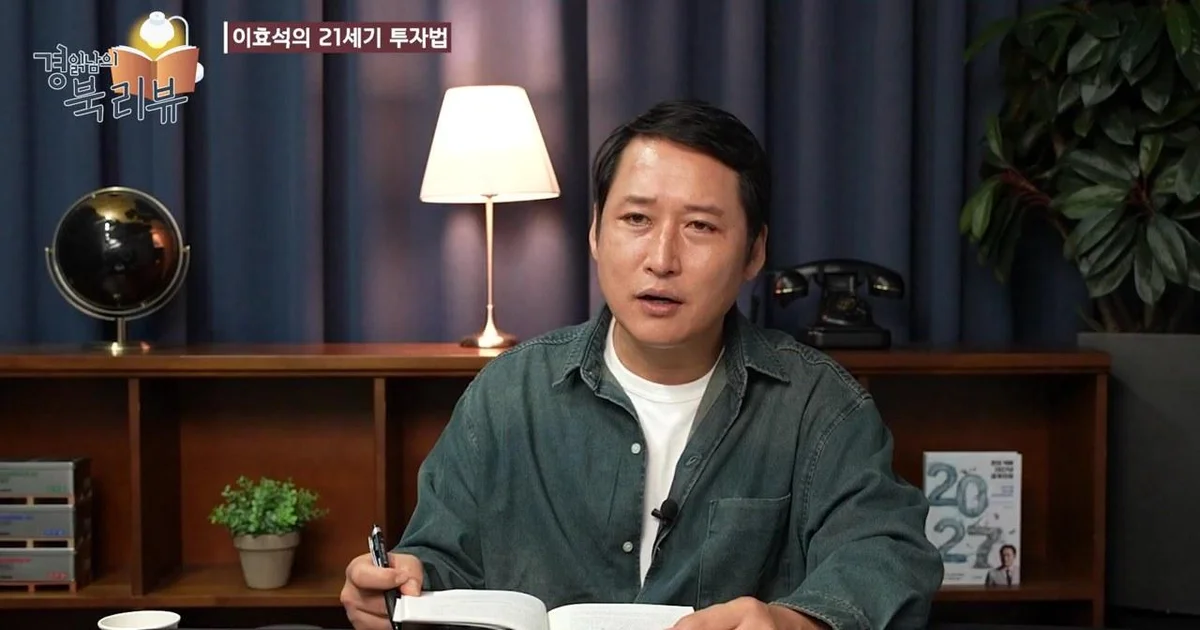
Amid such uncertainty, the core message presented by citing author Lee Hyo-seok's '21st-Century Investing' is that 'a crisis will definitely come, and one must be prepared for it.' The video emphasized that if a crisis cannot be avoided, it is important to gauge in advance how bad it could get when the crisis strikes.
As a specific method for crisis response, 'turning vague fear into numbers' was suggested. This aligns with the professional term 'stress test'. The video stated, "You must imagine worst-case scenarios in advance, such as the index falling by 20% or individual stocks falling by more than 70%," and "You must establish standards for how much loss your portfolio will incur, how long you can endure in that state, and if you can endure, what more you will buy."
Ultimately, the core of 21st-Century Investing is summarized as 'aligning with what changes (AI revolution, industrial structure, etc.) while learning what does not change (human nature, ROI, etc., investment principles).' This is because while market technology and environments change rapidly, the human nature at the center of them does not change. The video advised that the difference between those who are prepared and those who are not when facing a crisis will make a decisive difference in future returns.
0Comments
Comments are currently disabled.