
National Pension Retroactive Payment System Changes Announced... Analysis of Major Reforms Including Foreigner Cases and Premium Rate Increases
An analysis of the National Pension Act reveals simultaneous efforts to close institutional loopholes and expand beneficiary rights…
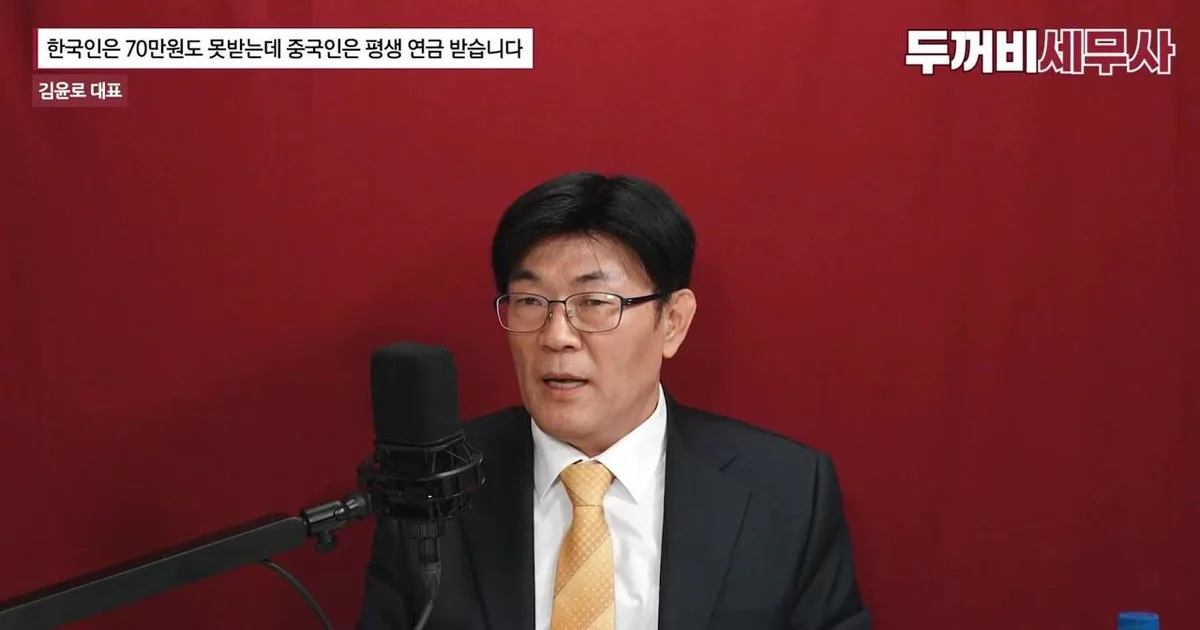
As a result of analyzing the controversies surrounding the National Pension's retroactive payment system and the main contents of the recently amended National Pension Act, it appears that changes are being made simultaneously to supplement institutional loopholes and expand beneficiary rights. Kim Yun-ro, CEO of the YouTube channel 'Finance with Toad Tax Accountant', pointed out in a video the current situation where calls for system reorganization are increasing due to the recent surge in cases of foreign workers using retroactive payments.
Surge in Foreigner Retroactive Payments and Controversy over Institutional Loopholes
Recently, cases of foreign workers utilizing the National Pension retroactive payment system to receive old-age pensions have increased, emerging as a social issue. According to the video, the number of foreigner retroactive payments, which was approximately 530 cases in 2023, surged to 994 cases in the first half of 2026 alone. In particular, it is estimated that about 80% of the foreigners who applied for retroactive payments are Chinese. Among the 1.1 million foreigners currently residing in Korea, about 410,000 are Chinese (including 350,000 Joseon-jok and 50,000 pure Chinese), and the analysis suggests they are strategically utilizing the cost-effectiveness of the National Pension. Regarding this, CEO Kim pointed out the institutional deficiencies, stating, "It is not illegal, but it is a result of the state failing to properly manage social security agreements between countries or reciprocity."
The problem is that the number of people receiving old-age pensions through these retroactive payments is increasing sharply. While there were 104 foreigners receiving old-age pensions through retroactive payments and the return of lump-sum refunds since 2021, it is shown that this will increase about fivefold to 520 people in the third quarter of 2026. Kim mentioned, "There are many people already latent or who will burst out in the future," noting the need to be wary of the phenomenon where foreign workers prepare for retirement by utilizing their payment history in Korea. Additionally, cases where foreigners who have obtained pension eligibility register dependents living abroad to receive additional payments were mentioned, raising issues regarding the responsibility for verifying family relationships and livelihood maintenance.
In the past, there were cases where large pension amounts were received by paying 241 months all at once because there were no limits on the period eligible for retroactive payment. In a case in Songpa-gu in 2020, 101,500,000 won was paid all at once as premiums for 241 months. As equity issues were raised among diligent payers due to this, the period eligible for retroactive payment was limited to a maximum of 119 months through a law amendment on December 29, 2020. Kim expressed concern that "current retroactive payment targets need to be careful as they do not know how the system will change in the future," particularly that the system intended for the socially vulnerable, who lack the capacity to pay premiums, may shrink due to strengthened regulations for retirement preparation.
National Pension Act Amendment: Premium Rate Increase and Credit Expansion
Starting from June 2026, the main contents of the National Pension Act changed, and the beneficiary environment also changed. The video explained the core contents of the amended National Pension Act in three aspects. First, the premium rate was increased from the existing 9% to 9.5%, and this is scheduled to be increased step-by-step to 13% by 2033. On the other hand, the income replacement rate was fixed upward from the existing 41.5% to 43%. Kim showed a basically positive view regarding these reform contents.
The 'credit' system reflecting social values was also strengthened. In the case of military service credit, it has been expanded from the existing maximum of 6 months to a maximum of 12 months, which will apply to those discharged from 2026. There are also changes in the childbirth credit. Previously, benefits of 12 months for the second child and 18 months for the third child were given, and a 50-month cap existed, but in the amendment, credits of 12 months for the first child, 12 months for the second child, and 18 months from the third child are granted, and the cap was abolished to provide motivation to respond to the low birth rate problem.
Support for Low-Income Groups and Changes in the Pension Reduction System for Employees
Support measures to resolve social blind spots were also included. For low-income local subscribers with a monthly income of 800,000 won or less, a system has been prepared where they can receive 50% of the premium for one year. For example, if a subscriber with a monthly income of 600,000 won pays a premium of 9.5%, the government supports 50%. Regarding this system, Kim evaluated it as "a desirable device that helps people in the National Pension blind spot prepare for their old age themselves and reduces future social costs."
Additionally, changes in the standard amount related to the old-age pension reduction system for employees were mentioned as a major checkpoint. It is a structure where the pension amount is reduced by a certain percentage if income exceeding a certain amount is generated while receiving the pension, and due to recent law amendments, changes in this standard amount and others are expected to affect the actual amount received by beneficiaries. Kim emphasized that since the National Pension system is being amended in a very detailed manner, it is important for subscribers to closely monitor the changing regulations.
0Comments
Comments are currently disabled.