
Professor Kim Sang-gyun outlines strategies for survival in the AI era
Professor Kim Sang-gyun discusses future strategies for individuals, corporations, and nations to survive and thrive in the era of artificial intelligence.

Professor Kim Sang-gyun of Kyung Hee University advised that individuals and companies should focus on capability augmentation rather than simple automation to ensure long-term competitiveness. During a meeting with SK hynix ambassadors, Kim noted that an analysis of 780,000 pieces of AI data at a Pohang steel company demonstrated how AI can uniformly raise overall capabilities.
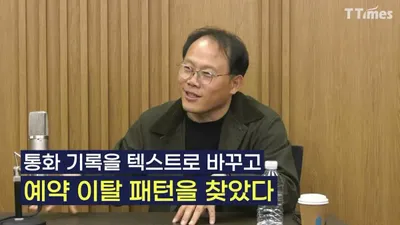
As artificial intelligence (AI) shifts the paradigm across all industries, what strategies should individuals, companies, and nations adopt to survive? SK hynix university student ambassadors met with Professor Kim Sang-gyun of the Graduate School of Business Administration, Kyung Hee University, to examine future strategies for the AI era.
"AI is a tool to create alternatives, not the subject of judgment"
Regarding the phenomenon of AI integrating into all aspects of society, Professor Kim Sang-gyun mentioned a "leveling-up effect." Kim explained, "An analysis of 780,000 pieces of AI data used for one year at a steel company in Pohang last year showed an effect where overall capabilities rose uniformly after the introduction of AI. AI fills in gaps in experience or mathematical ability, raising the overall level."
AI utilization can be broadly classified into two categories: "Automation," which involves delegating tasks simply to reduce work time, and "Accumulation" (augmentation), which expands human capabilities beyond existing limits. Kim added that a person who cannot speak Italian using AI to read an original book is in the realm of "augmentation," which exceeds individual capability. Citing a presentation by Entropy, he analyzed that, currently, automation accounts for a much larger proportion than augmentation.
However, he drew a clear line regarding the role of AI. When asked about accountability when problems arise from decisions made by AI, Kim stated firmly, "Judgment is the responsibility of humans." He emphasized, "AI should not be treated as the subject of judgment, but used as a tool to create alternatives to assist judgment."
Corporate survival depends on the "expansion of intelligence"
Regarding corporate strategy, Kim warned that while reducing manpower through AI might bring short-term profits, it could be dangerous in the long term. Citing automation cases from the past industrial era, he analyzed that focusing solely on cost reduction could lead to stagnation in new product development and ultimately weaken corporate competitiveness. "If a snack company focuses only on using robots to produce the same products cheaply and in large quantities, it may eventually fall behind because no new products are being released," he explained.
"In the AI era, it is like equipping a company with immense intelligence," he said. "A company with 1,000 members must be able to utilize AI as if it possesses the intelligence of 10,000 or 100,000 people." The core is to use the time and resources saved by AI to challengingly create new products or services that were previously unimaginable. Kim added, "Based on the time and cognitive space secured through AI, one must propose what role to play for their own career or the future of the organization."
At the national level, building massive "AI infrastructure" is essential. "For AI services to operate, they must be supported by large-scale data centers equipped with GPUs, massive amounts of electricity and cooling water, and semiconductors," Kim suggested. "Since individual companies find it difficult to handle such infrastructure, it should be built in a form where the state leads and companies cooperate." He also emphasized that "AI Literacy" is as important as infrastructure. This refers to the ability to fully utilize and employ the new intelligence of AI as if it were one's own, and he explained that understanding of the humanities and social sciences must also increase to achieve this.
Four keywords for future talent: 'S.T.A.R'
Practical advice for university students facing employment followed. Kim presented four keywords as strategies for future talent: 'S.T.A.R.', which stands for 'Start', 'Try', 'Amplify', and 'Recover'.
The specific strategies are as follows: ▲'Start' is analyzing and beginning what one can become using AI; ▲'Try' is challenging projects outside of one's major; ▲'Amplify' is the stage of amplifying one's own capabilities through AI; and ▲'Recover' means recovering new value through the time saved by AI. Kim said, "The process of becoming talent involves recovering time through AI, contemplating how to fill that space to build one's career, and filling the four portfolios one by one."
Finally, Kim concluded his lecture by emphasizing 'balance'—not rejecting AI or being completely dependent on it, but becoming talent that possesses the powerful "second intelligence" of AI in harmony with human intelligence.
Source: original video (YouTube)


0Comments
Comments are currently disabled.