
Lee Chang-dong explores human desire and freedom in new film
Behind-the-scenes details have been released for the film 'Possible Love', which explores human desire and freedom beyond the constraints of a capitalist society.
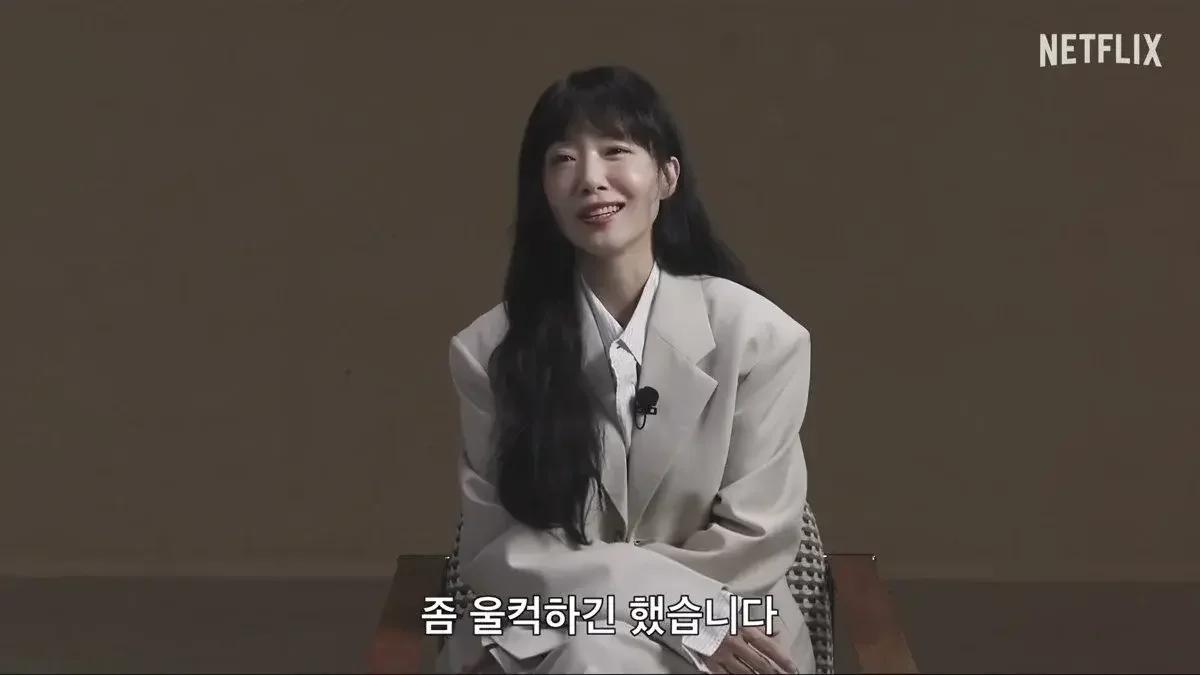
Director Lee Chang-dong has revealed behind-the-scenes details for 'Possible Love', the first Korean film to win the Grand Jury Prize at the Venice International Film Festival. The production explores how individuals can overcome the constraints of a capitalist society through personal freedom.
The production behind the scenes of 'Possible Love', a film exploring human desire and the freedom beyond it in a capitalist society, has been revealed. This work, which garnered global attention after becoming the first Korean film to win the Grand Jury Prize at the Venice International Film Festival, gains further depth through the perspectives of director Lee Chang-dong, the actors, and the staff.
Commandments of Desire, Transcendental Perspectives, and the Meaning of the Moon
Director Lee Chang-dong identified "desire" as the core driving force of the film. He explained that he sought to address how the commandment not to covet a neighbor's goods, quality of life, or happiness operates in a capitalist society, and how the differing desires of the characters collide. In particular, he made efforts to capture a somewhat transcendental perspective, distinct from the typical gaze of a child.
This transcendental perspective is also linked to the CCTV viewpoint in the film. The director's intention was to realize, through the eyes of a child, the subtle intersection between a gaze that monitors everything and a gaze that looks on transcendentally from beyond. Furthermore, the setting where the Mi-ok and Sang-woo couple and the Ye-ji and Ho-seok couple share the same object—the "moon"—despite living extremely different lives, suggests that the same moon exists for us regardless of how our existential lives change. This is the reason the final scene is arranged so that audiences can reflect on their own meanings while looking at the moon.
The director stated that he wants to convey the value of "freedom" through this film. He included a message that even if capital defines us in certain ways and deprives us of various life conditions, individuals can overcome this through their own sense of freedom.
Jung Jae‐il's Music and the Implementation of Realistic Mise-en-scène
The roles of music and art were significant in completing the film's emotional atmosphere. Music director Jung Jae‐il faced the task of revealing the uniqueness of the music without clashing with the emotions of the film. The music was requested to feel both classical and modern, and was designed to be used sparingly to convey the tension felt in the characters' relationships and the transcendental emotion of the moon in the sky.
The art department focused on revealing the spatial characteristics of the characters. Mi-ok's house was implemented as a detached house that could be found anywhere in Korean society yet strongly reveals the personality of its resident, while Sang-woo's villa was depicted as a manifestation of spatialized capital. Rather than a simply expensive luxury villa, the art team worked meticulously to create a space that feels old, quiet, and gives a subtle impression of exclusive use of the beach. Meanwhile, to increase realism, the set for Ho-seok's decisive experience during the strike scene was built directly on a wide plain.
Actors' Synergy Flourishing Under the Instruction to "Not Act"
Contrary to expectations, the actors reported a very harmonious atmosphere on the filming set. Rather than demanding extensive preparation from the actors, director Lee Chang-dong wanted them to create through mutual interaction on set. In particular, his instruction to "speak as if flowing, without the need to deliver lines precisely" presented a heavy task for the actors to "not act."
Jeon Do-yeon recalled focusing on Mi-ok's gaze to read the character, noting that the synergy on set was so good that she felt the filming time was a waste. Choi Gyeong-gu shared a moment of being moved to tears by the happiness of encountering the work after filming Ho-seok's painful scene. The actors agreed that they gained a new sense of film work through this project and that the time spent with their colleagues was like healing.
Source: original video (YouTube)

0Comments
Comments are currently disabled.