
United States aims to quadruple nuclear capacity; uranium supply shortages and overseas dependence are key factors
The United States is pursuing a goal to quadruple its nuclear power plant capacity by 2050, facing challenges such as rising global uranium demand and high dependence on foreign supplies. Discussions regarding technological cooperation between South Korea and the United States, including reactor models and reprocessing technologies, are also underway.
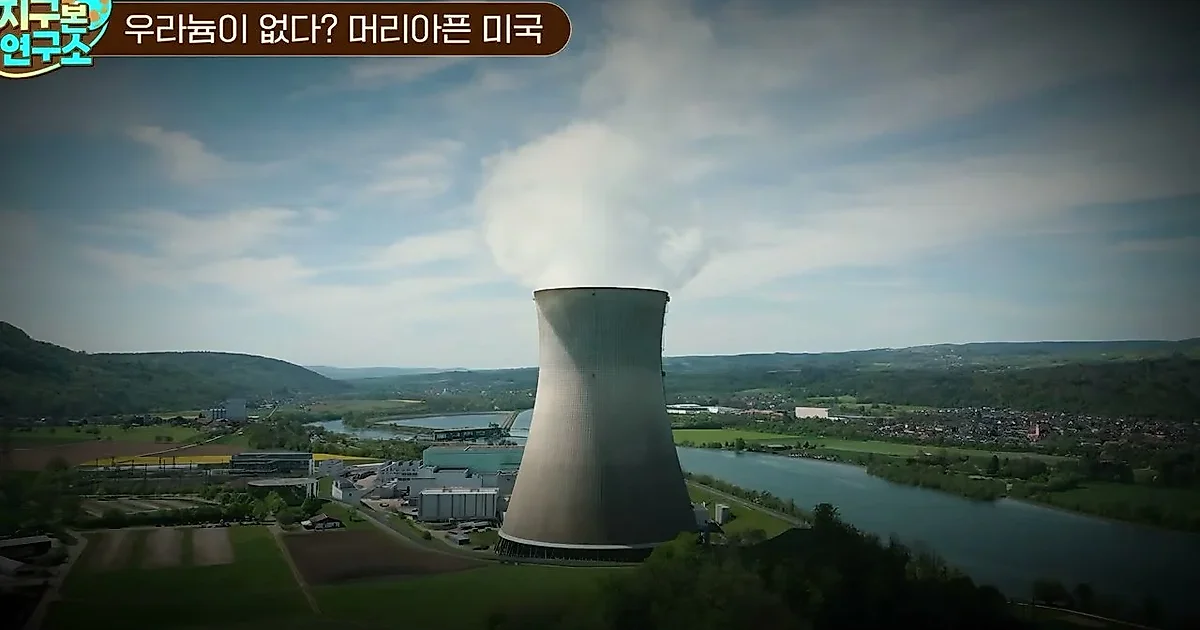
The United States is pursuing a goal to increase its nuclear power plant capacity to four times its current level by 2050. In this process, the global increase in uranium demand and the high overseas dependence of the United States are emerging as major variables in the nuclear expansion plan.
Nuclear expansion goals and discussions on technology cooperation between South Korea and the United States
The video explains that the United States has a goal to increase its nuclear power generation capacity to four times the current level by 2050. In relation to this, plans are being discussed for South Korea to invest approximately 120 billion dollars to construct 8 large-scale nuclear power plants, with about 60% of that investment directed toward the nuclear sector.
Differences in positions regarding reactor models also exist. While South Korea seeks to reflect the Korean-style reactor 'APR 1400' as much as possible, the United States is demanding construction centered on Westinghouse's 'AP 1000' model. The video presents a forecast that even if South Korea makes efforts, the best-case scenario might involve including about 2 units of 'APR 1400' and about 6 units of 'AP 1000'.
Discussions regarding spent nuclear fuel reprocessing technology are also continuing. Beyond traditional wet reprocessing methods, there is an atmosphere in the United States expecting investment from South Korea in new technologies such as 'Pyro-processing', which South Korea has steadily developed. However, reprocessing is a very politically sensitive issue due to the possibility of nuclear weapons diversion through plutonium extraction.
Global uranium supply shortage and the United States' supply and demand structure
A major challenge for nuclear expansion is the uranium supply. As of 2025, while global uranium production is approximately 62,642 tons, demand exceeds 68,000 tons. A supply shortage of about 6,200 to 6,300 tons per year is occurring. Currently, the situation is being addressed using stockpiled uranium, but if the United States quadruples its nuclear capacity, the supply problem could intensify further.
The United States' uranium supply and demand structure has a high level of overseas dependence. While the United States accounts for about 30% of the world's nuclear power generation, its uranium reserves account for only 1% of the world's total. The import proportions are Canada (32%), Kazakhstan (28%), and Australia (15%) in that order, while the United States' own production is at about 7% of the total. In particular, imports from Russia have been banned following the war in Ukraine, and imports from Russia are scheduled to be completely prohibited starting January 1, 2028.
Resumption of uranium mining in the United States and utilization of ISR technology
The United States is increasing its domestic uranium exploration and mining activities again. Drilling activities, which had plummeted after 2013, returned to an increasing trend after 2022; comparing 2024 and 2025, the total drilling length, including exploration drilling, increased by about 66% compared to the previous year. U.S. uranium production, which had fallen to the level of 21,000 pounds in 2020, recovered to 1.38 million pounds in 2025, but this is still less than one-third compared to the production volume in 2014. Accordingly, investment costs related to uranium exploration and mining also increased from 160 million dollars in 2024 to 230 million dollars in 2025.
The main mining method in the United States is the 'ISR' (In-Situ Leaching) method. This is a method where a solution is injected into underground uranium layers to dissolve the uranium into a liquid state, which is then recovered through boreholes. Of the 9 uranium mining facilities currently operating in the United States, 7 use this method. Wyoming and Texas are key regions, and in Utah, concentrate mining, which involves directly digging up ore, is carried out in parallel.
The United States is investing not only in large-scale nuclear power plants but also in the development of next-generation nuclear technology. In particular, in new technology fields such as spent nuclear fuel treatment, the country is building an ecosystem where startups and private companies can lead research and development, moving away from government-led methods.



0Comments
Comments are currently disabled.