
$200 Billion Investment in the United States and 8 Nuclear Reactors: An Opportunity or a Poison Pill for Korea?
The United States is requesting the construction of eight nuclear power plants in Korea, with $120 billion of a $200 billion investment fund being directed toward this project. However, concerns are rising because the project utilizes the AP1000 modular construction method, which differs fundamentally from the traditional methods used by Korea.
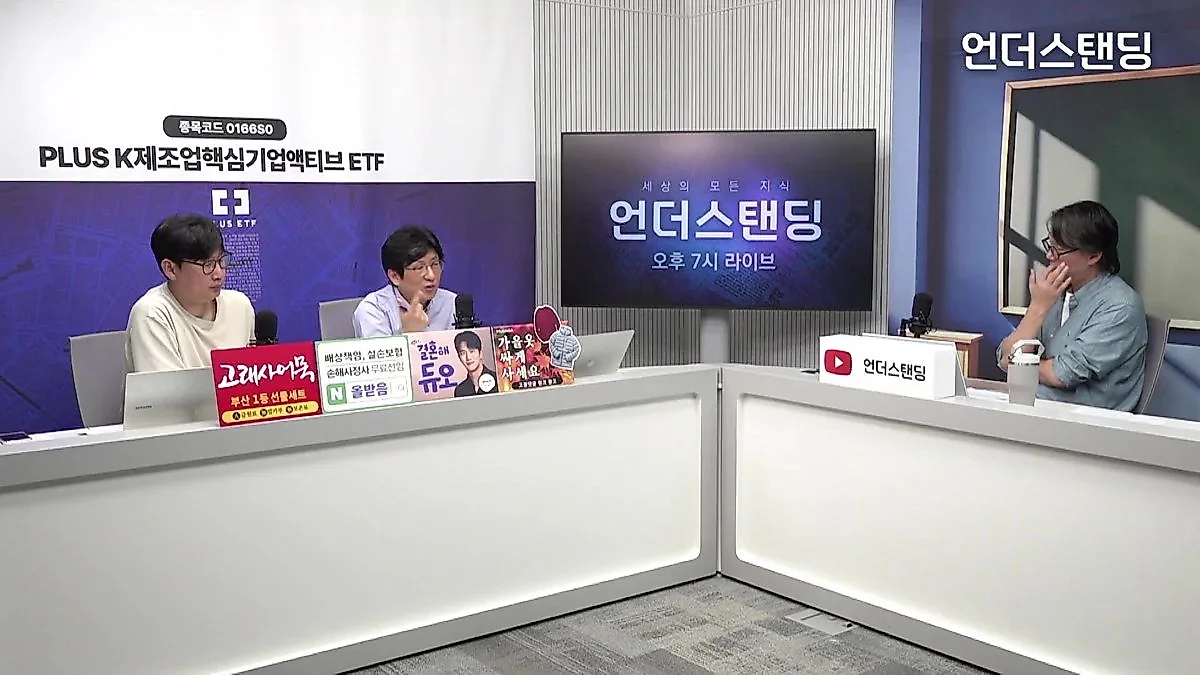
The United States is requesting the construction of eight nuclear power plants in Korea. The structure is such that approximately 60%, or $120 billion, of the $200 billion investment cooperation fund for the United States is being injected into this project. However, voices of concern are emerging because this business is fundamentally different from the methods Korea has previously performed.
The core of this project, as reported by reporter Kim Sang-hoon of Understanding: All the Knowledge in the World, is the 'AP1000' model developed by the American company Westinghouse. Until now, Korea has mainly used traditional methods where concrete containment buildings are poured directly on-site. In contrast, the AP1000 adopts a 'modular construction method' where modules manufactured in a factory are assembled on-site. Kim emphasized that this is "as different as the sports themselves are between soccer and American football," noting that not only the design but the very method of building is completely different.
The Lesson of Vogtle Units 3 and 4, Where the '3.5-Year Completion' Promise Was Broken
The AP1000 method originally touted innovative efficiency. This is because a total of 342 modules—including 122 structural modules, 154 pipe modules, 155 equipment modules, and 11 electricity-related modules—can be pre-manufactured in a factory and simply assembled on-site. Westinghouse expected that just 3.5 years would be sufficient from concrete pouring to commercial operation. Compared to the 6 to 8 years typically required when building nuclear plants using traditional methods, this was an enormous competitive advantage. In particular, shortening the construction period has the advantage of being able to produce cheap electricity since massive financial costs can be reduced.
However, the reality was different. Vogtle Units 3 and 4 in the United States, which began construction in 2013, took about 11 years to reach commercial operation. In the case of Unit 4, the construction period has increased significantly more than expected, with the goal of commercial operation in 2024. Kim named this phenomenon the 'first-of-a-kind curse.' It is a principle that no matter how perfect a design is, trial and error cannot be avoided when building a large-scale structure for the first time. Construction was delayed due to a combination of factors such as 'tolerance' issues, where the gaps between modules do not match minutely, design changes, and broken supply chains.
The Key Variables of Modular Construction: 'Tolerance' and the Supply Chain
The success or failure of the modular method depends on precision. When using a crane to move modules containing major equipment, such as steam generators, into the massive reactor containment building, each part must fit perfectly without error. If this value, called 'tolerance' in technical terms, does not match, situations arise where the entire module must be discarded. As seen in the case of Vogtle Units 3 and 4, if the connection between modules is not smooth, the construction period and costs swell uncontrollably.
Furthermore, an analysis suggests that the background of the United States wanting to entrust construction to Korea includes an intention to restore the broken nuclear power supply chain in the United States through Korean volume, in addition to Korea's excellent construction capabilities. The United States built many nuclear plants starting from the 1960s, but the supply chain weakened as orders from utility companies stopped following the Three Mile Island Nuclear Generating Station accident in the 1970s. It is pointed out as a risk that if the United States revitalizes its domestic supply chain through Korean companies, Korea's role may diminish once the United States establishes an independent nuclear power ecosystem in the future.
Managing Investment Risks in the United States and Negotiation Tasks
This project goes beyond simple orders and is directly linked to the stability of the entire investment in the United States. Since 60% of the $200 billion investment cooperation fund is being injected, the structure is such that if massive losses occur during the nuclear plant construction process, the entire investment project in the United States could be shaken. In a situation where a plan to remit about $10 billion in advance payments by the end of the year is currently being discussed, a scenario where Korean companies can secure equity in Westinghouse is also being mentioned.
Therefore, Korean companies must clearly define the securing of tax credits, supply chain quality assurance, and most importantly, the 'liability in case of cost overruns' during the negotiation process. Kim analyzed that while this business could be an opportunity to gain experience in modular construction methods and enter the Western market together, the success or failure will depend on how the liability risks regarding cost and quality are managed.
Source: original video (YouTube)
0Comments
Comments are currently disabled.