
"Allocate 5-10% of Salary to Retirement"... Is the ISA 3-Year Cycle 'Windmill Strategy' Effective?
Experts suggest that the 2030 generation should balance current life expenses with retirement savings by allocating 5-10% of their income to retirement…
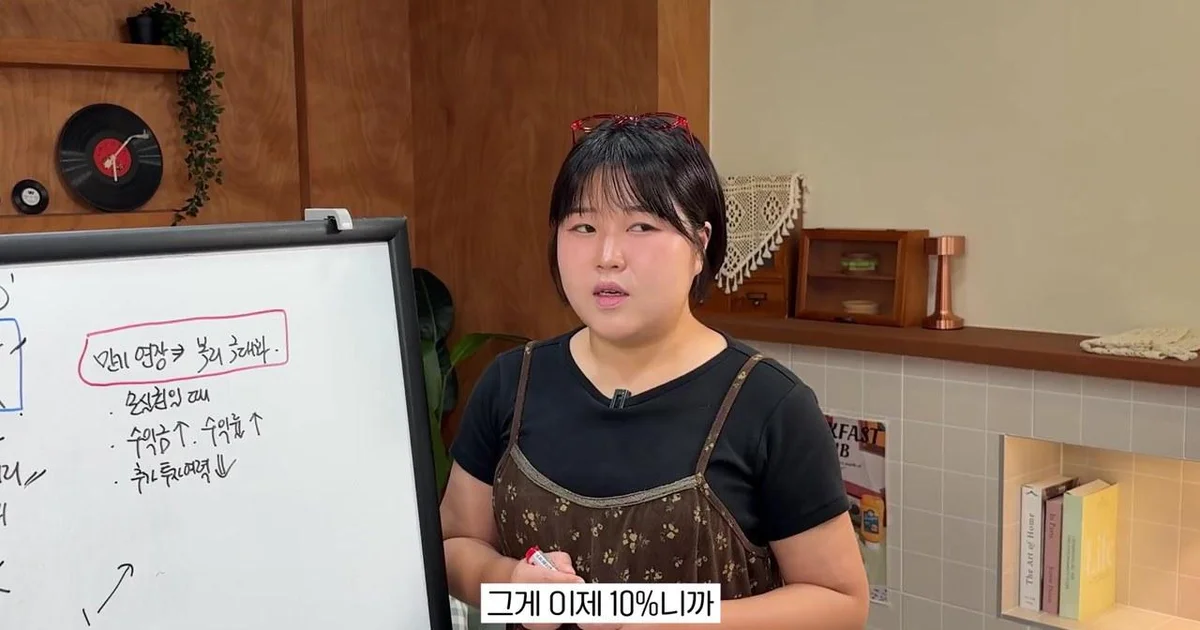
In the asset management strategies of the 2030 generation, including those new to society, balancing "current life" and "retirement" is emerging as a core challenge. According to a video recently released on the YouTube channel 'Kim Jjanbu', experts emphasized that it is more important than anything else to secure accounts for retirement preparation during youth, a period when income exceeds expenditures.
"5-10% of Salary to Retirement Accounts"... A Parallel Strategy for Current Life and Retirement
Appearing in the video, Manager Park from UPPITY cited a life-cycle income and expenditure graph, pointing out that while youth is a period when income is greater than expenditures, the period during which money must be grown for future retirement lasts for more than 30 years. In particular, she explained that one must simultaneously manage two different worldviews: "money for current life," such as independence, marriage, buying a home, raising children, expanding housing, and business, and "money for retirement preparation," which may feel distant now but must be prepared for.
While many tend to delay retirement preparation by focusing on savings for their immediate, visible current life, the participant explained that the two must be pursued in parallel. The participant advised, "5-10% of your salary must unconditionally be put into accounts for retirement preparation (such as pension savings funds, IRP, etc.)," adding, "If your monthly savings capacity is 500,000 won, it is important to allocate even a small portion, such as 30,000 won or 50,000 won, to a pension account."
When setting the total amount available for savings and investment, the participant recommended first considering "savings and investment for current life," which encompasses investments through the Youth Future Savings Account or ISA accounts, while allocating 5-10% to pension accounts during this process. In other words, the method is to allocate at least about half of the salary to savings and investment, while yielding a portion within that to fill retirement accounts.
ISA '100 Million Won Compound Interest Management' vs '3-Year Cycle Transfer': Which is Advantageous?
As a specific methodology for asset management, a question was raised regarding the management strategy for the Individual Savings Account (ISA). The core issue is whether to continue compounding the funds in an ISA account until it reaches the 100 million won limit, or to perform a 'windmill strategy' by transferring funds to a pension savings fund every time the 3-year mandatory subscription period ends.
In response, the participant expressed the position that "it is generally correct to close it every 3 years." This is because there is a need to finalize the process of securing the main benefits of the ISA: tax deferral, tax exemption through profit and loss offsetting (2 million won for general types, 4 million won for low-income types), and low-rate separate taxation (9.9%) on excess profits. In particular, she explained that if profits are hovering around the tax-free limit, the strategy of settling funds at the time of maturity to finalize profits and then opening a new ISA to reset the tax-free limit is effective.
Furthermore, the additional benefits that occur when transferring ISA maturity funds to a pension account are also major considerations. While the annual contribution limit for an ISA is 20 million won, the total contribution limit is 100 million won. However, a major merit is that when transferring maturity funds to a pension account, a large sum can be transferred all at once without a limit on the amount. In this process, one can receive an additional tax credit of 10% of the transferred amount (up to a limit of 3 million won), making it a powerful tax-saving tool for investors with high annual incomes. For example, if 30 million won is deposited, a tax credit of 3 million won is possible. This allows for additional benefits beyond the tax credit of up to 9 million won available through pension savings accounts and IRP combined.
Exceptional Situations: Cases Where the ISA Account Should Be Maintained Long-Term
However, closing the account every 3 years is not the answer in all cases. The participant cited two exceptional situations. First, when the profits within the ISA account are very large (e.g., hundreds of millions of won), making it more advantageous to enjoy the 9.9% separate taxation benefit for a long period rather than resetting the tax-free limit. While general accounts deduct 15.4% tax on profits, ISA only applies 9.9%, so if the scale of profit is massive, maintaining the account may be beneficial. Second, if it is expected that the capacity for additional contributions will decrease in the future due to marriage or childbirth, it may be better to extend the account rather than terminate it.
Additionally, investors who are likely to become "subjects of comprehensive taxation on financial income" in the future need to make strategic choices. Since new ISA subscriptions are restricted for those subject to comprehensive taxation on financial income, methods such as setting the maturity to an unlimited period in advance to maintain the account at the time one is expected to become a subject were mentioned. The participant emphasized that "when profits are around the tax-free limit (e.g., profit levels of 10 million won to 20 million won), the general strategy is to settle them periodically," and that customized choices are necessary depending on an individual's asset scale and investment capacity.
0Comments
Comments are currently disabled.