
Warning as 10-Year U.S. Treasury Yield Approaches 5%... KRW/USD Exchange Rate Expected to Enter 1,200 Won Range
As volatility in financial markets increases, analysis suggests that the 10-year U.S. Treasury yield reaching around 5% could trigger a U.S. recession and lead…
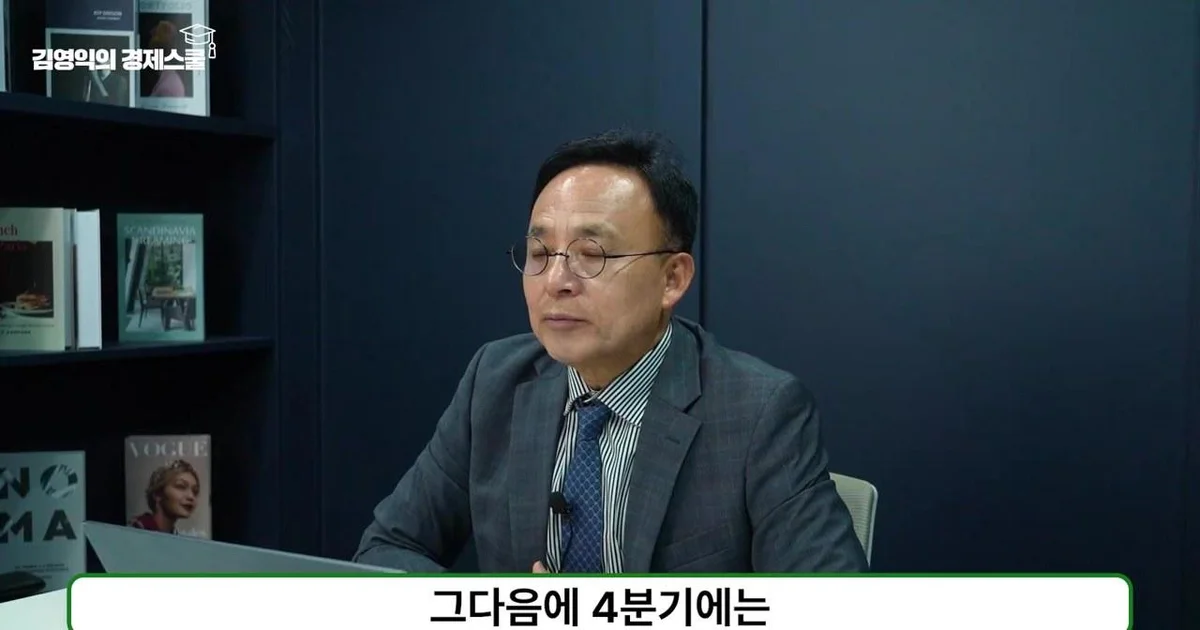
As volatility in financial markets expands this year, an analysis has been released regarding the future direction of the global economy and domestic financial markets as the 10-year U.S. Treasury yield rises to around 5%. The KRW/USD exchange rate rose to 1,551 won in the first half of the year and has recently fallen to the 1,340 won range.
U.S. Treasury Yield Surpassing 5% and the Possibility of a U.S. Economic Recession
Economic warning signs are being detected regarding the situation where the U.S. 10-year Treasury yield has reached around 5%. Pointing to past cases, it was noted that whenever U.S. interest rates surged, economic crises occurred either within the United States or in external countries. Representative examples include the U.S. banking crisis and Savings and Loan crisis in the 1980s, Black Monday in 1987, South Korea's foreign exchange crisis, and the 2008 financial crisis.
Rising interest rates become a factor that reduces household consumption with a time lag. In particular, given the situation where AI companies have been raising funds through corporate bond credit, a Treasury yield at the 5% level could make investors prefer Treasury bonds over risky assets, thereby shrinking investment by AI companies. This analysis suggests that such a decrease in consumption and investment will lead to a contraction in the consumption sector, which accounts for 69% of the U.S. GDP, potentially causing the U.S. economy to fall into a recession next year.
Factors for the Decline of the KRW/USD Exchange Rate and Outlook for the 1,200 Won Range
The KRW/USD exchange rate is projected to show a downward trend in the medium to long term. The U.S. Dollar Index, one of the factors determining the exchange rate, is expected to enter a downward phase in the medium term. This is because the value of the dollar is likely to fall and the value of the Chinese yuan is likely to rise during the process of resolving global economic imbalances. Considering South Korea's high export ratio to China, the rise in the yuan's value could lead to an increase in the won's value (a decline in the exchange rate).
Additionally, the rise in the yen's value and South Korea's current account surplus trend are factors supporting the strength of the won. If the difference between the 10-year Treasury yields of the United States and Japan narrows, the value of the yen may rise, which could move in the same direction as the rise in the won's value. In the case of South Korea, while the total savings rate in the first half of the year reached a historical high of 45.6%, the domestic investment rate was low at 24.2%, and the current account surplus is projected to reach 450 billion dollars, exceeding 20% of the GDP. This large-scale inflow of dollars acts as a factor for the rise in the won's value. Accordingly, while there is a possibility of a short-term rebound in the KRW/USD exchange rate, observations suggest it could fall to around 1,200 won in the medium to long term.
Possibility of Further Adjustment in KOSPI and Major Risk Factors
The domestic stock market, KOSPI, rose along with the decline in the won's value in the first half of the year, but is showing a different flow from the past, such as falling along with the rise in the won's value in the second half. This is interpreted as a process of finding its proper place, where the KOSPI was excessively overvalued and the won's value was undervalued in the first half.
Major risks in the current market include: ▲Overvaluation of deferred assets (stocks) ▲Concerns over an AI investment bubble ▲Maintenance of high long-term interest rates in advanced countries ▲Surge in oil prices due to the Strait of Hormuz issue ▲Geopolitical risks related to Trump. In particular, the rise in U.S. Treasury yields is pointed out as a structural problem that could lead to stock price adjustments in the fourth quarter and a decrease in consumption and investment in the first half of next year. Accordingly, there is a possibility that a scenario will unfold where the exchange rate rises and the KOSPI falls further in the fourth quarter.
0Comments
Comments are currently disabled.