
Uniform Land Tax Law triggers rise of Gongin merchants and handicraft villages
The implementation of the Uniform Land Tax Law in the Joseon dynasty led to the emergence of Gongin, a class of professional merchants responsible for state procurement, which subsequently transformed the nation's commercial and labor structures.
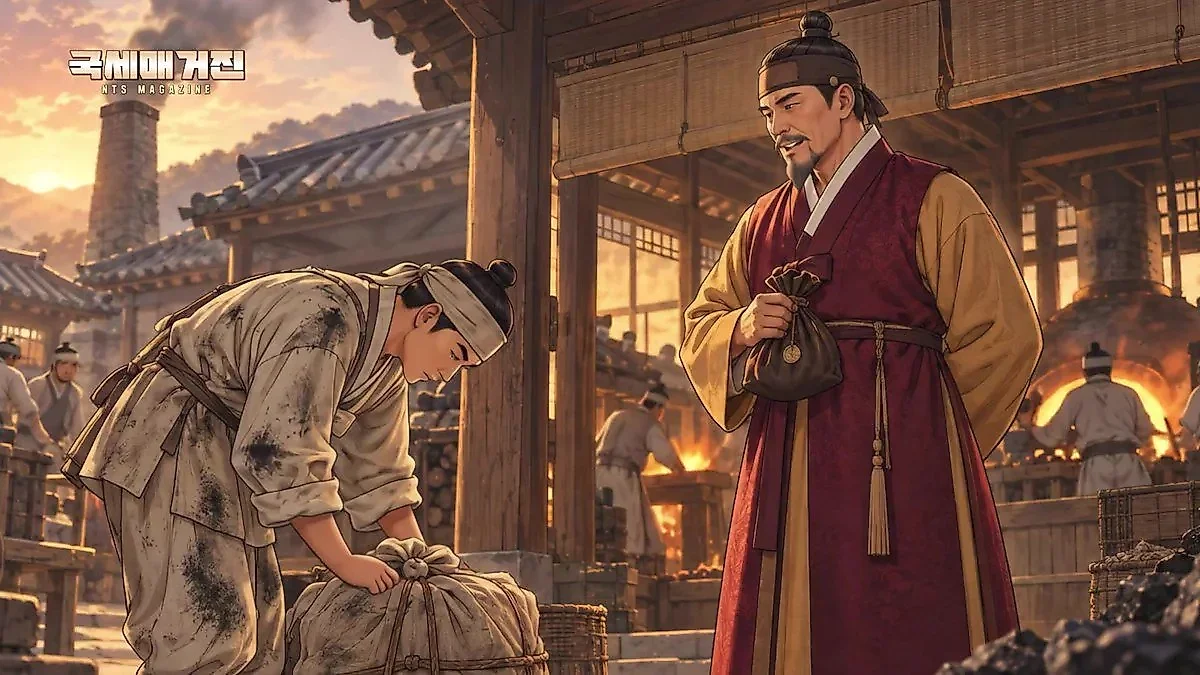
The introduction of the Uniform Land Tax Law transitioned Joseon tax payments to rice, cloth, or money, creating professional Gongin merchants to supply the state. This shift fueled the emergence of specialized handicraft villages like Geumchon and a new wage labor market by the late 17th century.
A fundamental change in the tax system of the Joseon dynasty gave birth to a new professional class and restructured the commercial ecosystem. The introduction of the Uniform Land Tax Law, which required taxes to be paid in rice, cloth, or money based on land area, went beyond simple tax reform to lead to the emergence of the "Gongin," a class of professional merchants dedicated to procuring goods for the state.
According to records provided by the National Tax Service, the tribute system was implemented during the early Joseon period, where specific goods from each region were presented to government offices. However, the burden increased as citizens had to prepare the goods themselves, and the corruption of "bangnap"—where third parties collected undue profits by paying tribute on behalf of others—emerged as a serious social problem. To resolve this, the Uniform Land Tax Law transitioned the tax payment method from a focus on specific goods to a focus on kind (rice, cloth, or money) based on land area.
Gongin, professional state suppliers, grow into protagonists of the market economy
As the method of tax payment changed, the way goods required by government offices were procured also changed completely. While goods were previously collected directly from regions, the structure shifted so that the state had to purchase necessary goods from the market. In this process, the "Gongin" became institutionally established as professionals who supplied necessary goods in exchange for payments called "gongga" from the state.
The Gongin were more than mere assistants to government office operations; they were professional merchants responsible for the state's demand for goods. They acted as distributors who purchased goods in large quantities from the market to supply to government offices, and also served as producers who directly manufactured and supplied goods. As their scope of activity expanded, the demand, production, and trade of goods surged, centered around Hanyang, and the circulation of currency and commodities became active.
As commercial profits grew, the status of the Gongin also changed. They grew into an economically valuable group to the extent that their business rights, known as "gongingwon," were traded. They evolved from simple suppliers into a professional merchant class pursuing profit.
Emergence of handicraft villages "Geumchon" and changes in the labor market
The activities of the Gongin led to the development of the private handicraft industry. As the Gongin purchased goods in large quantities from the market to procure state supplies, demand for daily necessities such as brassware, ironware, and ceramics exploded. Consequently, since the late 17th century, handicraft villages called "Geumchon" emerged across the country, specializing in the production of specific goods.
Representative examples include Sagijeom, which produced ceramics; Gyujeom, which made ironware; and Uijeom, which produced brassware. The emergence of these production centers brought significant changes to the production methods and labor structure of Joseon. In the early Joseon period, under the state-run handicraft system, government-employed artisans known as "gongjang" produced goods while receiving tax exemptions.
However, as time passed, the state-run system weakened, and market-centered "wage labor" became the mainstream. People who lost land or sought jobs due to social stratification in rural areas moved to cities or Geumchon, forming a new labor force. They were employed in various forms, such as daily laborers, monthly wage earners, and seasonal workers, and showed labor mobility by moving between various Geumchon in search of higher wages.
The change in the tax system created the professional merchants known as Gongin, and the demand they triggered led to the formation of nationwide handicraft villages and a wage labor market.
Source: original video (YouTube)

0Comments
Comments are currently disabled.