
Korean beauty brands seek localization to enter Brazil's beauty market
To succeed in the Brazilian beauty market, Korean cosmetic companies must move beyond product quality to implement detailed localization strategies, including adjusting product volumes, packaging, and textures to suit local skin tones and climates.

Ten Korean beauty companies participated in the Beauty Fair 2026 in Brazil, where local buyers suggested that increasing product volumes from 200ml to 220ml could provide a competitive advantage.
To cross the threshold of the Brazilian beauty market, "detailed localization" that penetrates the subtle habits of local consumers is essential, going beyond simple product quality. While the quality of Korean cosmetics is already recognized, analysis suggests that to lead to actual purchases, companies must reflect the specificities of the Brazilian market, such as volume configurations, packaging, and color makeup that matches local skin tones.
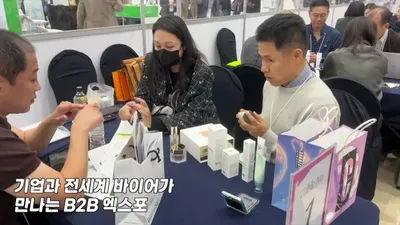
The "Beauty Fair 2026" site, reported by the KOTRA São Paulo Trade Office, gathered approximately 190,000 visitors and about 2,000 brands. With more than 92% of visitors consisting of industry professionals, this exhibition served as a business venue where practical distribution and transactions took place beyond simple viewing. This year, 10 Korean beauty companies participated in the KOTRA Korea Pavilion to conduct consultations with local buyers.
"220ml is more advantageous than 200ml"... Volume and ingredients determine purchasing decisions
While highly evaluating the competitiveness of Korean products, local buyers presented specific indicators that must be considered to lead to actual contracts. Brazilian buyers agreed that when purchasing Korean cosmetics, they most importance place on ingredients, quality, results, and price. In particular, there is a very high trend of interest in skincare products.
A notable point is the local preference regarding product "composition" and "volume." One local buyer advised that even for products typically sold as 200ml in Korea, slightly increasing the volume to 220ml to match Brazilian market trends could serve as a differentiated competitive advantage. This implies that a difference of just 20ml can be a strategic tool to establish a brand's presence in the local market.
Product packaging is also an important variable. A characteristic of this exhibition was the expansion of live commerce, packaging, perfume, and personal care sectors, suggesting that the Brazilian market is expanding in a direction that emphasizes not only the contents of a product but also how the product is presented and experienced—namely, the "sales method" and "visual experience."
The challenge of "texture localization" considering diverse skin tones and climate
A challenge as demanding as product quality is reflecting Brazil's demographic characteristics. Brazil has diverse climates and a very wide spectrum of skin tones due to its racial composition. An official from a participating company analyzed that "it is essential to implement the colors of color makeup that suit Brazil's diverse skin tones." Additionally, product texture and usability tailored to climatic characteristics were also cited as key elements of localization.
Understanding local culture and traditions must also precede entry into the local market. Because the Brazilian market coexists with diverse cultural backgrounds, Korean companies may face difficulties entering the market if they fail to accurately grasp the local situation. In fact, some companies operating locally spend about half of their time during the entry process on contract negotiations and registration procedures, highlighting the importance of administrative and cultural adaptation.
From certification and customs support to fraud prevention... Strengthening trade office practical support
The entry barrier to the Brazilian market is not low. To solve problems that are difficult for companies to identify independently, such as certification and customs issues or discovering local buyers, KOTRA is continuing practical support. The trade office is helping companies respond to local regulations by guiding them to local professional agents.
A security warning has also been issued regarding the transaction process. Recently, types of fraud have appeared involving the identity theft of famous importers or requests to change account information through email hacking. KOTRA emphasized that if a request to change an account is received via email, a procedure must be followed to verify it directly with the local headquarters through a telephone call or video call.
The KOTRA São Paulo Trade Office plans to closely monitor changes and local demand in the Brazilian beauty market to support Korean companies in entering the market with customized strategies.
Source: KOTRA TV (YouTube)


0Comments
Comments are currently disabled.