
AI-powered cheating threatens national exams; shift to university-led selection proposed
Professor Kim Jae-in of Kyung Hee University warns that AI-driven cheating is undermining the foundation of national professional and academic exams. He proposes that the College Scholastic Ability Test should serve as a basic qualification check, while individual universities should be granted the authority to select students through diverse evaluation methods.
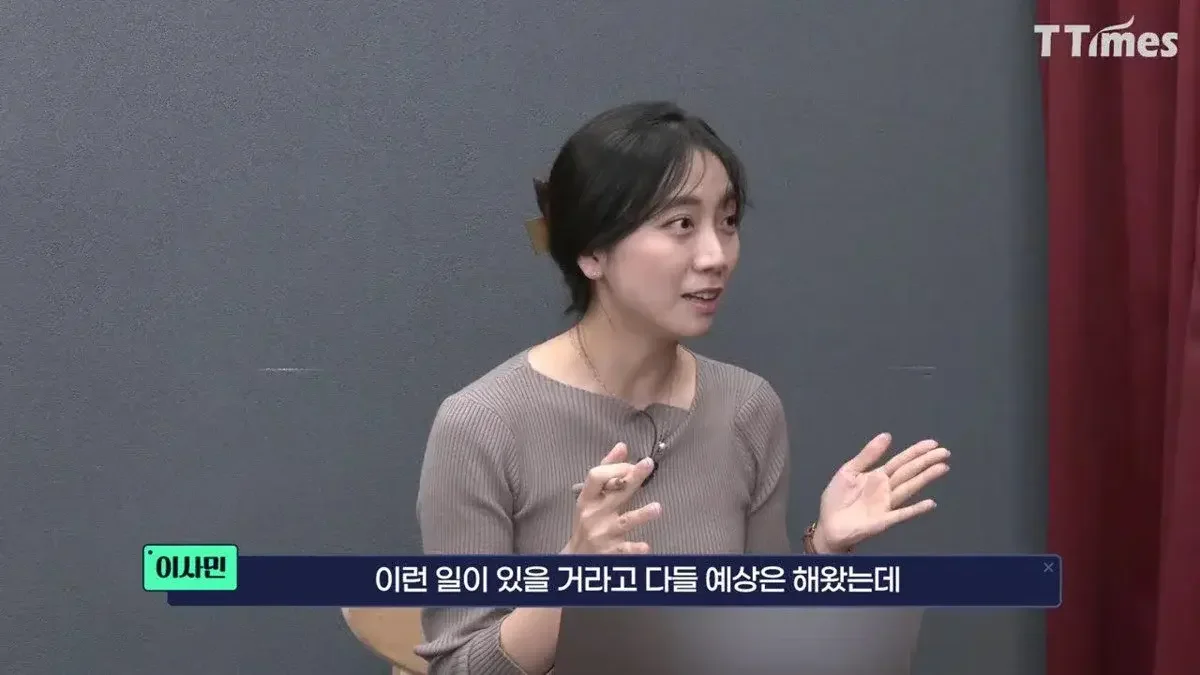
Cheating using AI technology is threatening national professional exams, such as the College Scholastic Ability Test and the Legal Education Eligibility Test (LEET), shaking the very foundations of the education sector. Critics point out that existing evaluation systems are becoming obsolete as technical interfaces, advanced AI, and loopholes in supervision converge.
According to an analysis by Kim Jae-in, a professor at Kyung Hee University, reported by T Times TV, recent AI cheating incidents are an inevitable result of technological readiness being complete while human perception has lagged behind. Professor Kim identified three requirements for such cheating to occur: technical interfaces such as cameras, displays, and earphones; AI capable of processing intermediate steps at the speed of light; and the supervision required to control them. "These three requirements were already in place," he diagnosed, noting that "technology was already ahead, but our perception simply failed to keep up." He further warned that the progress of technology is destroying the value of existing exams, suggesting that "a massive number of crimes must have occurred under the surface" beyond the cases that have been caught.
"CSAT should be minimum qualification check... transfer selection authority to universities"
Regarding the question of how to evaluate students in an era where AI can instantly find correct answers, Professor Kim divided the purpose of testing into two categories: 'formative assessment,' which fosters student growth, and 'summative assessment,' which measures ability. He analyzed that the current selection-oriented exams fall under summative assessment, and specifically noted that the 'relative evaluation' method—which ranks students within a limited number of slots—is most vulnerable in the AI era. The problem with relative evaluation is that it ranks individuals within a fixed number of selections, which can lead to irrational results even when the difference in ability between those selected is minimal.
Professor Kim offered a radical proposal for the university admissions system: transitioning the College Scholastic Ability Test to an 'absolute evaluation' system to verify a certain level of academic ability, and transferring the authority for specific student selection to individual universities. He explained that this is not a regression to the era of former university-administered entrance exams, but rather a transition to a "future-oriented model" similar to the American education model, where each educational institution directly defines and selects the talent it requires. "Universities becoming the primary agents of selection and holding that authority is not a return to the past, but the path to the future," he explained.
He further explained, "It is possible to gather students who pass a certain standard (e.g., 80 points) through the College Scholastic Ability Test, and then have universities select students through essays or oral interviews according to their own criteria." His logic is that if universities hold the authority of selection, they will have the discretion to select talent suited to their specific characteristics, much like how corporations recruit talent based on specific competencies. He added that only when universities hold selection authority will diverse evaluation methods, such as essays and oral interviews, become practically feasible.
Interview scenes with AI glasses appearing; it is a problem of 'management' rather than 'technology'
While essays and interviews are mentioned as alternatives to current evaluation methods, they are not immune to the infiltration of AI. Although Professor Kim initially expected that essays and interviews could block AI intervention to some extent in the field, he expressed concern over recent technological variables. In particular, cases where individuals attend interviews wearing AI glasses and receive high evaluations by reading answers displayed on the screen inside the glasses are factors that seriously undermine the credibility of existing interviews.
He emphasized that "preventing the act of wearing AI glasses or lenses itself is a matter of management," stressing that a thorough supervision system capable of detecting and controlling cheating must be implemented alongside technical blockades. While AI intervention is relatively difficult in the case of essays due to the physical constraints of writing answers on-site and tight time limits, interviews face a high risk of exposure to AI technology that induces real-time answers. This is because AI technology can exploit the characteristic of interviews where an interviewee must provide an immediate response without delay when an interviewer asks a question.
Ultimately, the paradigm of evaluation in the AI era must shift from asking 'what one knows' to how to verify the unique human thinking abilities that AI cannot replace. While Professor Kim expressed difficulty in agreeing with the portfolio method due to the possibility of training being provided by private academies, he suggested that the only breakthrough is for universities to proactively build systems that deeply understand students by combining various verified forms of evaluation, such as essays, oral exams, and projects.
Source: original video (YouTube)



0Comments
Comments are currently disabled.