
Bank of Korea launches Project Hangang to test digital currency systems
The Bank of Korea has initiated 'Project Hangang,' a financial experiment combining deposit tokens issued by commercial banks with institutional digital currency issued by the central bank to innovate payment systems.
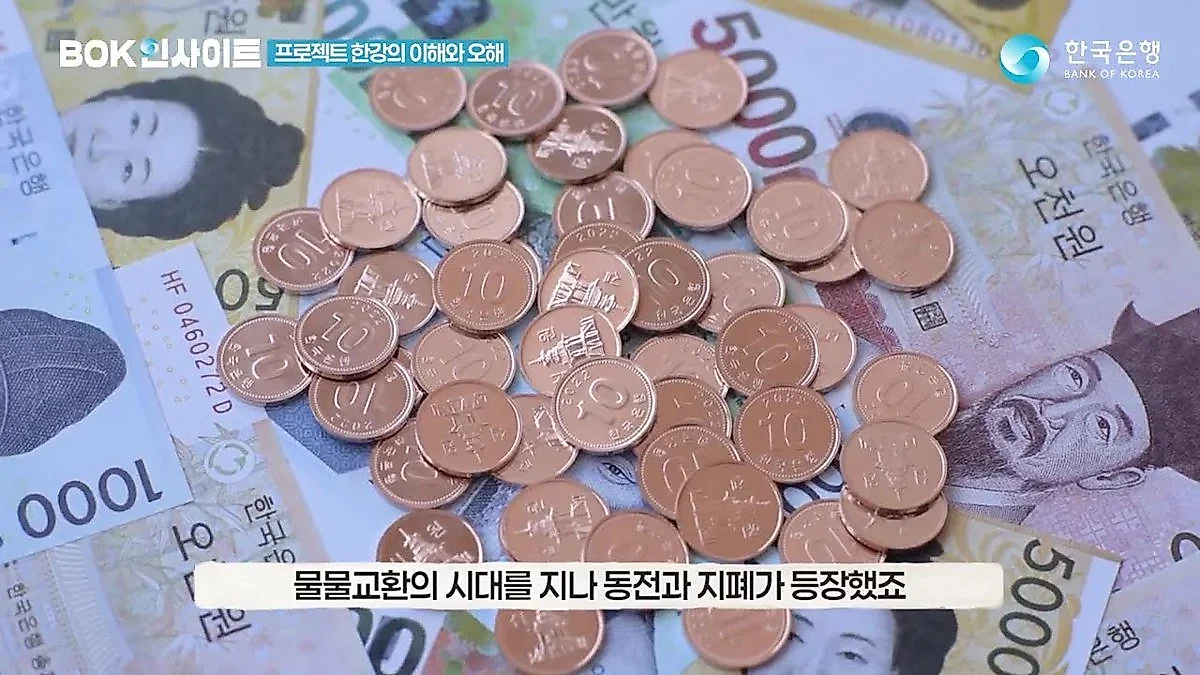
The Bank of Korea has introduced Project Hangang to test deposit tokens and institutional digital currency, aiming to verify if new technologies can process financial transactions more safely and efficiently than current systems. The project utilizes deposit tokens for user purchases while using institutional digital currency for bank settlements, such as enabling immediate automatic payments for culture vouchers.
With the arrival of the digital finance era, the form and usage of money are changing rapidly. In an environment where all payments can be made with a single smartphone, the Bank of Korea has embarked on a new financial experiment by promoting 'Project Hangang' to preemptively build future monetary infrastructure.
Project Hangang, as presented by the Bank of Korea, is a project that tests new payment methods by combining "deposit tokens" issued by commercial banks with "institutional digital currency" issued by the Bank of Korea. Deposit tokens are digital token versions of deposits held by users in banks, which can be used to purchase goods or services. In contrast, institutional digital currency is issued by the Bank of Korea for the settlement of funds between banks rather than for general users. In this structure, users use deposit tokens, while the complex movement of funds between banks is handled by the institutional digital currency.
Why a new experiment is needed despite already convenient payment systems
South Korea's financial payment services already possess a world-class level of convenience. Nevertheless, the reason the Bank of Korea is experimenting with new technology is that the visible payment process for users differs from the underlying financial system's processing procedures. Banks undergo complex procedures to verify the vast transaction details that occur daily and to settle the funds they must exchange with one another.
The purpose of Project Hangang is to maintain the advantages of the existing financial system while verifying whether new technologies can process financial transactions more safely and efficiently. Major central banks, including the BIS, as well as the ECB and BoE, are also actively conducting research on digital currencies. Since the financial system is not an area that can be changed immediately just because a technology has emerged, the intention is to sufficiently verify safety and versatility before full-scale changes take place.
Clarification on concerns regarding "disappearing cash and privacy exposure"
Whenever discussions regarding the introduction of new digital currencies arise, two major concerns are raised: the end of cash usage and privacy infringement due to the exposure of individual transaction history.
The Bank of Korea clarified that Project Hangang is not a project intended to eliminate or replace cash. Separate from digital technology research, the Bank of Korea plans to continue issuing and supplying cash, and intends to protect the "right to use cash" so that citizens can use it whenever necessary.
The Bank of Korea also drew a clear line regarding privacy issues. Even under the Project Hangang system, the roles of commercial banks and the Bank of Korea are strictly divided. Even if a user uses a deposit token from Bank A, their identity information is stored only with that specific bank. The structure ensures that the Bank of Korea or other banks cannot know who sent money to whom. The Bank explained that the same privacy protection standards and technical and legal safeguards currently in place will be applied to block unauthorized access.
Practical applications of deposit tokens, such as automatic settlement for culture vouchers
If deposit tokens are introduced, changes that can be felt in real life will emerge. A representative example is the "conditional automatic payment" function. It can be set so that funds are automatically paid out when specific conditions are met, maximizing the efficiency of the settlement process.
For example, when using government-issued culture vouchers, the current process involves several stages of settlement through card companies and banks, taking several days for the payment to reach an exhibition venue after a user purchases an admission ticket. However, by utilizing deposit tokens, the system automatically verifies at the moment the user purchases the ticket with the voucher whether the payment meets the purpose of "cultural life." If the conditions are met, the payment is immediately transferred to the exhibition venue. This reduces intermediary steps, lowering fee burdens and preventing settlement errors.
Furthermore, the Bank of Korea is participating in 'Project Agorá' alongside the BIS and major central banks to apply this technology to cross-border fund transactions. This international cooperation seeks to use the principles of deposit tokens and institutional digital currency to resolve the temporal and cost limitations of cross-border remittances caused by differing financial systems and regulations in each country.
Source: original video (YouTube)


0Comments
Comments are currently disabled.