
Driven by insult in Germany, researcher overcomes 21 years of failure to localize nuclear fuel cladding
Dr. Jeong Yong-hwan overcame professional insults and a massive patent battle with Areva to lead the localization of nuclear fuel cladding, a critical component for South Korea's nuclear power plants.
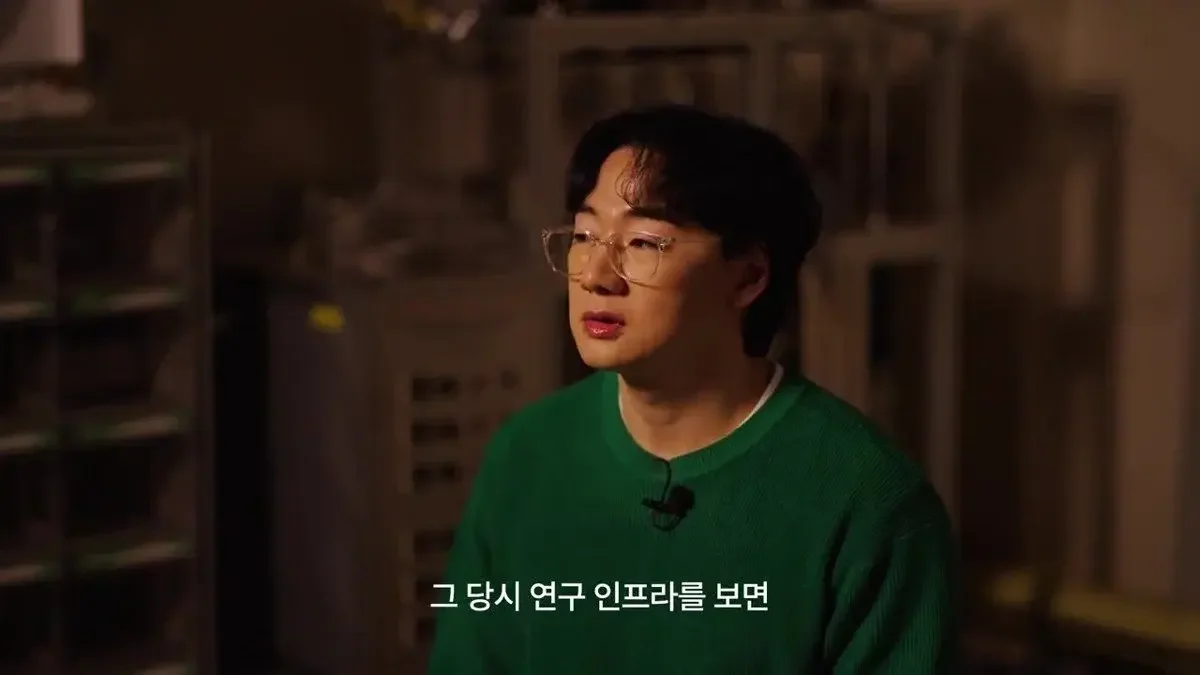
In the early 1990s, while South Korea's nuclear power plants were operational, they relied entirely on imports for nuclear fuel cladding, a core component. At the time, South Korea's technological level was comparable to that of an elementary school student when compared to advanced nations. The determination of a researcher, who had to endure insults in a German laboratory—being told to "just do basic research and go back since you are from Korea"—led to the independence of South Korea's nuclear technology.
A video released by the Ministry of Science and ICT captures the 21-year research journey of Dr. Jeong Yong-hwan, the key figure in the localization of nuclear fuel cladding. Nuclear fuel cladding is a critical material that acts as a "primary protective suit," wrapping uranium within a reactor to safely induce nuclear reactions and prevent exposure to radioactive materials. It is a field requiring precision technology for components reaching 0.6mm in thickness and 4m in length.
The answer found through 700 alloys and 20,000 pieces of failure data
After being rejected for participation in a local project while studying in Germany in 1991, Dr. Jeong Yong-hwan vowed to develop the cladding with his own hands to use in nuclear power plants. The new material development project, which began upon his return to Korea in 1993, was not smooth. He was hindered by a lack of budget and a poor environment lacking even laboratories and equipment, as well as negative views from those around him who questioned how he could succeed at something that even foreigners fail at for 10 to 20 years.
To avoid drawing attention from other laboratories, the research team continued conducting nighttime experiments. Dr. Jeong was so immersed in his research that he could barely go home for six months. The research process was a continuous series of failures. There were moments when performance improved incrementally only to hit a limit where it could no longer advance. To achieve the goal of surpassing U.S. levels, Dr. Jeong experienced psychological pressure so intense that he considered changing his profession.
Ultimately, Dr. Jeong designed 700 new types of alloys, creating a total of 20,000 test specimens in the process. The 20,000 pieces of data discarded over the long 14-year period were not merely records of failure. Dr. Jeong stated, "I found the answer again from the 20,000 pieces of discarded data," revealing that the failed data eventually became an essential milestone for success.
Patent war against giant capital, a victory achieved in a hotel hallway
An unexpected crisis arrived following the successful technology development. Areva, the world's largest nuclear power company based in France, filed a lawsuit to invalidate the patent held by Dr. Jeong's team. The research team felt significant pressure from the persistent attacks by Areva, which utilized massive capital and a powerful patent team.
At the time, the research team lacked even the budget to hire a lawyer. Because the room rental fee for a preliminary meeting with European representatives amounted to 1,500 euros (approximately several million won), which was equivalent to their entire business trip expense, they eventually had to hold the meeting in a hotel hallway. The outcome of the international patent litigation, which lasted seven and a half years, hinged on the "20,000 pieces of data" accumulated by Dr. Jeong. Based on this vast amount of data, Dr. Jeong persuaded the judge, eventually winning the case and escaping technological colonialism.
Recalling the tension of the trial day, Dr. Jeong remarked that he felt "like he was flying in the sky" upon hearing the news of the victory. This successful localization went beyond merely creating a single component; it established a foundation to resolve technical constraints and the burden of technology fees resulting from overseas technological dependence in the future.
Dr. Jeong left a message for junior researchers, stating, "Most research is a series of failures, but failed data is a necessary answer for the next study." He concluded his research journey by telling his self from 20 years ago, "You made the right choice; you are doing well now."
Source: original video (YouTube)
0Comments
Comments are currently disabled.