
Leaders must master AI to drive organizational transformation, says CEO
Team J-Curve CEO Jang Hyeon-min explains that true AI Transformation (AX) requires leaders to redesign workflows and move beyond individual productivity to organizational-level agent ecosystems.
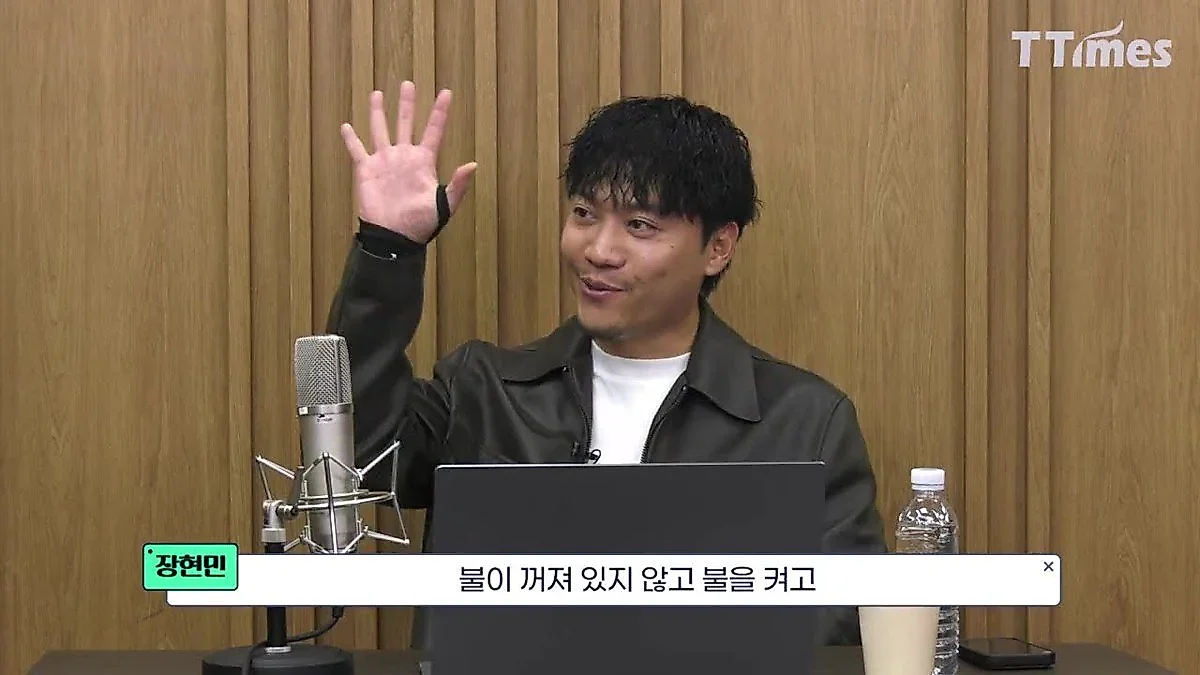
Team J-Curve CEO Jang Hyeon-min warned that AI adoption often fails to improve corporate structure because leaders lack the capabilities to redesign workflows. He noted that while individual productivity may rise, true transformation requires leaders to move beyond simple search-level use to building agent ecosystems.
While companies are rushing to adopt artificial intelligence (AI), a "bottleneck" is occurring where the AI capabilities of individual members do not translate into organizational performance. The diagnosis is that while individual employee productivity may increase, it remains fragmented and fails to lead to fundamental improvements in corporate structure or innovation in business processes.
According to an interview with Team J-Curve CEO Jang Hyeon-min reported by T Times TV, this phenomenon currently experienced by many companies stems from differences in AI utilization levels and a lack of leadership. Jang categorized organizational AI utilization into three stages, emphasizing that leaders must possess high-level capabilities to drive organizational change.
From Search-Level to Agent Sharing: Three Stages of AI Utilization
Jang defined AI utilization capabilities into three levels. The first stage is the "capture level," where Large Language Models (LLMs) are used simply like a search engine to find restaurants or summarize and translate information. The second stage involves using tools like code interpreters or Codex to delegate parts of one's work to AI or to directly create automation tools, a realm that requires individual will and interest.
The highest stage, the third level, goes beyond individual use to enable organizational expansion. "For an agent to work well, you must give the AI 'hands and feet.' To do this, efforts are needed to understand concepts like MCP (Model Context Protocol), share environments with team members, and build an agent ecosystem," Jang explained. He analyzed that these third-stage capabilities primarily appear in leaders who hold positions capable of changing organizational structures.
In the field, "different dreams" scenarios—where the capabilities of leaders and practitioners diverge—are frequent. This occurs when practitioners handle AI proficiently but leaders fail to accept it, or conversely, when leaders are ignorant of AI while only practitioners utilize it. "What is beneficial to an organization is not a leader who cannot use AI, nor is it an organization that simply has practitioners who use AI well; it is an organization with a leader who handles AI well," Jang said, adding, "This is because leaders possess the authority to change decision-making and workflows, which is a dimension of time that practitioners cannot hold."
Reducing Report Cycles from One Week to One Day: Leaders Redesigning Work Processes
When leaders use AI to change work structures, organizational speed increases dramatically. Jang provided a real-world example of the changes that occur when a leader redesigns work methods through AI. In one case, an organization that previously took a week to submit a result report after a project ended saw its reporting cycle shortened to the following morning after the leader instructed, "Write the report in HTML format and use Claude code."
In this process, the leader's role goes beyond simply using tools to becoming "the person who turns on the light." "Because practitioners lack work experience, they find it difficult to design the workflow itself—deciding what to delegate to AI and what to do themselves," Jang emphasized. "Leaders must reveal the reality of the work and clearly distinguish between tasks to be delegated to AI and tasks to be augmented."
However, there is a caution. If AI is introduced before work processes are established, a side effect may occur where the vast amount of output generated by AI actually increases the workload for the leader. "If AI is used without a sufficient understanding of the work, a situation arises where instead of a 10-page report, 30 pages of reports pour out, causing fatigue," Jang added, noting that the sharing and learning of work processes must come first.
The Essence of AX is Process Innovation (PI), Not Just AI Adoption
Ultimately, the core of AX (AI Transformation) is not the mere introduction of AI as a tool, but the fundamental redefinition of existing ways of working. Jang mentioned the concept of "AXPI (AI Transformation + Process Innovation)" emphasized by Samsung Electronics, explaining that existing processes must be innovated during the process of creating AI-driven members and matching the environment.
Recently, some challenging leaders have been conducting AI-centered productivity experiments by envisioning "5:5 organizations" (organizations composed of 5 agents and 5 humans). Jang advised that for such innovative attempts to be possible, "hands-on" experience of directly handling AI agents is essential for leaders themselves.
Rather than dismissing AI by saying, "AI can only do this much," one must reach a level of contemplating, "Why does our team's workflow not fit with AI?" Jang concluded, "Defining work itself requires much labor, but defining it and creating an environment where it can be delegated to AI is the true beginning of AX."
Source: original video (YouTube)

0Comments
Comments are currently disabled.