
Monthly Design editor-in-chief emphasizes questioning over answers in AI era
Choi Myeong-hwan, Editor-in-Chief of Monthly Design, discusses how the publication maintains its relevance through flexibility and a focus on the investigative process. He argues that as AI makes visual production easier, the value of design will shift toward human storytelling and problem-solving planning.
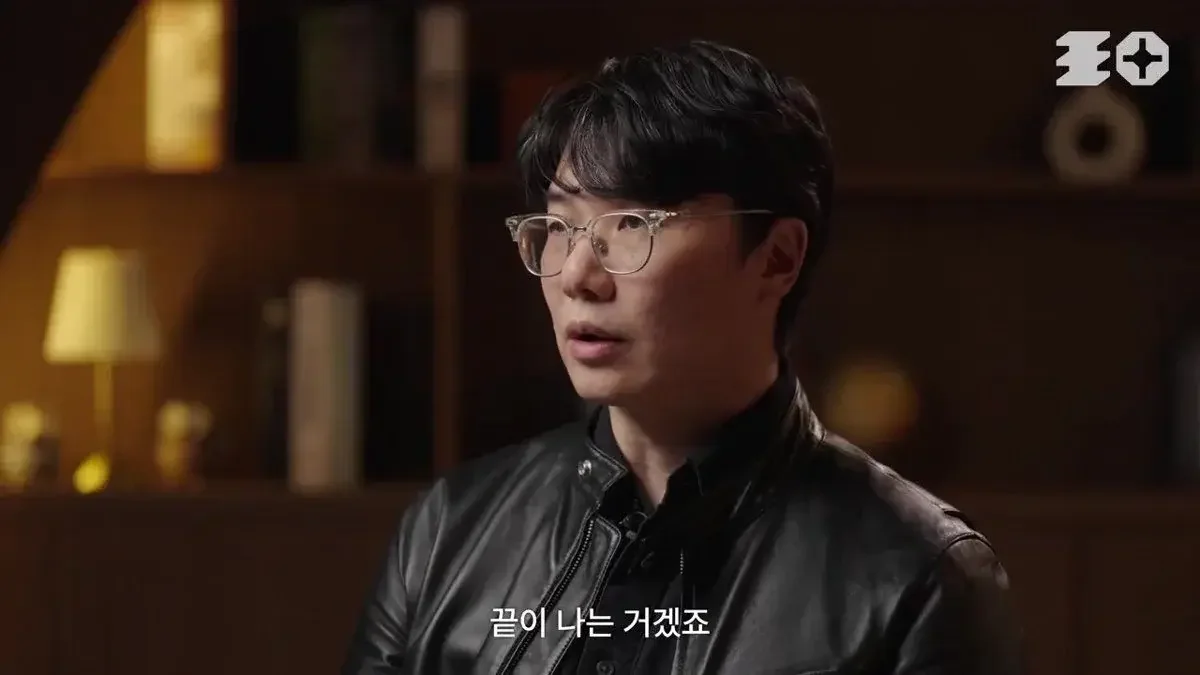
Choi Myeong-hwan, Editor-in-Chief of Monthly Design, believes design value will increase through human contemplation as AI makes image generation easier. To foster this, he allocates two months for special features, intentionally designating one month as a period for failing to test hypotheses.
Not every failure necessarily leads to learning. What is more important than the failure itself is the intensity of the process used to confront it. Choi Myeong-hwan, Editor-in-Chief of Monthly Design—which has served as South Korea's only comprehensive design specialist magazine since its founding in 1976—emphasizes this point.
An interview conducted by EO Korea captures Choi's philosophy on how a magazine medium can prove its reason for existence in an AI era overflowing with correct answers, and how it has flexibly survived by adapting to changing times. He cites "flexibility" as the secret to Monthly Design's survival amidst the rise and fall of numerous design specialist publications. As the scope of design expands, the key to survival was naturally incorporating those new domains into the medium.
"One month is time for failure"... intentional delays for hypothesis testing
Choi states that a magazine cannot be created if one only pursues high probabilities in perfectly prepared circumstances. He allocates two months to his reporters for a single special feature. The unique aspect is that he intentionally designates one of those months as a "month for failing."
This month is a period for verifying whether established hypotheses are correct by directly engaging with and investigating the field. If it is determined that a hypothesis is wrong, Choi instructs his team to choose a second option without hesitation. This is because it is essential to go beyond abstract thoughts and delve deeply into whether phenomena can be interpreted from a design perspective. "Not all failures result in learning," he explained. "Learning does not exist within the failure itself, but rather in the intense process of contemplation." His philosophy is that the role of a magazine maker ends the moment they begin to fear failure.
This attitude is also reflected in the business methods of Design House. Rather than conducting business that is perfectly planned and projected to succeed, they adopt a method of attempting the business first and then making it work. He believes a magazine is closer to a medium that asks questions rather than one that provides correct answers. While someone may provide a right or wrong answer to the questions they pose, he views the process itself as meaningful.
"Doing one's best to fix mistakes is the driving force to move forward"
Choi added a confession that he has never made a perfect magazine. Although he does his best every time, he feels a sense of shame and inadequacy whenever he sees the final results released to the world. He told his reporters, half-jokingly and half-seriously, "I will retire when I have made a perfect magazine a thousand times," reflecting his constant sense of insufficiency. However, he noted that this shame serves as the driving force to work even harder on the next issue. He explained that the charm of a magazine lies in the fact that "whether it turns out well or poorly, there is an end, and until it closes down, there is always a next one waiting."
He recalled that advice from the publisher regarding a recent major mistake resonated deeply with him. The advice was to do one's best to rectify a mistake, but that it does not matter even if the result does not completely compensate for the error. In the video, the publisher advised: "You must do your best to fix it to the extent that it satisfies your own heart. If you do that and the mistake is corrected, you will make another mistake next time, but then you can just do your best to fix that one too. That is how we move forward." Choi said he felt goosebumps from these words, even though they are phrases he hears every day.
In the AI era, the value of design lies in "storytelling" and "planning capability"
With the advancement of AI technology, an era has arrived where anyone can easily generate images. While Choi respects creators who quickly learn and express AI in their own language rather than ignoring the technology, he predicts that the value of design touched by the "human hand" will increase further. This is because when AI outputs suffer from a loss of value—similar to inflation—results containing human contemplation can deliver differentiated value.
He analyzed that design competitiveness lies not only in the final product but in the "process" that precedes it. Much like past instances where Monthly Design introduced designers' unfinished proposals, he believes it is important to show the numerous processes of contemplation and selection that went into a result, even if the client did not make the final selection. This is a uniquely human domain that data cannot convey, and it connects to storytelling, which is the core of design. He analyzed that the gaps data cannot fill can be derived when humans meet other humans, share stories, and observe and listen to actions.
He emphasized that future designers must go beyond the role of simply decorating visual results beautifully and must possess a "planner's perspective" to define problems and design the solution process. Just as discussions regarding problem-solving capabilities are active in Silicon Valley, designers are required to have the capability to design the process from the moment a problem is discovered. Since anyone can create something universally valid in this era, his analysis suggests that the key to survival will be the ability to contemplate what one can enjoy making and to gather people who empathize with that value.
Meanwhile, Design House will hold the exhibition "Just Creative!" at the Design House building from October 27 to November 25. In this exhibition, a total of 18 teams of designers and artists will present their own interpretations of "Just." Following this, from November 26, a poster exhibition featuring 50 graphic designers will be presented at the Seoul Design Festival held at COEX.
Source: EO Korea (YouTube)


0Comments
Comments are currently disabled.