
Bank of Korea Signals Further Rate Hikes... 'Small Tool' Strategy to Tackle 2,000 Trillion Won Household Debt and Inflation
The Bank of Korea is expected to continue its monetary tightening stance…
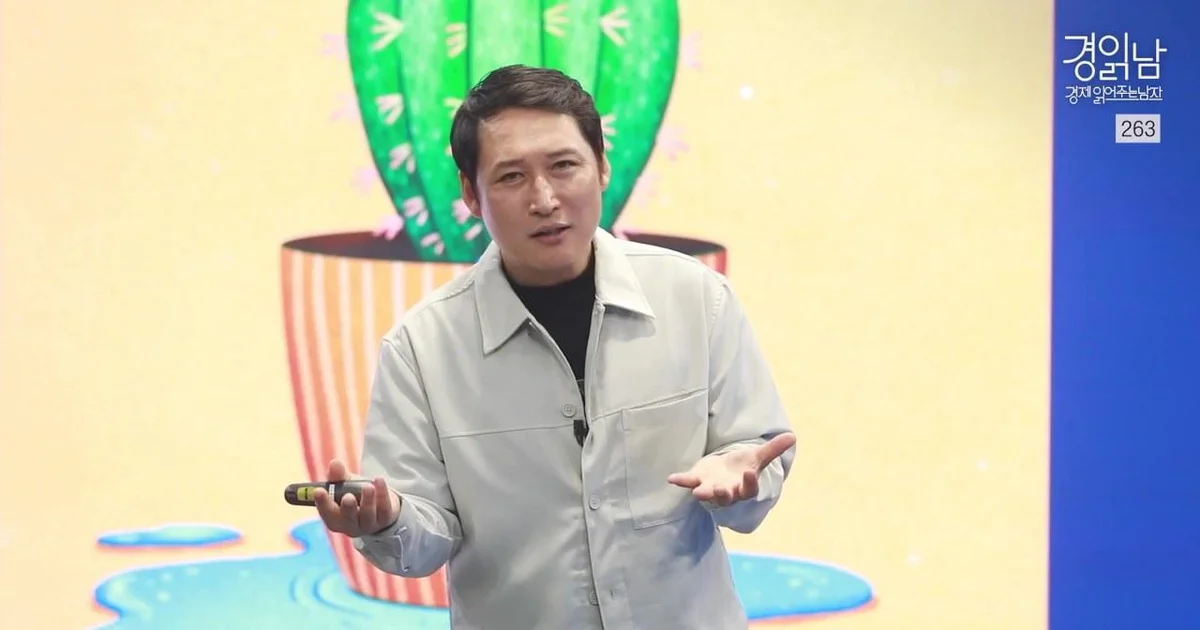
The Bank of Korea is expected to continue its monetary tightening stance, signaling the possibility of additional interest rate hikes. Having implemented two consecutive rate hikes recently, the Bank of Korea appears to have determined that preemptive responses are necessary to stabilize inflation and suppress household debt.
"We will not use a shovel to stop what can be stopped with a hoe"... Background of Preemptive Rate Hikes
According to a video from The Man Who Explains the Economy (Kim Kwang-seok TV), the Bank of Korea implemented consecutive base rate hikes in July and August of this year. This is a very unusual decision compared to its previous move of maintaining the base rate at 2.5% for about a year. Citing remarks from Bank of Korea Governor Hyun Song Shin, the presenter analyzed that the moves have a strong character of "insurance rate hikes," aiming to respond by raising rates in advance before the inflationary trend spreads. The intent behind Governor Hyun Song Shin's mention that "the inflation trend is spreading, and we must implement rate hikes first before it spreads" is interpreted as the will to take preemptive measures—"stopping with a hoe"—to prevent a situation where inflation becomes uncontrollable and must be "stopped with a shovel" later. Governor Hyun Song Shin also stated, "We will respond until we are confident that the inflation rate will steadily converge to the target level of 2%."
In fact, recent inflation indicators support the need for tightening. The video pointed out that the inflation rate has not settled at the 2% target level and is maintaining a level in the 3% range; specifically, it noted that the core inflation rate surged to 3.4% according to the results announced in early September for the August inflation rate. Furthermore, the import price inflation rate is showing a strong upward trend, at 9% in dollar terms and 18.7% in won terms. Considering the impact this will have on consumer prices with a lag of approximately three months, an analysis suggests that a prompt response for price stability is inevitable.
The Correlation Between 2,000 Trillion Won Household Debt and Real Estate Market Stabilization
In terms of financial stability, the issue of household debt, which has exceeded 2,000 trillion won, has emerged as a key variable. In a situation where the proportion of mortgage loans within the composition of household loans has been steadily increasing since 2020, interest rate hikes serve as a mechanism to suppress the steep increase in household loans. The presenter explained that while interest rate hikes increase the interest burden on individual borrowers, they ultimately have the effect of lowering dependence on additional loans and preventing the scale of household debt from increasing rapidly.
In particular, regarding the upward trend in the real estate market centered around Seoul, an analysis was presented that interest rate hikes could act in a direction that induces market stabilization by reducing the capacity for housing investment. The presenter evaluated, "It is not that rates are being raised to stabilize the real estate market, but rather that the effect of the rate hike influences the stabilization of the real estate market." Additionally, an inference was added that the current government's efforts to stabilize the real estate market and monetary policy could have a kind of policy coordination character. This includes the perspective that interest rate hikes can contribute to real estate market stabilization in terms of political sense or policy coordination.
Narrowing Korea-US Interest Rate Gap and Outlook for Exchange Rate Stabilization
Regarding external conditions, the change in the Korea-US base interest rate gap is acting as a major variable for exchange rate stability. The Bank of Korea's trend of raising interest rates has resulted in narrowing the interest rate gap with the United States, which had been maintaining relatively high rates, and this is becoming a factor that induces the stabilization of the KRW/USD exchange rate. The presenter cited this monetary policy stance as the basis for the existing forecast that the KRW/USD exchange rate will fall below the 1,300 won level by the end of 2026. Furthermore, it was explained that the phenomenon of narrowing interest rate gaps between the United States and Japan, and between the United States and the eurozone, could also be a factor that induces a fall in the KRW/USD exchange rate by lowering the dollar index.
However, an analysis also emerged suggesting that the appropriate exchange rate level viewed by the Bank of Korea is likely to be in the 1,200 won range rather than the current 1,300 won range. The fact that maintaining a higher level of interest rates than the current level may be advantageous for the exchange rate to show a more stable trend is expected to be a major factor determining the future direction of monetary policy. The Bank of Korea's future dot plot also remains in a state of leaving the possibility of additional hikes open, with the base rate staying in the range between 3.25% and 3.5%. Regarding this, the presenter explained the character of each country's monetary policy by using metaphors: Governor Hyun Song Shin has "hoe claws," Federal Reserve Chair Powell hides "hawk claws," and Federal Reserve Governor Kevin Austin hides "dove claws."


0Comments
Comments are currently disabled.