
"No stocks until you save 30 million won"... A 3-step asset management roadmap to prepare for the end of the year
An expert suggests establishing a "basics-first" asset management plan by correcting salary management habits and building a savings system before pursuing…
As the end of the year approaches, suggestions have emerged that one should correct disorganized salary management habits and establish asset management plans for the next year. It is pointed out that before grand investment strategies, "basics" such as accurately identifying one's own consumption patterns and building a savings system must come first.
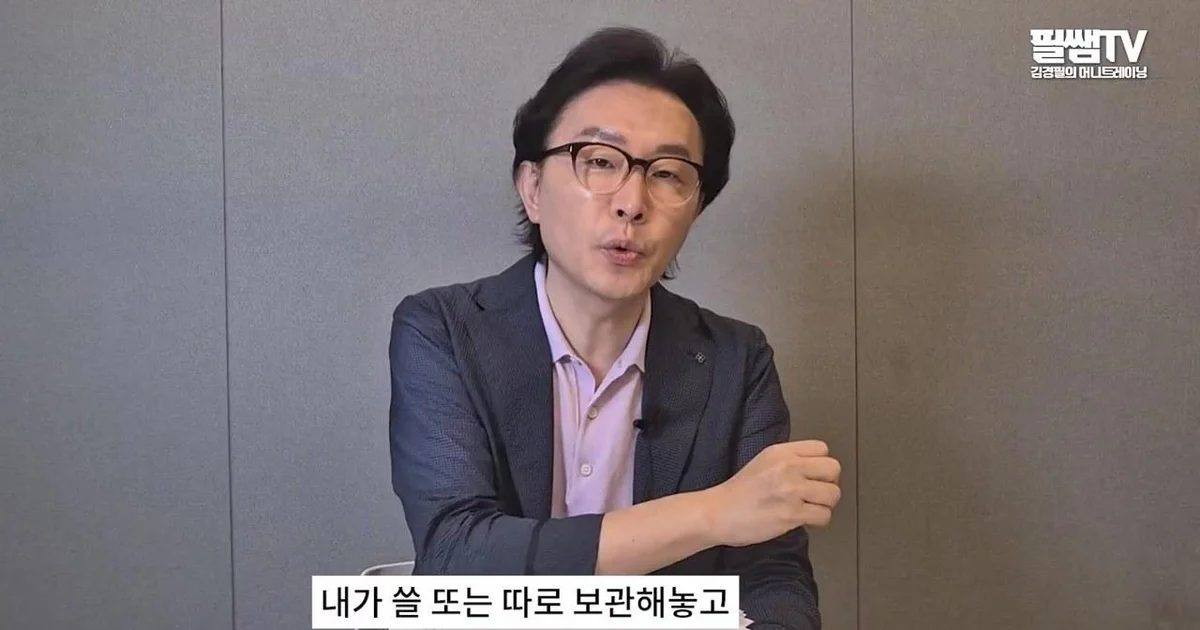
According to a video from Teacher Pil TV - Kim Gyeong-pil's Money Training, individuals facing the end of 2026 are advised to execute a three-step stepwise bank account inspection process from October to December. The core is to objectively reflect on one's own situation regardless of the scale of the monthly salary.
October: 'Stopping Leaking Money'... Identifying 4 Types of Consumption
The goal for October, the first step, is 'stopping leaking money.' The presenter suggested recording all consumption by dividing it into four types to identify where one's money is disappearing. The specific classifications are: ▲ 'Fixed costs' including monthly rent, communication fees, insurance premiums, subscription fees, etc. ▲ 'Shopping costs' which include unnecessary expenditures ▲ 'Leisure costs' including leisure, hobbies, dining out, travel, etc. ▲ and 'Impulse spending' that one regrets later.
In particular, the presenter pointed out, "People only remember spending large amounts of money and do not pay attention to small expenditures, but these are representative factors that quickly dry up bank accounts." To this end, he emphasized the need for a process of checking oneself by recording all consumption using card apps, household account book apps, or memo pads.
November: Building a 'Forced Savings System'... "Save First and Live on the Remaining Money"
In November, a 'forced savings system' must be created. The presenter said, "You must abandon the thought that you will save if there is money left," and ordered the creation of a 'save first, consume later' structure because there is a limit to saving after cutting back. In other words, the order must be changed to a 'earn-save-spend' process.
In this process, setting a 'consumption ceiling (budget)' is important. It is explained that in addition to fixed costs and culture/leisure costs, one should set their own consumption limits for detailed items such as OLIVE YOUNG expenditures or dining out costs. The presenter said, "It is easy to mistakenly think that money in a salary account is money that can be spent," and stated that a strategy of 'clearing the place where you intend to lie down' is needed to psychologically limit the scale of spendable money by having the savings amount deducted first.
December: 3-Month Settlement and Establishing 2027 Plans
In the final month of December, one must comprehensively settle the income, expenditures, and savings amounts from the past three months (October to December). The core is the process of finding out which among the consumption items are 'expenditures that do not greatly affect happiness even if reduced.' It means identifying expenditures that may provide momentary happiness but were not essential, such as habitual food delivery orders or subscription services paid for carelessly.
The presenter advised adjusting next year's budget in advance, saying, "You must not make the 2027 plan in 2027. You must make it in December 2026." He also explained that by going through this 3-step process, one will know their monthly consumption and savings amount accurately, an automatic savings system will be established, and one can identify what kind of consumption tendency they have.
Finally, the presenter mentioned the importance of investment attitude according to the scale of assets. The presenter advised, "Do not invest in stocks until you have saved 30 million won or 50 million won," and emphasized, "The probability of success in the stock market is different between investing with 5 million won of your entire fortune and investing 5 million won, which is 10% of 50 million won, after you have saved 50 million won."



0Comments
Comments are currently disabled.