
FVI Reaches Long-term Average... Concerns Over Insolvency of Marginal Firms Amid Interest Rate Hikes
The Bank of Korea reported that while the domestic financial system remains stable, the Financial Vulnerability Index (FVI) has reached its long-term average…
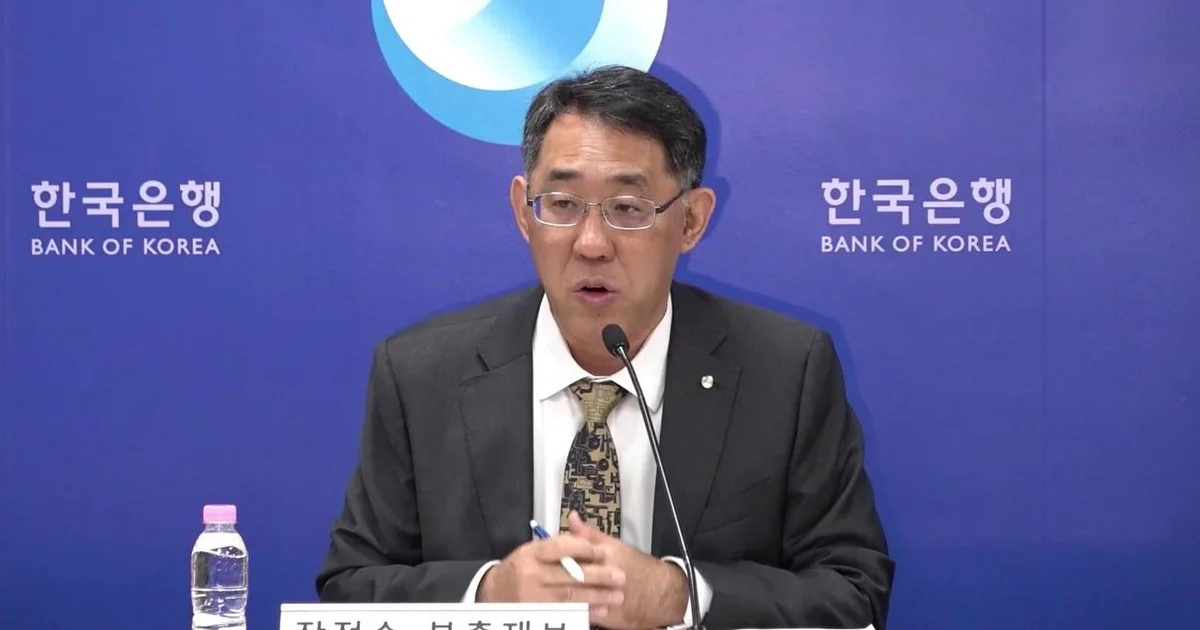
South Korea's financial system is maintaining a generally stable state based on good resilience and external solvency despite domestic and external uncertainties. However, caution is required regarding major risk factors such as the accumulation of financial imbalances, the possibility of insolvency in vulnerable sectors, increased volatility in financial and foreign exchange markets, and the growing burden of liquidity management for financial institutions.
On the 22nd, the Bank of Korea held a press briefing for the 'Financial Stability Situation, September 2026' to inspect the recent soundness and risk factors of the financial system. At the briefing, Deputy Governor Jang Jeong-su and Financial Stability Department Director Lim Gwang-gyu acted as presenters to diagnose the overall situation of the country's financial system and explain in detail the impact of recent interest rate hikes on the financial market and the risks in vulnerable sectors.
FVI Reaches Long-term Average... Upward Trend Expected to Continue
The most notable indicator at the briefing was the movement of the Financial Vulnerability Index (FVI). The FVI is a key indicator for judging the degree of medium-to-long-term accumulation of financial imbalances, and it has continued an upward trend for nine consecutive quarters after recording 37 in the first quarter of 2024. According to the Bank of Korea, as of the second quarter of 2026, the FVI recorded 46.5, reaching the long-term average level.
During the Q&A session, Lim Gwang-gyu, Director of the Financial Stability Department, stated, "While the third-quarter figure is not yet finalized, judging from the current point, it is estimated that the upward trend will continue in the third quarter." However, he added that recent consecutive base interest rate hikes through July and August, government real estate measures, and the reduction of leverage during the stock price adjustment process could act as factors somewhat constraining the rise of the FVI. He explained that the growth in household loans in August and real estate price trends are also intertwined with these constraining factors.
The Director also expressed caution by citing past cases. He explained, "Looking at past cases such as the Asian financial crisis, Korean credit card crisis, Global Financial Crisis, and the negative situations during COVID-19, the pattern showed that financial vulnerability accumulates, and when an external shock occurs, economic recession and financial instability appear, causing the FVI to decrease. We are being cautious as a recent upward trend is forming, increasing the upside risk of the FVI."
Meanwhile, regarding the Financial Stability Index (FSI), which indicates short-term financial instability, he explained, "Basically, when interest rates are raised, the FVI shows a downward trend after a time lag. However, when interest rates are raised, the FSI tends to rise in the short term as the burden of principal and interest repayment for vulnerable groups increases or financial market price variables are adjusted." He added, "We expect that if financial vulnerability improves through interest rate hikes, the FSI will eventually show improvement as well."
Aftermath of Interest Rate Hikes... Household Delinquency Rates Fall While Corporate Delinquency Rates Rise
Looking at the situation by sector, the trends for households and corporations are diverging. Household credit saw an expansion in its growth trend during the second and third quarters, but since July, the scale of household loan growth has shown a pattern of contraction. The household delinquency rate showed stability, falling slightly at a level below the long-term average.
On the other hand, while corporate credit continues a moderate upward trend, vulnerability appeared in terms of delinquency rates. Corporate delinquency rates rose, centered on non-banking sectors and small and medium-sized enterprise (SME) loans, and remain at a level higher than the long-term average. In particular, as interest rate hikes continue, the burden of principal and interest repayment for vulnerable borrowers and marginal firms is emerging as a risk.
Director Lim analyzed, "While interest rate hikes are expected to help mitigate the risk of accumulating financial imbalances, continuous monitoring is required for vulnerable sectors that are more heavily affected by rising interest rates." In the case of the household sector, he pointed out, "Although the proportion of total vulnerable borrowers has decreased compared to past interest rate hike periods, the delinquency rate of vulnerable borrowers carries a risk higher than the household average."
Checking Potential Risks in Non-banking Sectors and Insolvency Possibility of Marginal Firms
The asset soundness of financial institutions was good in the banking sector, but there were differences across sectors in the non-banking sector. Most non-banking sectors maintained a good level, but a decline in liquidity ratios was observed in some sectors. In particular, the Bank of Korea evaluated that securities firms need to re-examine their usual loss-absorption capacity in preparation for increasing financial market uncertainty. In addition, the need to inspect potential risks in non-banking sectors such as card companies and securities firms was mentioned.
The issue of marginal firms, cited as one of the risks in the corporate sector, was also discussed in depth. Regarding the proportion of vulnerable companies with an interest coverage ratio (the value of operating profit divided by interest expense) of less than 1, Lim explained, "It is difficult to conclude whether the current figure in 2026 is the highest ever. Quarterly seasonality must be considered, and compared to the first quarter of 2025, the proportion of vulnerable companies has not risen sharply."
The Bank of Korea predicted that future financial stability will be influenced by changes in global monetary policy, geopolitical risks, and the degree of income improvement by sector. Accordingly, it emphasized the need to operate monetary policy and macroprudential policy in a complementary manner, and to have economic coordination through financial and fiscal policies regarding the financial instability occurring during the interest rate hike process.


0Comments
Comments are currently disabled.