
HYUNDAI to Complete Battery-Dedicated 'Alpha Line' by 2027, Aiming for 20% Increase in Energy Density
HYUNDAI is strengthening its integrated capabilities in battery research, development…
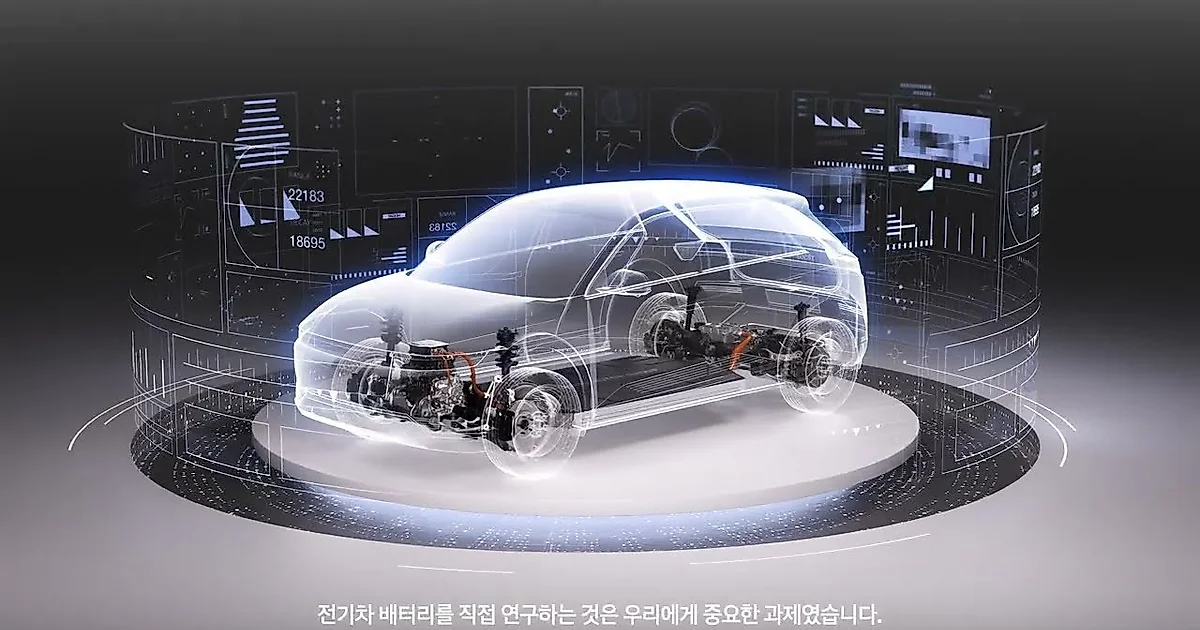
HYUNDAI is moving to strengthen its integrated capabilities spanning from research to development and production to secure battery technology, which is the core of electric vehicle (EV) competitiveness. The plan is to build a portfolio tailored to the characteristics of each vehicle, such as performance-oriented NCM (Nickel·Cobalt·Manganese) batteries and LFP (Lithium·Iron·Phosphate) batteries that emphasize economic efficiency, and to preoccupy the future mobility market through next-generation battery technology.
Battery Internalization and Laying the Foundation for Gigascale Production Technology in 2027
According to a HYUNDAI video, the group has been redefining the definition of electric vehicles by establishing a dedicated platform in 2021 after launching mass-produced electric vehicles in 2011. In particular, in 2023, the group has been pursuing the internalization of battery technology, such as bringing innovative battery technology in-house to conduct fully developed inside processes. This move is based on the judgment that just as the performance of internal combustion engine vehicles depends on high-quality engines, the competitiveness of electric vehicles depends on battery technology.
A specific roadmap to maximize future battery production capabilities was also presented. The video stated that the group plans to complete a dedicated 'Alpha line' by 2027 to support battery research and implement Gigascale production technology. Through this, the group aims to increase the energy density of next-generation batteries by more than 20%. Next-generation batteries are expected to be lighter, smarter, and more efficient than existing ones. Currently, the group's next-generation battery R&D lab is already producing these batteries on a small scale and is building the capability to enable mass production in the future.
Customized Battery Lineup by Vehicle and Diversification of Form Factors
Instead of applying the same battery to all vehicles, HYUNDAI takes a 'customized strategy' based on the use and purpose of the vehicle. The method is to apply high-performance NCM batteries when powerful output is required, and economical LFP batteries to models where efficiency is important. Additionally, the group plans to provide solutions optimized for vehicle design and purpose by developing various battery form factors, such as Pouch and Prismatic types.
This strategy is intended to allow electric vehicles to travel further and faster. The group presented a vision to create an environment that encompasses the entire process from research to development and production, to introduce safe and smart mobility vehicles that provide wider space, reliability, and always a high level of performance in the future. Technologies that were considered only for the future in the past are expected to become part of daily life through HYUNDAI's next-generation battery technology.
Establishment of Multi-Safety Systems Based on Thermal propagation Prevention and BMS
The field emphasized as much as battery performance is 'safety.' HYUNDAI is focusing on developing technology to block 'Thermal propagation,' a phenomenon where heat generated in a battery cell spreads to adjacent cells. This includes Emergency vent technology to relieve internal pressure and suppress flame emission, and fire-resistant structural designs to prevent Thermal propagation between cells.
Safety control at the system level is handled by the Battery Management System (BMS). The BMS monitors the state of the battery in real time based on accumulated expertise. According to the video, if an abnormality is detected in the battery state, the system immediately sends notifications to the remote support team and the driver. Furthermore, it is designed to be able to respond to safety accidents by including a function to directly notify the fire department if necessary. HYUNDAI plans to build a future mobility environment where people can move further, faster, and more safely through these battery technology innovations.


0Comments
Comments are currently disabled.