
"Without a single drop of water" Kim Kang-woo presents apple waterless boiled pork and walnut soybean paste
Actor Kim Kang-woo shared detailed cooking know-how and healthy recipes for his family, including waterless boiled pork and antioxidant juices, in a video released through the KBS WORLD TV content 'Fun-Staurant'.

Actor Kim Kang-woo personally composed a healthy diet for his family, showcasing detailed know-how in the cooking process. In a video released through the KBS WORLD TV content 'Fun-Staurant', Kim Kang-woo introduced various recipes, from juices considering antioxidant effects to boiled pork using a waterless cooking method.
Antioxidant juice and the principle of waterless boiled pork using apples
The first menu Kim Kang-woo introduced was an antioxidant drink called '10-year deletion juice'. In the video, Kim Kang-woo mentioned that the anthocyanin component in blueberries helps eye health and antioxidant action, and he combined bananas, low-fat milk, black sesame powder, sullytae powder, and oatmeal. In particular, he incorporated his personal health management methods into the recipe, such as adding sullytae powder for hair health. He showed himself sharing the finished juice half-and-half with his wife, accompanied by a bar consisting of 73% whole grains.
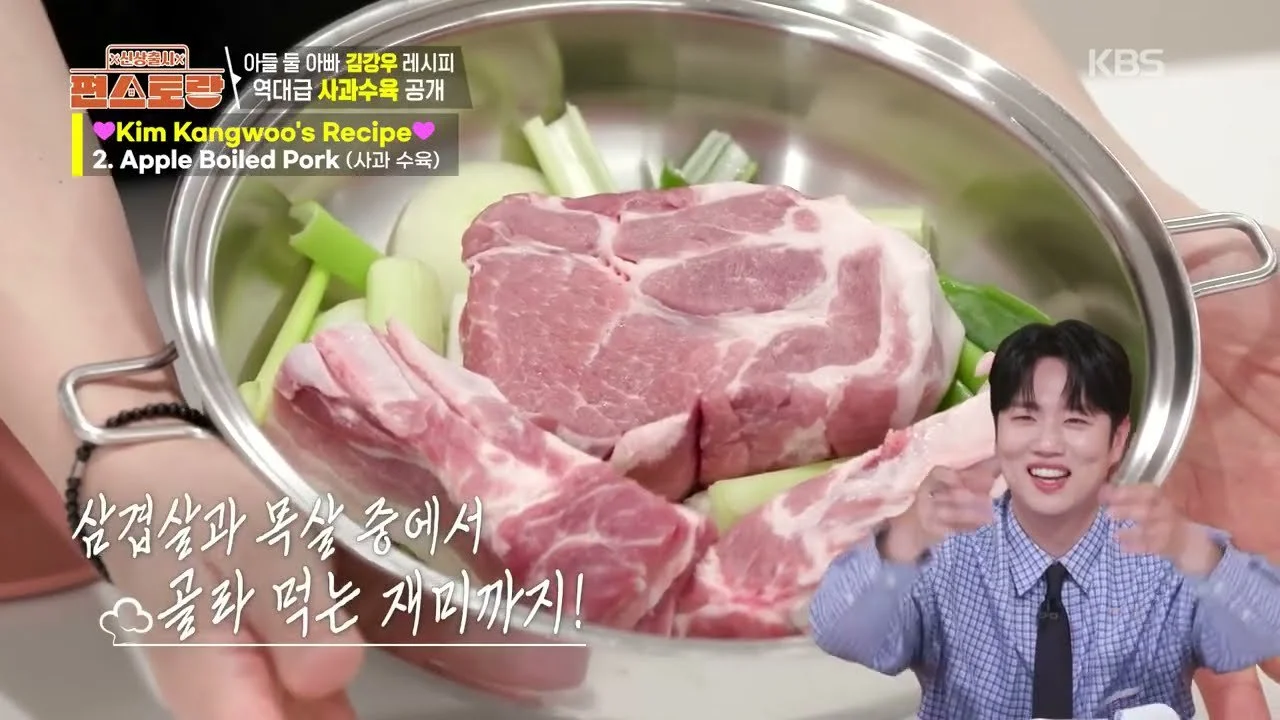
In the subsequent boiled pork cooking, 'apple' was used as a key ingredient. Kim Kang-woo laid onions and green onions at the bottom of the pot, placed 500g of pork belly on top, and then used a method of thinly slicing bruised apples and covering them over the meat. He explained, "The sweetness coming from the apple helps the tenderizing process and creates sweetness." In particular, he adopted a 'waterless cooking' method that uses no water at all, characterized by cooking the meat using only the juices released from the vegetables and apples to preserve the meat juices. After cooking for 45 minutes over medium-low heat and going through a 5-minute resting process, the completed boiled pork showed a moist texture.
Walnut soybean paste containing his wife's recipe and dishes using Doubanjiang
Kim Kang-woo presented 'walnut soybean paste' as a recipe considering his family's taste. This menu is a recipe his wife taught him, made by sautéing shredded carrots, onions, king oyster mushrooms, and zucchini in oil and then adding country-style soybean paste. Kim Kang-woo added walnuts for texture and went through a process of cooking until the ingredients were sufficiently cooked.
A menu using Doubanjiang followed. Kim Kang-woo made 'Doubanjiang cucumber tangtangyi' by using a zipper bag to smash cucumbers. He achieved a spicy and refreshing taste using a sauce made by mixing sugar, vinegar, soy sauce, and Doubanjiang, and enhanced the flavor by adding Cheongyang chili peppers at the end. This sauce was also used as the sauce for 'Doubanjiang bibim-myeon' with the same composition, showing connectivity between the menus.
Fried rice maximizing the flavor of garlic scapes and perilla oil makguksu
Finally, Kim Kang-woo cooked fried rice using pork neck and garlic scapes. He first sautéed the meat and then added oyster sauce and cooking wine to ensure the seasoning permeated the inside. In particular, to increase the perfection of the fried rice, he used instant rice to induce a fluffy texture and showed an efficient cooking process, such as washing the pan immediately while it was still hot. This menu, completed by mixing the previously braised garlic scapes and pork with rice, realized a Chinese restaurant-style visual.
To finish the meal, perilla oil makguksu appeared. Kim Kang-woo maximized the nuttiness by mixing perilla oil and sesame oil in a 4:1 ratio. He explained, "If you add sesame oil rather than using only perilla oil, the nutty taste rises significantly." He used tsuyu to add umami for seasoning, and also suggested a specific alternative method that if tsuyu is unavailable, soy sauce and tuna liquid can be mixed in a 1:1 ratio and used.

0Comments
Comments are currently disabled.