
Food Master Song In-saeng preserves 120-year red ginseng tradition
Republic of Korea Food Master Song In-saeng continues a 120-year family tradition of producing red ginseng in Jinan, Jeonbuk, using ancestral steaming methods.
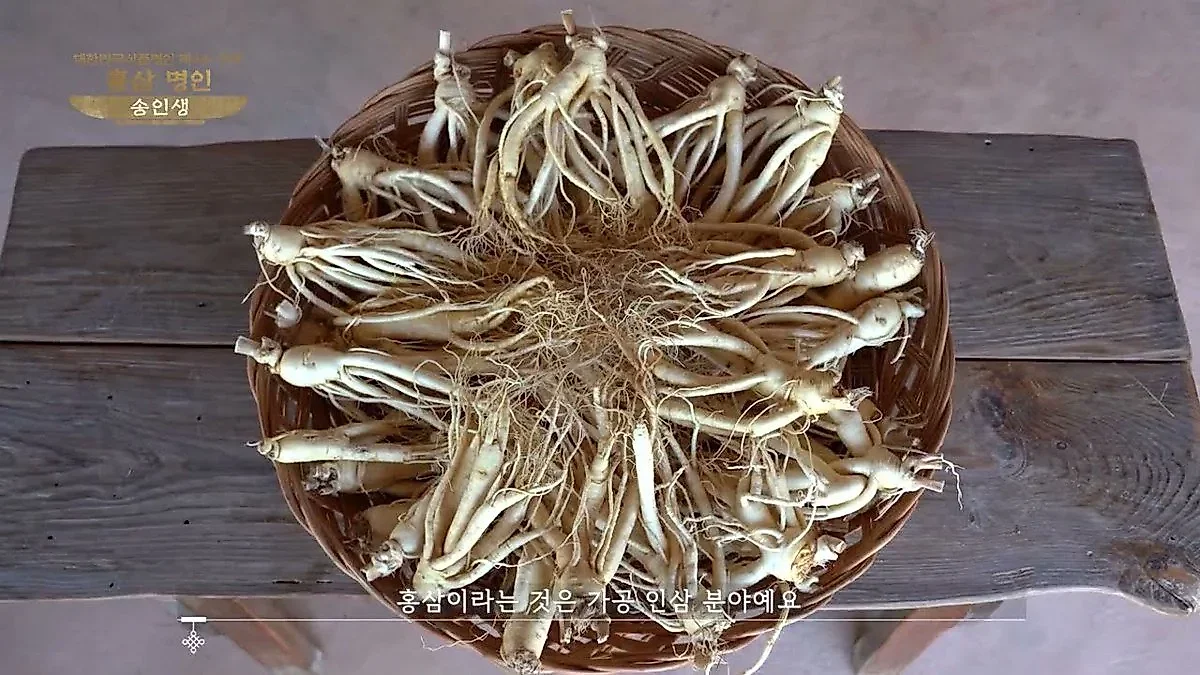
Republic of Korea Food Master Song In-saeng is maintaining a four-generation red ginseng manufacturing process in Jinan, Jeonbuk, that began with his great-grandfather 120 years ago. The traditional method involves steaming ginseng on pine needles and using precise temperature control to develop the product's signature red glow.
In the ginseng fields of Jinan, Jeonbuk, rows of black plastic covers stretch along the roadsides. Located where the Sobaek Mountains and Noryeong Mountains intersect amidst high-altitude areas like Deogyusan Mountain, this region possesses the optimal soil and climate for ginseng growth and once boasted the largest ginseng cultivation area in Korea. According to records provided by the Korea Agro-Fisheries & Food Trade Corporation, Republic of Korea Food Master Song In-saeng is continuing a red ginseng manufacturing process that has maintained the fire of the steaming furnace lit by his great-grandfather over 120 years ago, spanning four generations.
From removing impurities between the head to steaming on pine needles
Republic of Korea Food Master (No. 44-Ga) Song In-saeng defines red ginseng as processed ginseng that has been turned red by steaming or heat-treating fresh ginseng and then drying it. According to the master, ginseng grows in places with four distinct seasons, undergoing nutritional growth in spring and summer before storing nutrients in the roots during autumn. In particular, ginseng with well-developed lateral roots is said to have richer nutritional content.
The first step in red ginseng production is washing the fresh ginseng. Song emphasizes the importance of cleaning the head (noe-du) during the washing process. The head contains "growth scars" (gyeong-heun) that form like steps as the plant grows over a year, and it is crucial to meticulously clean these crevices. Additionally, sand or small pebbles caught between the main root and the lateral roots must be removed. To avoid damaging the ginseng, the technique involves washing it under running water rather than soaking it, using a stiff brush to brush out impurities between the head and the lateral roots.
Once washed, the ginseng is placed in a steamer to be steamed. The master explains two reasons for lining the bottom of the steamer with pine needles: the active ingredients of the pine needles seep into the ginseng, and the needles help distribute the steam inside the vessel evenly so the ginseng cooks uniformly. The steam gathers at the knob of the lid and falls back onto the ginseng, a traditional steaming method designed to prevent the medicinal properties from escaping.
Repeating boiling water and cooling water to complete the red glow through patience
The steaming process requires precise temperature control. To regulate the boiling steam, a process of repeatedly replacing cooling water and boiling water is performed. Once the sharp scent of ginseng transforms into a deep, savory aroma, the fire is extinguished, and the ginseng is left to mature through steaming for 30 minutes. A point of caution is that if the lid is opened while the internal temperature of the object remains high, the ginseng may tear; therefore, the steamed ginseng must be removed only after a sufficient cooling process.
The steamed ginseng is then slowly dried in the wind and sunlight. Patience and waiting are essential for the completion of red ginseng that holds a red glow. The red ginseng festival held every autumn in Jinan serves as a place to share the power of these roots that contain the energy of the earth. Through the hands of Master Song In-saeng, which have continued for four generations, red ginseng remains more than a simple processed product, serving as a family history and a source of regional pride.
Source: original video (YouTube)



0Comments
Comments are currently disabled.