
"Even if analysts disappear, capabilities become more important" — Data analysis in the AI era as told by an NCSoft team leader
Song Ji-hun, a team leader at NCSoft, explains that while the specific job position of a data analyst may decrease due to AI, the importance of data analysis capabilities is actually increasing. He emphasizes the need for analysts to maintain control over the analytical process and develop deep domain knowledge to avoid losing their professional edge to AI.
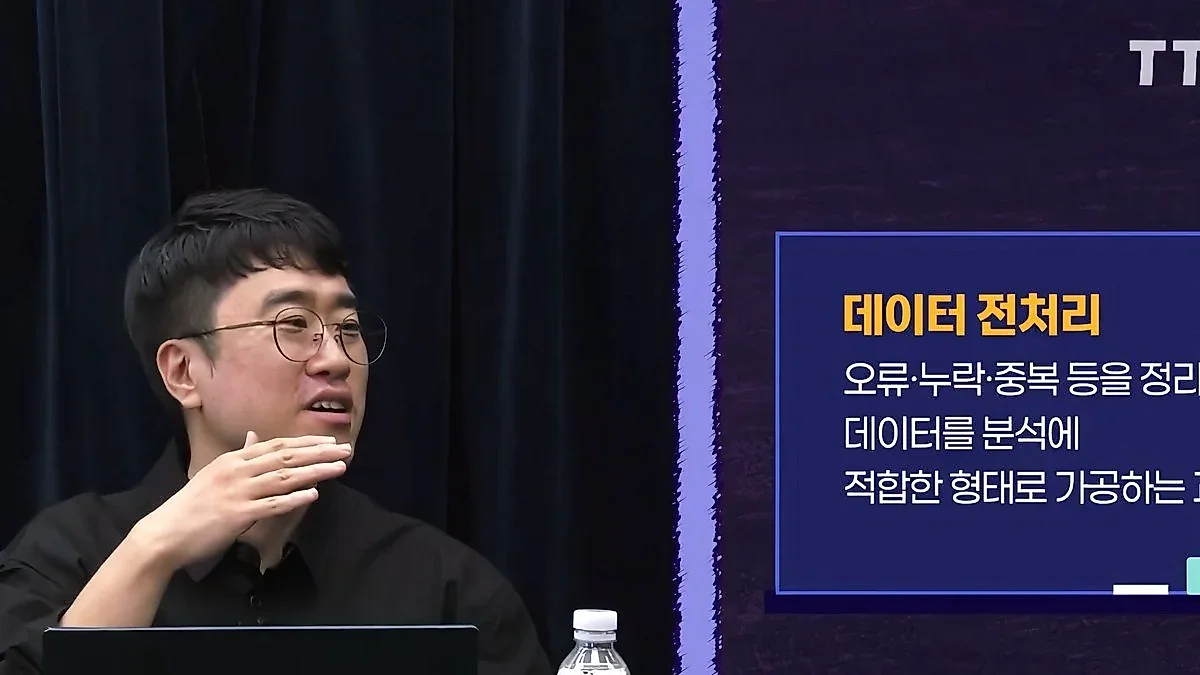
As artificial intelligence (AI) technology penetrates deeply into all industries, fundamental changes are appearing in the roles and work methods of data analysts. In a conversation reported by T Times TV, Song Ji-hun, a team leader of the Marketing Analysis Team at NCSoft, expressed the view that while the job position of a data analyst itself may decrease, the importance of the capability to handle data is actually rising.
The reason why 'analysis capability' is emphasized despite the decrease in data analyst positions
Team leader Song Ji-hun mentioned that there is a recent trend where hiring for the position of a data analyst is almost disappearing, and that concerns regarding the loss of roles felt by analysts in the field actually exist. However, he analyzed that although the profession of an analyst may change, the capability to analyze data itself is becoming more important.
In fact, demand from business departments to directly analyze data using AI tools is increasing. According to Song, there are more cases where members of business departments directly request raw data instead of existing analysis reports. This is interpreted as a movement where department members intend to perform deeper analysis themselves using AI. However, Song explained that he witnesses cases where projects cannot be completed because business departments face difficulties in professional areas such as experimental design, hypothesis setting, and the interpretation of statistical verification results.
The disappearance of 'grunt work' and concerns about the growth path of junior analysts
While the introduction of AI has increased work efficiency, it has simultaneously emerged as a new challenge that it has taken away the opportunities to learn through the inefficient processes formerly called 'grunt work.' It is pointed out that processes like data preprocessing, where one learns by handling data and writing code through trial and error, were learning processes that increased understanding of data, but as AI takes over these tasks, the path to accumulating such experiential knowledge is disappearing.
Song mentioned that because new hires start their work in an environment where AI tools are already highly advanced, they are not experiencing the route to acquiring experiential knowledge that can be gained by handling data directly. He analyzed that this could make it difficult to build the fundamental strength required to judge data errors or verify the appropriateness of results. Regarding this, Professor Lee Jung-hak of Dongguk University suggested that leaders could restore the process of 'grunt work' for domain understanding by having new employees perform tasks directly without using AI for a certain period.
The analyst's response strategy to avoid losing initiative to AI
The key for an analyst in the AI era is not to delegate all processes to AI, but to maintain initiative over the analysis. Song emphasized that one must be wary of situations where delegating tasks one by one to AI leads to handing over the authority over the overall design roadmap of the analysis project or the interpretation of results to the AI.
He said that to avoid losing initiative, effort is needed to look back at the intermediate processes that AI skips. He stated that the process of deconstructing the analysis—such as reviewing what assumptions the AI made to perform the analysis and how the code was structured—is a role unique to the analyst. Furthermore, he added that to judge whether the methodology chosen by AI is appropriate, a broader understanding of methodologies is required than before, and the human role of problem definition and verification will become even more important.
Source: original video (YouTube)



0Comments
Comments are currently disabled.