
"At least I should make them gain some weight before they leave"... The hand-made taste of boarding house ladies and the university district scenery of the 1990s
The article explores the landscape of university boarding houses from the 1990s to the early 2000s, highlighting the communal warmth of boarding house owners and the shifting residential patterns due to rising costs and limited dormitory capacity.
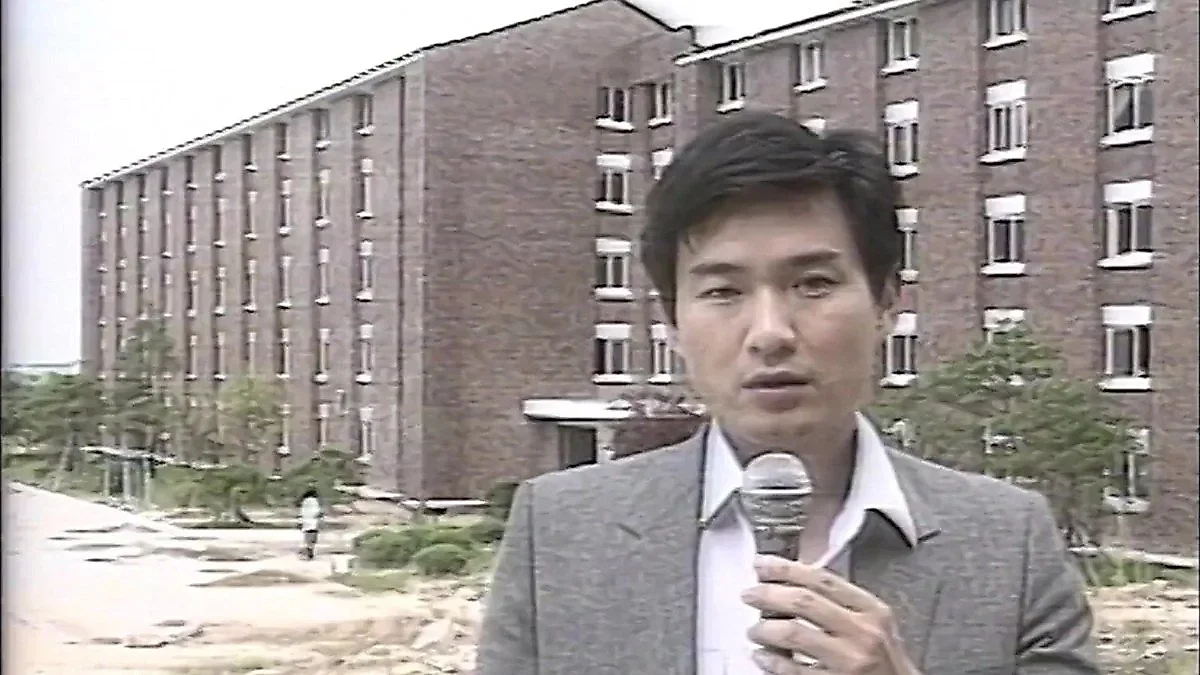
When a new semester begins, university boarding house villages come to life with the thick bundles of luggage from students arriving from the provinces. The scenery of boarding houses, viewed through records from the 1990s to the early 2000s, was more than just simple accommodation; it was a living community where affection and meals intersected.
"At least I should make them gain some weight before they leave"... The boarding house lady's rule: a generous table
In the center of university boarding houses in the 1990s, there was always 'son-mat' (handmade taste). Looking at the boarding house scenery of that time recorded by KBS, in houses where a large family of about 30 people lived together, the host ladies would even mobilize handcarts to go grocery shopping every two days to cater to the diverse tastes of the students. If the host gentleman's hometown was Gwangju, the table was so abundant that ten side dishes were the standard.
The rule for the host ladies, who were responsible for the students' meals, was 'the boarding house rice cooker must always be full.' While there were complaints from students that they were getting tired of the menus because they were always similar, the ladies expressed their concern for the students' health, saying, "At least I should make them gain some weight before I send them out while they are staying with me." The fact that they would personally fetch water from the mountain spring behind the house for the students' health or take meticulous care of them when they were sick shows that boarding houses at the time played a role beyond simple lodging facilities.
Soaring boarding fees and the changing landscape of university districts
However, unlike the warm affection, the repeated increase in boarding fees every semester was a heavy burden for students. In the early 1990s, boarding fees in university districts within Seoul exceeded 150,000 won for a double room and 250,000 won for a single room. Due to rising inflation and other factors, boarding fees increased every semester, leading to financial hardship for students. In the early 2000s, in the area around Sinchon, single rooms were over 280,000 won, and double rooms were at the level of 200,000 won.
The choices for students feeling the burden of boarding fees changed according to the era. In the mid-1990s, an increasing number of students sought out Gosiwons or reading rooms that had low boarding fees and a good atmosphere for studying, and the residential styles in university districts gradually diversified, with some students in good financial situations seeking officetels. In particular, as more houses converted boarding rooms into Jeonse (lump-sum deposit) rooms, a phenomenon emerged where finding a room itself became difficult.
Insufficient dormitories, 'Regional Dormitories' filling the void
As the capacity of university dormitories hit its limit, the housing issue for students from the provinces also emerged as a social task. Since the dormitory acceptance rate of major universities, including Seoul National University, was only slightly over 10% of the student population, out-of-town students had no choice but to rely on boarding houses. In this situation, there were loud voices demanding the expansion of university dormitories.
What emerged to fill this gap were 'Regional Dormitories.' Like Gangwon Haksa, which was built for students from Gangwon Province, dormitories operated with the sincerity of local residents received a great response, operating at a low cost of about 70,000 won per month, which was about half the level of boarding fees. Gangwon Haksa was so popular that its average competition rate reached 3 to 1, functioning as an alternative that relieved the loneliness of out-of-town students and eased the economic burden on parents. Along with this, efforts to connect local communities and universities continued, such as the promotion of building regional dormitories for university students staying in the capital in Gyeonggi Province, North Jeolla Province, Chungcheongnam-do, and Chungcheongbuk-do.
Source: original video (YouTube)



0Comments
Comments are currently disabled.