
"Craving Growth" Vietnam vs. "Exhausted" China... Two Faces of the Asian Economy Observed by Dr. Gwak Su-jong
Dr. Gwak Su-jong diagnoses the future of the South Korean economy based on his recent business trip through Vietnam, China, and Japan, observing the stark contrast between Vietnam's growth aspirations and China's structural economic crises.
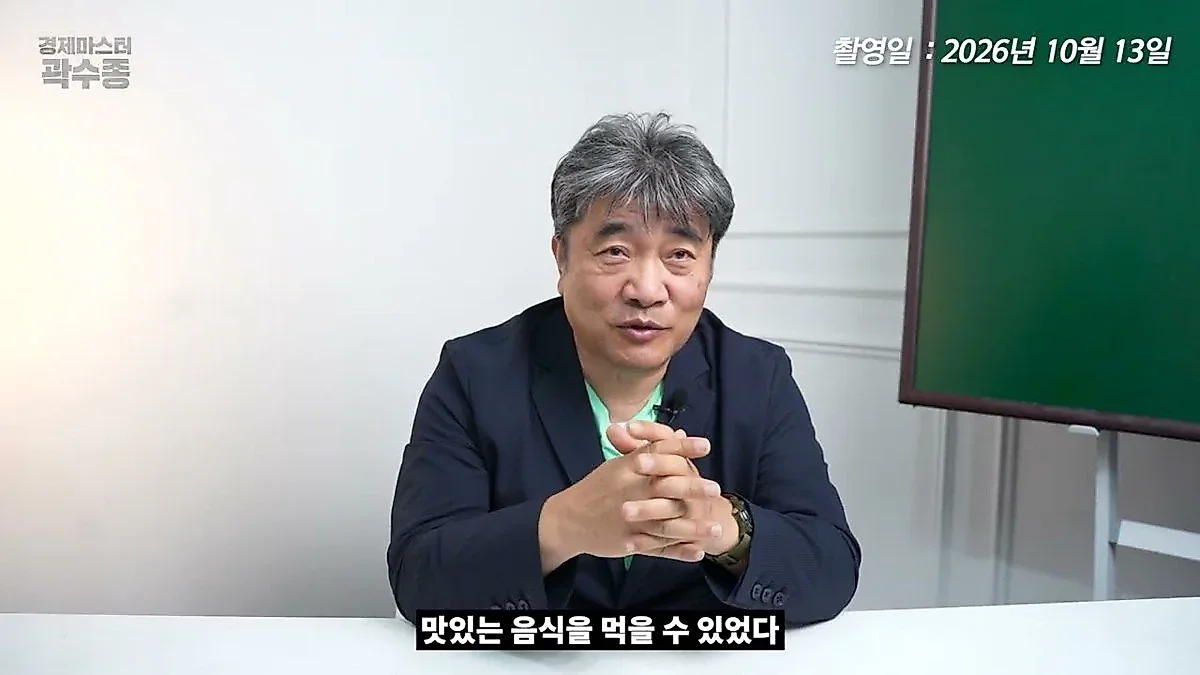
The economic landscape of Asia is shifting. There is a stark contrast between emerging nations filled with an aspiration for growth and a giant economy facing real estate insolvency and employment limits. Dr. Gwak Su-jong diagnosed the future that the South Korean economy will face through the local economic realities he witnessed during his recent business trip connecting Vietnam, China, and Japan.
"Eyes Craving Growth"... Vietnam, the 'My Car' Craze in the Era of $4,500 Per Capita Income
Ho Chi Minh City, Vietnam, which Dr. Gwak Su-jong visited, was a city with very fast and dynamic development. What was particularly noticeable was the attitude of the local youth. Regarding the eyes of the young people he met in Ho Chi Minh City, Dr. Gwak reported, "I felt a brightness that craves development and seeks to gain something more." They appeared to possess a strong desire and dreams for growth.
Vietnam's current per capita national income is recording between $4,000 and $5,000. Economically, it is believed that when per capita national income exceeds $2,000, the 'My Car era' opens, characterized by a surge in automobile distribution; Vietnam has already passed this stage and entered a period of full-scale consumption expansion. This is a flow similar to the case of South Korea, which opened the My Car era by exceeding $2,000 around 1980. In fact, streets in Ho Chi Minh City are filled with a mix of Japanese cars, South Korean cars, and Chinese cars driving together. However, the traffic situation, where motorcycles and bicycles are entangled, is also a facet showing the congestion of the city.
However, systemic limitations and challenges in corporate culture also exist. Dr. Gwak analyzed that Vietnamese youth are growing within a system where the socialist ideologies of Marx and Lenin remain. He also pointed out the 'localization' issues that South Korean companies face when entering the local market. He explained that due to communication issues between South Korean managers and local workers, as well as the image difference between large corporations like Samsung and small and medium-sized enterprises, local talents tend to move between companies for career development. In particular, he added that local young people tend to prefer organizational cultures such as the 'Amoeba Management' of Japan's Kyocera.
In contrast to the vitality of Vietnam, the economic reality of China was heavy. Dr. Gwak analyzed that the loss in asset value caused by the real estate insolvency crisis in China, involving companies such as China Evergrande Group and Country Garden, amounts to approximately $13 trillion. For China, a giant economy with a population of 1.4 billion, an evaporation of assets on this scale is a serious matter that could lead to a national loss.
The crisis in the employment market is also severe. While China's official youth unemployment rate was announced at 18.9%, Dr. Gwak diagnosed that the perceived unemployment rate could approach 40%, considering the opacity of Chinese statistics. His observation was that, unlike the Vietnamese, the appearance of the Chinese youth he met locally was "exhausted and tired, filled with worries about how to make a living."
The instability of the Chinese economy is also evident in national debt. Currently, China's national debt-to-GDP ratio is at the level of 130%. Although it looks large externally, with per capita national income reaching $15,000 to $18,000, the analysis suggests that the extreme gap between inland and coastal regions and the debt burden are threatening the soundness of the economy. Dr. Gwak predicted that more time will still be needed to raise China's overall environment to the level of advanced nations.
Concentration on Engineering Colleges and Talent Cultivation... The Power of 'Education' that Determines National Rise and Fall
Dr. Gwak cited 'education' as the force sustaining China's economic structure and the factor that will determine its future. Citing examples of Chinese university campuses, he noted that Chinese youth overwhelmingly prefer engineering colleges over medical schools. In fact, on Chinese engineering college campuses, foreign exchange is so active that he witnessed scenes where mid-range hotels like Hampton Inn are established due to active external exchanges.
This is similar to the flow in the past when South Korea intensively cultivated electronic and electrical engineering talent, including the Department of Semiconductor Engineering at Kyungpook National University, to foster the semiconductor industry. Just as the manpower released at that time became the foundation for today's South Korean semiconductor industry, China is also securing industrial manpower by producing a large number of engineering college graduates. Citing Ray Dalio's book 'The Change of World Order', he emphasized education as a key indicator that determines the rise and fall of a nation.
Ultimately, Vietnam's growth engine and China's structural crisis provide important implications for the South Korean economy. Witnessing both the explosive growth of emerging nations and the internal limitations of a giant economy, it is a time when reflection is needed on what kind of industrial talent South Korea should nurture and what kind of economic position it should take.
Source: original video (YouTube)



0Comments
Comments are currently disabled.