
The Flip Side of the AI Infrastructure Race: Once the Selection Process is Over, 'Skin-Clad Robots' Will Arrive
Professor Kim Kwang-seok analyzes the growing calls for "speed control" in the AI industry, suggesting it is actually a process of separating winners from losers based on capital strength. He predicts that after the current infrastructure race, the focus will shift toward Physical AI and the emergence of a "skin" market for robots and appliances.
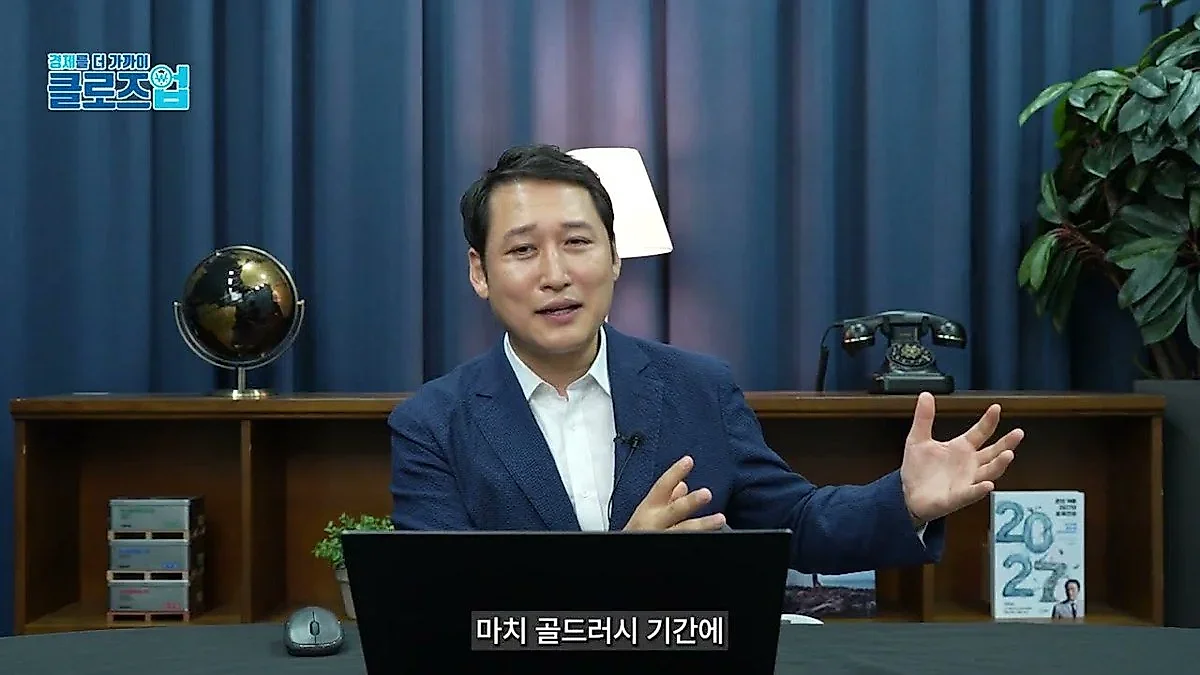
The theory of "speed control" surrounding the artificial intelligence (AI) industry is spreading. While voices are emerging to caution against excessive competition and suggest moving forward at an appropriate pace, Professor Kim Kwang-seok analyzed this not as simple speed adjustment, but as a process of "separating the wheat from the chaff" among companies. He argues that companies whose ability to mobilize funds has reached its limit are using speed control as a pretext for survival.
"A Pull-up Bar Hanging Race"... Financial Pressure Hidden Behind Speed Control Theory
Recently, arguments that the speed of AI development should be adjusted have been raised, centered around key figures such as Dario Amodei (Anthropic) and Elon Musk (xAI). Professor Kim Kwang-seok compared this phenomenon to a "pull-up bar hanging race." He explained that while all companies have jumped into the infrastructure competition, such as data centers, by injecting massive amounts of capital, companies with poor financial situations are losing strength first and want to stop the race.
He cited the situation of Anthropic as a specific example. Anthropic is burdened with massive fixed costs due to a "Take-or-Pay" contract structure. This is because they must pay a committed minimum amount regardless of actual data usage. This is in the same context as Google Cloud committing to $111 billion worth of TPU and data center infrastructure services, and Amazon (AWS) committing to $110 billion worth of chip and cloud resource usage contracts. Broadcom and equipment leasing also carry obligations for $166.2 billion in chip orders and equipment leases, most of which are structured to be non-cancelable. Microsoft is also entering into contracts worth approximately $31.4 billion. Professor Kim analyzed, "The long-term contract costs that must be paid regardless of revenue to secure infrastructure resources are pressuring the financial situations of companies."
In the case of OpenAI, he diagnosed that while revenue is exploding, it is in a state of "Field of Burn," where astronomical cash burn is occurring simultaneously. This means they are pouring more money into infrastructure and training than they are earning to seize next-generation leadership. Elon Musk's xAI is also undertaking terrifying expenditures reaching $1 billion every month, placing it in a situation where it must continue incessant fundraising. In particular, as operating expenses are surging centered on the AI division, xAI is pouring all revenue generated from other sectors, such as connectivity or space businesses, into the AI field. Professor Kim defined it as, "The AI speed control theory is ultimately a journey of separating the wheat from the chaff, where companies with sufficient financial strength and those without are divided."
Amidst this trend, questions are also being raised about whether hyperscaler companies will be able to continue purchasing semiconductors. While expectations for semiconductor performance through 2027 are high, including Samsung Electronics' October earnings announcement, the free cash flow situation of hyperscalers could be a variable. Market consensus sees that after CAPEX (capital expenditure) increases by 62% this year, the growth rate will slow to around 19% in 2027. On the other hand, speed control proponents argue that this growth rate should be lowered to 10%, 5%, or even negative levels.
Changes in the AI Value Chain, From 'Service' to Purchasing 'Products'
Professor Kim predicted that once this selection process is completed, the leading stocks will change once again. He presented "Physical AI" as the key keyword. His analysis is that while the existing AI industry focused on the use of "services" centered on models and infrastructure, the value chain will expand in the future toward purchasing physical products equipped with AI. The AI value chain starts with service use and leads to models and infrastructure (AI, communication, and power infrastructure), but in the era of Physical AI, a new category of purchasing "products" will emerge.
In the era of Physical AI, AI will be embedded in existing product groups such as home appliances, mobile devices, automobiles, and robots, and commercialized. Professor Kim foresaw that after conceptualization in 2025 and planning in 2026, it will enter a full-scale commercialization stage in 2027. In particular, he expects market attention to concentrate on the robot field starting from 2026. This signifies a massive shift where consumers go beyond using AI simply as software and directly own and purchase "products" in which AI is implemented. He explained that we have already entered an era where robots and Physical AI are entering daily life.
"What Will AI Robots Wear?"... The Rise of the 'Skin' Market
The core competitiveness in the era of Physical AI depends on how AI interacts with the physical world. Professor Kim emphasized that just as the jeans worn by miners during the Gold Rush era became an entire industry, in the era of Physical AI, what AI products "wear" will be important. He presented "sensors" as the answer.
Just as autonomous vehicles perceive the world through high-performance sensors, refrigerators and robots must also perceive their environment through sensors. In particular, autonomous vehicles can be seen as a case where sensors are "worn" in a high-end high-speed rim adhesive manner. Professor Kim predicted that robots and home appliances will "wear skin." This means the surface of a machine must perform the role of detecting and reacting to external stimuli like human skin. Accordingly, the growth trend of the global skin market is expected to be distinct. Although forecasts from various institutions differ, the prediction that the skin market will grow is common.
As an example, he mentioned Lumira Technologies. Lumira possesses technology that immediately heals micro-cracks caused by joint bending, friction, or external impact and extends the lifespan of sensors. Additionally, they are showcasing tactile sensor embedding technology that converts mechanical energy, such as human body movement, heartbeat, or vocal cord vibration, into electricity to reduce dependence on batteries. However, Professor Kim added that while Lumira Technologies is competitive enough to hold more than a 60% share in the patch market within the medical or healthcare domains, the competitive landscape in the overall skin market must be analyzed separately.
Source: original video (YouTube)

0Comments
Comments are currently disabled.