
LG targets AIDC market with integrated solutions to halve construction time
LG Group is accelerating its expansion into the global AI Data Center (AIDC) market by offering an integrated solution that combines cooling, power, IT, and operations.
LG Group aims to become Asia's largest AI infrastructure provider by offering a "One Contact, One Contract" model that uses prefabricated modules to reduce data center construction time by approximately 50%. The company is expanding its global reach with an overseas-dedicated data center in Indonesia scheduled for completion this October.
As the scale of AI models grows, the importance of the infrastructure supporting them has become greater than ever. Because the market moves so quickly, delays in infrastructure design can render technology obsolete. Amidst this trend, LG Group is accelerating its push into the global market with its "AI Data Center (AIDC) Integrated Solution," which unifies cooling, power, IT, and operations.
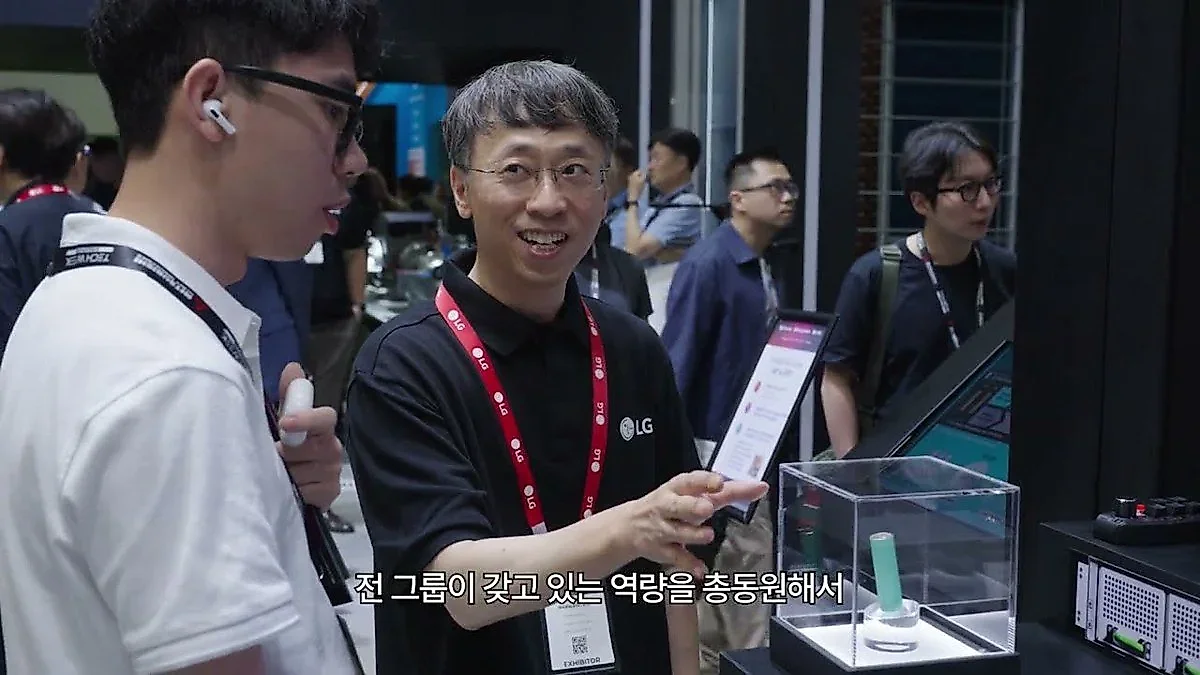
The core of the strategy presented by LG Group at DCWA 2026 held in Singapore this past September is "integration" and "speed." Recently, the global AI infrastructure market has transformed into a "Time to Market" battle, where securing infrastructure quickly is critical due to chip shortages. To address this, LG has moved beyond supplying individual products to propose a "One Contact, One Contract" model, where all solutions are provided under a single contract. This concept is similar to hiring an interior decorator to handle everything from wallpapering to flooring in one go.
Reducing construction time by 50% with prefabricated factory-built modules
The key weapon in LG's speed battle is its "prefabricated style modular data center." While constructing traditional hyperscale data centers typically requires a long period of at least 36 months, the prefabricated method—where major equipment is pre-manufactured in factories in container or module forms and then assembled on-site—can reduce the construction period by approximately 50% compared to existing methods.
Global customers are paying attention to the efficiency of this modular approach. On-site, controlling the momentary power peaks (load spikes) caused by the high-output characteristics of AI servers is cited as a major challenge. Since it is difficult to solve this with a single Battery Backup Unit (BBU) alone, there is high demand for integrated solutions where power and cooling systems are organically connected. Based on its expertise of operating over 500MW of power without accidents for 40 years, LG has showcased technology that optimizes systems using AI.
"I thought they were a TV company"... Global customers see a "hidden master"
In the past, LG's entry into the data center market was sometimes met with unfamiliarity. Global customers met on-site reacted by saying they were surprised because they were "familiar with the brand as a TV company" or "did not know the product lineup would be this impressive." While the market initially viewed LG as a "newbie," the atmosphere shifted to evaluating them as a "hidden master" after seeing a highly complete lineup covering everything from cooling and power to IT monitoring.
This market trust is supported by cooperation with the global big tech company NVIDIA. NVIDIA is reported to require extremely strict performance tests, and LG's cooling solutions (such as CDUs) have proven their technical prowess by receiving certification within the NVIDIA ecosystem. The structure is such that LG's various solutions realize the AI data center blueprints drawn by NVIDIA into physical reality.
Aiming to be Asia's largest infrastructure provider starting with Indonesia completion
LG's gaze is now directed toward all of Asia. Overseas business development is underway in places including Indonesia, Malaysia, Thailand, and Japan. In particular, the Indonesia data center, scheduled for completion this October, holds significance as the first overseas-dedicated data center from a Korean company.
LG's ultimate goal is not limited to simply building infrastructure. It is to complete the "AI Factory service" layer, which places IT infrastructure on top of the data center infrastructure and then implements various AI services on top of that. Through this, the company plans to leap forward as the largest AI infrastructure provider in Asia within a short period.
Source: original video (YouTube)


0Comments
Comments are currently disabled.