
Unorganized groups and opportunists drive rising violence in French protests
Analysis from Dr. Choi Jun-young suggests that the increasing violence in French protests is driven by the expansion of groups operating outside traditional organized frameworks, making them difficult for police to control.
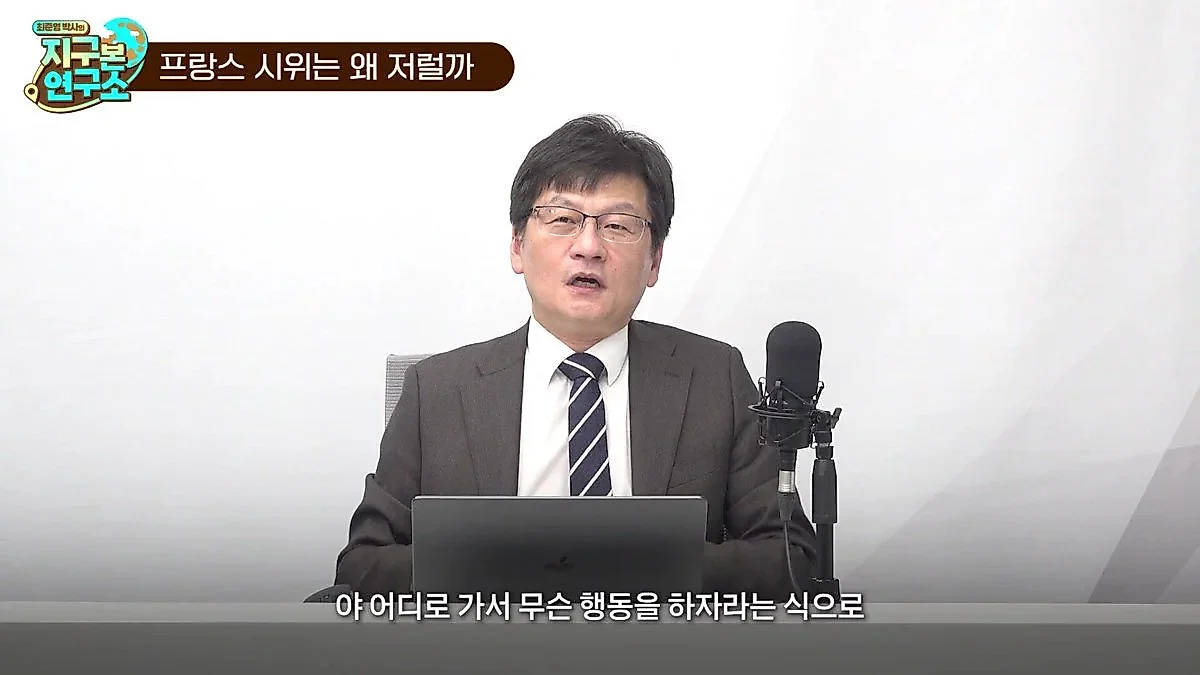
French security forces struggle to suppress increasingly violent protests as anonymous 'Black Bloc' groups and opportunists operate outside the control of organized labor unions and political parties. Despite the deployment of specialized units like the CRS and BRAV-M, limited personnel face difficulty protecting multiple simultaneous targets across various locations.
As protests in France take on increasingly violent characteristics, questions are being raised as to why police are unable to suppress them immediately. According to analysis provided by Dr. Choi Jun-young, the core reason for the amplification of violence in French protests lies in the expansion of forces that operate outside of existing organized frameworks.
'Black Bloc' and Opportunists Moving Independently from Organized Protests
Large-scale protests in France are usually led by organized groups such as labor unions or specific political parties, focusing on national issues like pension reform or tax matters. These groups operate within a legal framework where they negotiate march routes with the police in advance and hold the obligation to control the protesters' behavior. However, there is a growing number of forces that refuse such organized control.
Dr. Choi Jun-young categorized the perpetrators of violence into three main groups. The first consists of radical political participants who deny the authority of the state and adopt destructive acts as a matter of conviction. The second group includes opportunistic participants who have no interest in the political goals of the protest but watch for opportunities to engage in looting and theft. The third group consists of forces that use items such as Molotov cocktails in retaliation against what they perceive as excessive police suppression methods.
Of particular note are anonymous forces that assemble instantly via social media only to disappear. These appear in the form of the so-called 'Black Bloc,' maintaining anonymity by wearing black clothing. Because they gather temporarily for specific events at certain times and places without a single leadership, there are limits to tracking or suppressing them using traditional protest control methods.
France's Three Major Suppression Organizations Specialized for High-Risk Scenarios in Europe
Contrary to the perception that French police are powerless in responding to protests, France is classified as a country with a very high level of suppression systems within Europe. Dr. Choi Jun-young introduced the three core organizations that deploy when violent protests occur in France.
First, the 'Compagnie Républicaine de Sécurité (CRS)' is a typical protest suppression organization belonging to the national police. Approximately 65 companies are deployed to major cities nationwide to push back protesters or use tear gas.
Second is the 'Mobile Gendarmerie,' which holds the authority to suppress civilian protests despite having the status of soldiers. They possess professional expertise in maintaining order to the extent that they are responsible for training overseas police.
Finally, there is the 'Brigade Anti-Raid à Moto (BRAV-M)' belonging to the Paris police. This organization maximizes mobility using motorcycles and is tasked with chasing and arresting the individuals most violently committing acts of violence at protest sites. They operate in two-person teams, with one person driving in the front and the other exercising physical force from the rear.
Realistic Limitations: Many Points to Protect but Limited Personnel
Despite possessing such a strong suppression system, the difficulty in controlling protests stems from structural issues. If protesters move toward a single target, such as the Élysée Palace, intensive defense is possible; however, recent protests tend to involve temporary organizations causing incidents simultaneously at multiple locations.
From the police perspective, it is difficult to protect major state institutions while simultaneously chasing looting and arson scenes occurring all over the place. If forces are concentrated at a specific point, other areas may be breached, and conversely, if forces are dispersed, they are inevitably forced into a losing numbers game when the scale of the protest grows. Ultimately, the reality facing French security authorities is that while the targets to be protected are widespread, the number of trained professional personnel is limited.
Source: original video (YouTube)



0Comments
Comments are currently disabled.