
Former SKT VP warns AI implementation could increase useless reports
Former SKT Vice President Jeong Do-hee warns that adopting AI without first eliminating "fake labor" may lead to increased unproductive work, emphasizing that organizational culture and leadership must evolve alongside technology.

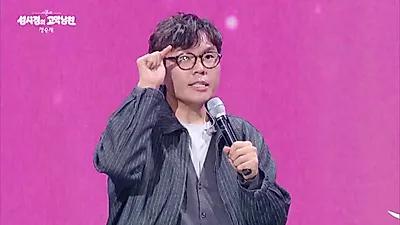
Former SKT Vice President Jeong Do-hee warned that companies risk creating ten more useless reports a week if they implement AI before eliminating "fake labor" and updating rigid organizational structures.
As artificial intelligence (AI) technology advances rapidly, the way companies work is undergoing a fundamental transformation. However, critics point out that while the speed of technological adoption is high, organizational operating systems (OS) remain stuck in the past. It is comparable to buying a cutting-edge sports car but being unable to gain speed because the road network is bumpy and the signaling system is outdated.
In a discussion reported by T Times TV, former SKT Vice President Jeong Do-hee identified the elimination of "fake labor" and the value of "small talk" as key themes for the AI era. She emphasized that changes in organizational culture and leadership capable of accepting technology must precede the introduction of the technology itself.
Eliminate 'fake labor' before AI implementation; technology application order is reversed
Many companies consider how to automate tasks when introducing AI. However, former Vice President Jeong points out that this order is incorrect. Before applying AI, the process of identifying and eliminating what constitutes "fake labor" must come first.
"If you use AI, you might end up creating ten more useless reports a week when you only needed to make one," Jeong said. "The correct approach is to first identify and eliminate fake labor, and then decide how to utilize AI to fill that void." Her logic is that instead of swinging a hammer without a purpose, one must first define the problem to be solved and then use AI as a tool. She added that management in many companies should be wary of introducing AI in a way that reverses the main and secondary roles, driven by the external AI craze.
One of the biggest obstacles to this change is rigid organizational structures. Jeong emphasized that the organization, leaders, and individuals must all change together, explaining that if only one changes, the others will pull it back to its original state. For example, even if an individual reduces report writing time using AI, the improvement in work efficiency will not be felt if existing complex reporting systems or meeting cultures remain unchanged. Furthermore, even if a leader encourages new attempts, if the year-end evaluation system remains stuck in the past—using methods that do not tolerate failure—the organization will rotate back to its former inertia. She noted that current annual business plans, budget allocations, and KPI (Key Performance Indicator) systems may be "old OS" that does not fit new attempts in the AI era.
Issues regarding organizational culture surrounding data sharing were also mentioned. As a data expert, she emphasized that the ability to interpret and utilize data is more competitive than the data itself. Especially in the era of agents, data sharing is essential because data serves as the "food" and "feed" for agents, yet in reality, smooth data sharing between departments is often lacking. She analyzed that structural problems, such as a lack of evaluation for the process of refining and sharing data or a system where the team providing the data actually suffers disadvantages in relative evaluations, act as barriers to data sharing.
"Real labor of the future is small talk"... 'Contextual interpretation' that AI cannot replace
As AI quickly performs standardized tasks such as research, coding, and report writing, the human role is expected to shift toward "small talk" and "emergence." Jeong identified "contextual interpretation" and the "expansion of ideas" as the areas humans must hold onto in the AI era.
"AI is excellent at identifying facts and organizing information, but interpreting information and deriving insights to fit our company's specific situation or context is the role of humans," she explained. She noted that even with the same data, the judgment of "how to report this at this specific timing in our company" is an area difficult for AI to perform. Using writing as an example, she distinguished between writing for simple "delivery," which can be left to AI, and writing as an "expansion of thought," where one's own ideas change and expand, which must be performed directly by the person in control.
In particular, she stressed the importance of "small talk" shared with colleagues. This is because short conversations with colleagues met in the hallway or exchanging opinions while having a cup of tea contain vivid information and differing opinions from the field that AI cannot learn. Her analysis suggests that new perspectives emerge through such small talk (emergence), and the process of developing ideas by asking AI questions based on these insights will become the core work of the future. She suggested a way of collaborating with AI by proposing, based on ideas obtained through such small talk, "Let's have AI do some research" or "Let's experiment."
Accordingly, the future office landscape is also expected to change. Instead of structures where people sit in front of monitors focusing on individual tasks or hold formal meetings in separate rooms, she predicted an increase in cafe-like spaces where people can freely engage in small talk and write ideas on whiteboards in wide, open areas. However, she added that it is desirable for such spaces to coexist with private areas in corners to maintain depth of work while increasing the efficiency of small talk.
Why 'Cleaner Leadership' is needed instead of 'Conductor Leadership'
In a changing environment, the role of a leader must also be fundamentally redefined. While past leaders were "conductors" who directed and coordinated the work of members, a leader in the AI era should be a "cleaner" who removes obstacles so that members can focus on their work.
"Leadership will become 'cleaner leadership' that clears the obstacles in front of and behind members," Jeong said. "The core is not teaching and directing each and every thing, but creating an environment where members can make new attempts."
She also warned of the risk of "confirmation bias" that can occur when working alone with AI. She noted that when processing work while conversing with AI, one can become immersed in the logic provided by the AI, causing thoughts to lean in one direction. "When you converse with AI, your conversation inevitably pulls the AI in," she said, expressing concern that while speed and quality may increase through conversation with AI, confirmation bias may intensify as the process of balancing thoughts through discussions with colleagues disappears. To prevent this, it is essential to constantly discuss with colleagues to verify one's thoughts and balance thinking through human interactions that AI cannot provide.
Source: original video (YouTube)


0Comments
Comments are currently disabled.