
Silicon Valley leaders demand debate to contrast with Asian corporate culture
An expert highlights how the difference in decision-making language and organizational culture between Silicon Valley and Asian companies like Samsung Electronics leads to challenges for highly qualified Korean talent in US recruitment.
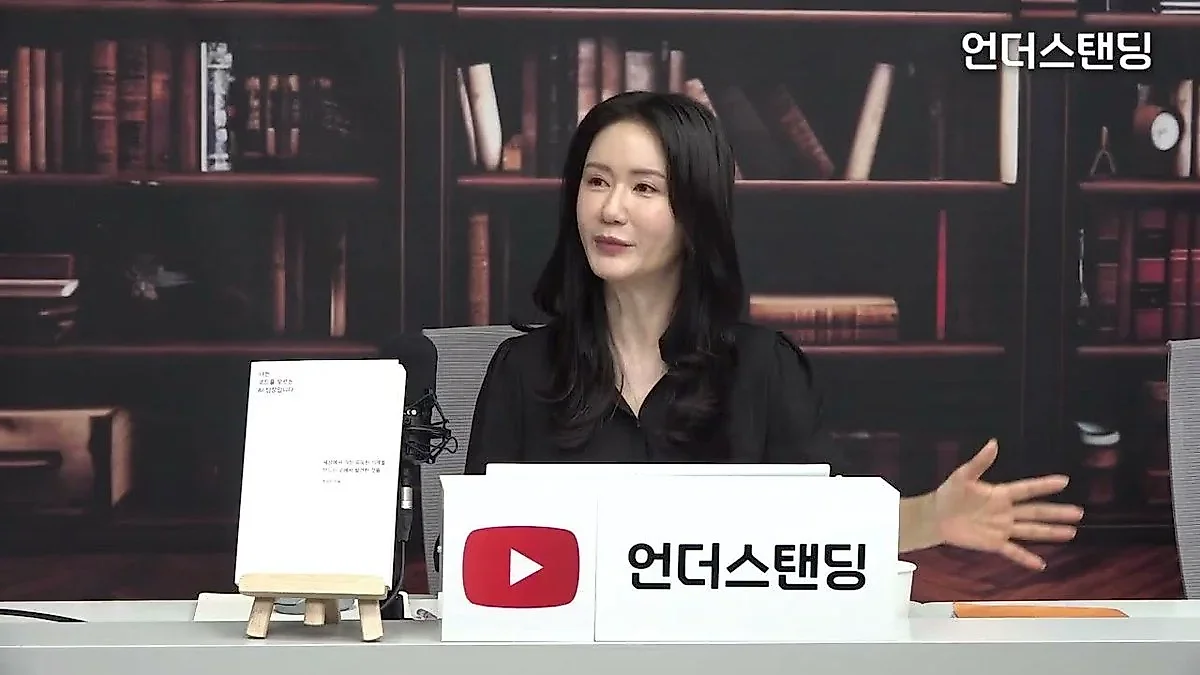
Highly qualified Korean talents may face rejection or lower positions in Silicon Valley because they often lack the linguistic ability to debate a leader's vision. This cultural clash highlights the difference between the "high-context" execution seen at Samsung Electronics and the intense questioning required at companies like Google and Meta.
From the perspective of an expert with experience at global big tech companies, the decisive difference between Silicon Valley and Asian companies lies in "language" and "decision-making methods." The analysis suggests that highly qualified Korean talents struggle in Silicon Valley interviews or are offered lower positions because they fail to meet the linguistic requirements of the organizational culture demanded by these companies.
Culture of not asking "Why?" versus the "Language of Leaders" in Silicon Valley
According to an interview shared by Understanding: All the Knowledge in the World, the biggest difference between Asian companies like Samsung Electronics and American companies like Google and Meta is how employees respond to a supervisor's decision. In Asian cultures, such as at Samsung Electronics, there is a strong tendency for members to execute a supervisor's direction in unison. Rather than wasting time questioning a supervisor's decision with "Why?", it is considered a virtue to trust and follow the supervisor's deep intentions. The speaker described this as a "high-context" culture, noting the Asian-style training where moving in accordance with a supervisor's words is common practice.
In contrast, the language of Silicon Valley leaders is different. In American companies, it is routine for members to continue debating for days or hours until they are convinced, even if a supervisor presents a vision. This is because members do not act unless they personally feel the vision and are persuaded. The speaker stated they experienced difficulties due to this cultural difference while working at Intel Japan. They pointed out that Asian-style training, which is accustomed to simply carrying out a supervisor's instructions, can clash with American culture that requires intense debate, causing individuals to be perceived as "people who only execute orders without vision" or "people who speak only at a high level without specific consideration."
This difference also appears during the recruitment stage. The speaker explained that they have witnessed cases where talents from Asia or Samsung Electronics were rejected or offered lower positions than expected if their language did not match that of Silicon Valley leaders, even if they received recommendations. This means the ability to ask for specific evidence regarding a leader's vision and to debate it acts as a key variable in hiring. The speaker explained that a leader should not merely be someone who delivers commands, but someone who persuades and motivates members through a vision.
Intel's 'Disagree but Commit' and Google's 'Bottom-up' culture
The center of gravity for decision-making also varies by company. Intel increased organizational efficiency through a culture of "Disagree but Commit." This is a method where, even if opinions differ, once a decision is made by the organization, members do the best they can to follow it for the sake of the team's goals. This functioned as a mechanism to ensure execution while clarifying responsibility for decisions. It was also used to clarify responsibility when Intel began to lose its footing during its growth phase.
Google is described as the pinnacle of "bottom-up" culture. It is a structure where all members want to participate in decision-making, and movement occurs only after consensus is reached among members. Conversely, Samsung Electronics shows a structural characteristic where the remaining members execute directions set by decision-makers who hold less than 5% of the power. Meta possesses a very horizontal structure where opinions can be expressed regardless of rank, while simultaneously being driven by the strong decisiveness of CEO Mark Zuckerberg.
Meta's horizontal culture was reportedly a great shock to the speaker. The atmosphere, where a practitioner might ask an executive, "Did you personally work on this project?" or where channels to deliver opinions directly to the CEO are respected, stood in stark contrast to the rigid organizational culture centered on hardware. The speaker explained that Meta is a very "flat" organization with a culture that respects the opinions of young talent.
AI development is like 'making soybean paste'; Google accelerates through DeepMind integration
The internal situation of Google, which is at the center of the recent AI technology competition, was also revealed in detail. To respond to the rapid growth of OpenAI, Google made the decision to integrate the academically inclined DeepMind with the technology-centered Google Brain. Since Demis Hassabis founded DeepMind in 2010 and it merged with Google in 2014, it has been an organization that asks philosophical and scientific questions to "understand the rules of the world" beyond simple product development. It has been dedicated to solving massive scientific questions, such as AlphaGo and AlphaFold.
However, with OpenAI pulling ahead, Google declared a "Code Red." Despite being the first to release Transformer technology, Google's response was delayed due to the bureaucracy typical of large corporations—where the risk of wrong decisions is high—and a tendency to protect existing revenue sources such as Search and advertising. Consequently, Demis Hassabis transitioned to a fast decision-making structure similar to a startup by integrating DeepMind and Brain. The speaker noted that Hassabis showed his qualities as a manager who increases organizational speed through rapid reviews and discussions as a leader with decision-making power.
The speaker compared the essence of modern AI development to "making soybean paste." While sophisticated design is important, the process of pouring in vast amounts of data and waiting for the results is essential. In this process, there is uncertainty where even developers find it difficult to identify the exact cause of errors, which is why intense internal debates occur regarding product launch timing.
Along with technological progress, the need for humanistic consideration was also raised. The speaker expressed concern that if AI becomes excessively agreeable to humans and only provides correct answers, the thinking ability of the junior generation, who must grow through trial and error, could be dulled. How to preserve the human "right to make mistakes" and the "process of thinking" is expected to be an important task in the AI era.
Source: original video (YouTube)
0Comments
Comments are currently disabled.