
West Castle argues consistent taste defines true music expertise
YouTube creator West Castle, who provides music digging guides, shared his philosophy on musical expertise and taste during a recent appearance on the ZENERATE channel.

YouTube music guide West Castle told the ZENERATE channel that true expertise is defined by consistent taste rather than memorizing knowledge, such as album charts or hit song orders. He explained that his content aims to reduce information asymmetry and connect people through music rather than using knowledge to alienate others.
In an era where people are categorized as "eum-jal-al" (those who know music well) or "eum-al-mot" (those who do not), a debate persists over whether true expertise lies in memorizing vast amounts of knowledge or possessing a firm sense of taste. West Castle, who runs a YouTube channel providing music digging guides, recently appeared on the ZENERATE channel to explain his personal view on music.
Why he calls himself an "eum-al-mot otaku" to break information asymmetry
West Castle defines himself as an "eum-al-mot otaku," meaning he does not consider himself an "eum-jal-al" with vast musical knowledge. He stated that he started his channel to satisfy the thirst for information he felt while encountering hip-hop during his childhood. Recalling his elementary school years as a fan of Epik High, he struggled to find information about artists, even searching through Naver Cafe, as it was not easy to find specific guides or information about the music scene in Hongdae. He noted that due to the information asymmetry at the time, he wondered "why everyone was building such walls," feeling that these barriers actually narrowed the music market.

He began creating content to resolve this information asymmetry and to make friends through music. His attempt to fill the loneliness of the real world with online musical connections led to his current guide channel. He explained that rather than covering all the complexities of music genres, he focuses on selecting and delivering specific parts so that people can connect through music. He added that he adjusts his content to fit the purpose of making friends, as attempting to cover every complex element could drive people away from music.
The standard for a music expert is 'consistent taste' rather than 'knowledge'
Regarding the standard for someone who knows music well, West Castle pointed to "consistency." Describing his own playlist as a "mixed bag" of all genres, he explained his tendency not to be confined to a specific genre. He revealed his personal "Deep Drill-down" method used when recommending music to friends: first receiving 5 to 10 songs the other person likes, then identifying common elements (such as brass sounds) to determine the genre. He noted this process is similar to entering a sophisticated prompt into an AI.
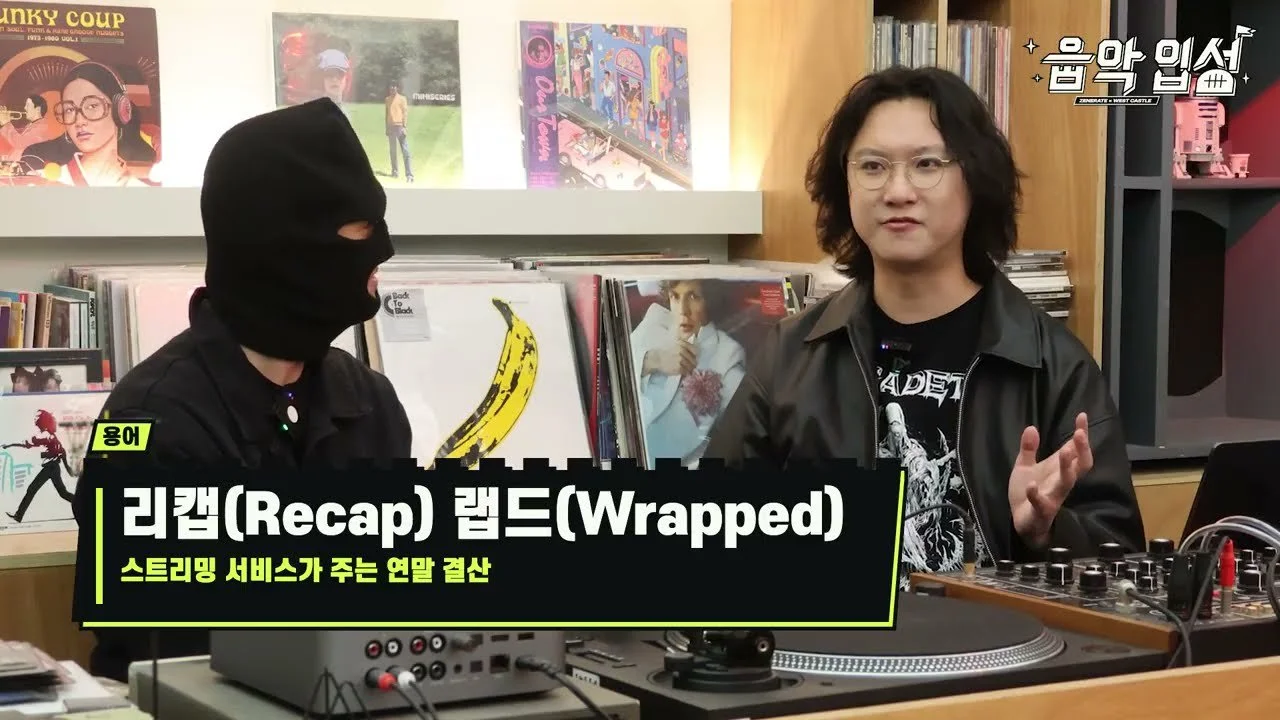
In the past, a knowledge-centered approach—such as memorizing album charts from specific years or the order of Michael Jackson's hit songs—was commonly used as a measure of being an "eum-jal-al." While respecting the importance of these traditional methods, West Castle mentioned that modern standards are changing. He emphasized, "After the process of listening to and filtering through countless songs, when the songs you like are tied together in one context, that consistency becomes the evidence of being an eum-jal-al."
The history of classes and belonging created by musical taste
He approached the phenomenon of musical taste becoming a class or a metric from an anthropological perspective. Just as classes formed in human history as resources became available, he views musical taste as a type of social phenomenon. In the past, there existed a culture of "music showing off," where people expressed superiority by listening to music that others did not know well. He recalled experiencing a culture in the 2000s that alienated others by flaunting musical knowledge, feeling that such methods narrowed the music market. He reflected that he had experienced an atmosphere of judging others based on musical knowledge, noting that such feelings existed first.
He described his experience in middle school of hanging out with friends who had similar musical tastes as "luck." He said that while there was an atmosphere at the time of criticizing friends who listened to certain idols, he felt a sense of belonging in an environment where they could share music without resistance. Ultimately, his story is that music acts as a powerful medium that connects people beyond individual taste.
Source: original video (YouTube)



0Comments
Comments are currently disabled.