
Clothing and textiles majors face 29 career paths amid AI shift
The career landscape for Clothing and Textiles majors is expanding beyond traditional design into fields involving data and technology, offering 29 different professional paths.
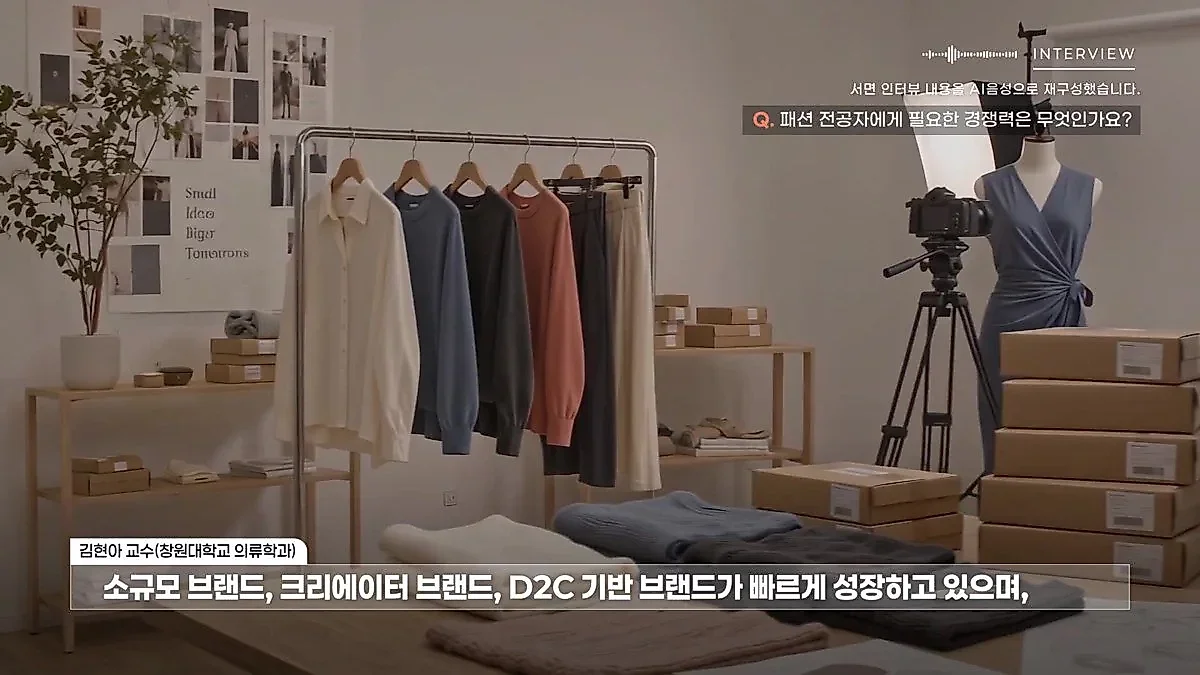
The Korea Employment Information Service has released a guide identifying 29 occupations for clothing and textiles majors, highlighting a shift toward convergent roles involving AI and data. As the industry adopts on-demand methods to reduce overproduction, future talent must combine traditional design with digital content production and data-driven thinking.
There is a distinct shift in Clothing and Textiles toward a convergent discipline that encompasses the entire process from material selection to production, distribution, and marketing, rather than merely designing the shape of clothing. This is because the professional world facing Clothing and Textiles majors is expanding beyond the narrow framework of design into domains that handle data and technology.
According to the "Career Guide by University Major – Clothing and Textiles" released by the Korea Employment Information Service (feat. Employment24), there are a total of 29 occupations available to Clothing and Textiles majors. These occupations are broadly distributed across seven fields, ranging from management, administration, and office work to manufacturing, R&D, education, arts, design, broadcasting, beauty, weddings, pet services, sales, and textile/clothing production.
Five Core Areas Spanning Design, Engineering, and Management
Clothing and Textiles explores ways to address human psychological, social, cultural, and physical needs through clothing. The academic structure is largely divided into five areas. "Fashion Design," which plans and expresses clothing products; "Clothing Construction and Design," which designs garments considering body type and wearability; and "Clothing Materials and Textiles," which researches the quality and function of fabrics, form the technical foundation.
These are combined with "Fashion Marketing and Merchandising," which deals with consumer analysis, product planning, and distribution strategies, and "Clothing Culture and Humanities," which examines the history and socio-cultural significance of attire. Due to its convergent nature combining science, art, engineering, and management, students are characterized by their ability to develop both design sensibility and analytical thinking and product planning skills simultaneously.
Planning MD, Tech Designer, and Marketer: Representative Practical Occupations
The guide specifically presents three representative occupations that demonstrate the scalability of Clothing and Textiles. First, the "Planning MD" plans and manages seasonal products based on consumer analysis and trend forecasting. They analyze market trends to determine product concepts and lineups, coordinate product specifications, production quantities, and launch schedules, and manage sales performance and inventory flow. For this role, internships in fashion brand product planning teams or experience in analyzing competing brands are recommended.
A "Fashion Technical Designer" is an expert who translates design ideas into specific, producible product specifications. They create Tech Packs, coordinate the sample production process with partners, and manage product quality by checking fit, dimensions, patterns, and sewing conditions. An understanding of garment construction and manufacturing processes is essential, and training in creating technical drawings and work orders is helpful for practical work.
A "Brand Marketer" plays a role in planning a brand's direction and content to create touchpoints with customers. They establish brand strategies through market analysis and execute marketing campaigns. Communication skills are important, and internships at marketing/PR agencies or participation in branding competitions are suggested as ways to increase job understanding.
Changes in the Fashion Industry Based on AI and Data and Required Competencies
Recent shifts in the fashion market landscape are demanding new competencies from majors. This is because, in addition to large brands, small-scale brands, creator brands, and D2C (Direct to Consumer) based brands are growing rapidly. In particular, the introduction of "on-demand" methods—using generative AI to create wearing images and promotional videos, or using AI demand forecasting to produce only what is needed—is addressing issues of inventory and overproduction.
Accordingly, future fashion talent must possess AI utilization skills, brand storytelling, and digital content production capabilities in addition to design capabilities. Furthermore, data-driven thinking to read consumer data and sales indicators, 3D clothing design, SNS/short-form content utilization skills, and an understanding of sustainable fashion are cited as key factors determining competitiveness within the industry.
Specific job competencies, qualifications, and portfolio construction methods for each major can be found through the "Career Guide by University Major" provided on the Employment24 and Korea Employment Information Service websites.
Source: original video (YouTube)
0Comments
Comments are currently disabled.