
Companies shift focus from finding right answers to defining problems
Dr. Im Chang-hyeon of SK Academy explains that as AI surpasses human intelligence in finding correct answers, companies must shift their focus from hiring "problem solvers" to "problem definers."
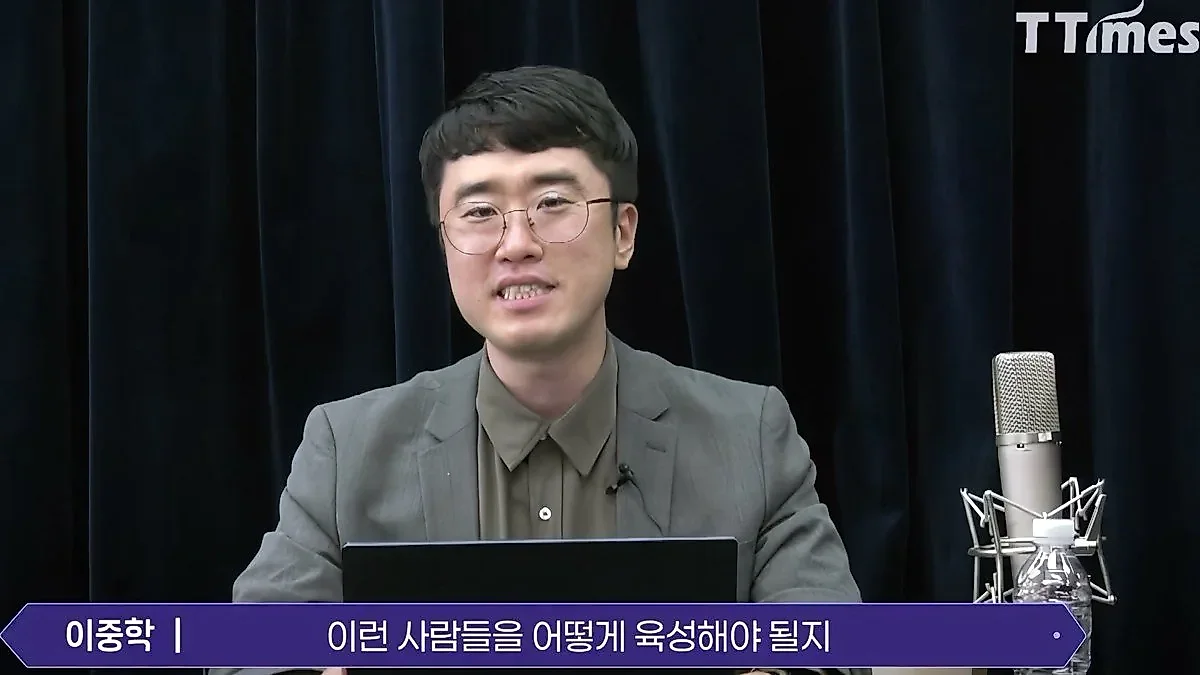
Dr. Im Chang-hyeon of SK Academy explained that as AI surpasses human intelligence in providing correct answers, corporations must transition from traditional academic-based recruitment to nurturing talent capable of problem sensing and definition. To support this, SK Group is experimenting with its 'AI Gen' program to provide a safe environment for young people to learn through failure.
In an era where artificial intelligence (AI) is surpassing human intelligence, the criteria companies use to evaluate talent are undergoing a fundamental shift. While the measure of talent used to be how quickly and accurately one could find a predetermined correct answer, AI is now taking over that role. Consequently, companies are no longer longing for "people who get the right answers," but rather for "people who find and define problems."
A discussion reported by T Times TV captures the changing signaling systems for talent in the AI era and the new attempts by corporations to nurture them. Dr. Im Chang-hyeon, who is in charge of industry-academic cooperation and technology promotion at SK Academy, explained during a conversation with Dongguk University professor Lee Jung-hak why traditional selection methods based on academic background and examinations are no longer effective.
"Academic background and exams are for verifying answers... now we must design the problems themselves"
Dr. Im diagnosed that the "signal" used to judge talent is changing. Until now, education and recruitment systems have focused on measuring how much specific knowledge has been acquired—in other words, how close one is to the correct answer. However, Dr. Im stated, "Knowing the right answer is now an area where AI is much better," adding, "Traditional academic backgrounds and exams were standards for judging how well one knows the right answer, but we have entered an era where this no longer works."
The core competencies of the new talent he proposes can be summarized into three areas: first, "problem sensing" ability to detect what the problem is; second, "problem definition" ability to make a discovered problem valuable; and third, "experience," which involves establishing hypotheses, executing them, and learning through failure to solve problems that have no correct answer. Dr. Im defined talent as "not people who are good at solving given problems, but people who set the standards for problems and pose the questions."
This shift is clearly visible in Silicon Valley as well. According to Dr. Im, recent innovative companies and investors in Silicon Valley have judged that they cannot secure the necessary talent through the methods of existing educational institutions, so they are establishing their own educational institutions. Instead of education centered on subjects, they are discovering talent through practical "evidence indicators," such as with whom a person solves real-world problems in the field and what kind of networks they form in that process.
SK 'AI Gen' experiment: "Creating a stage to experience failure safely"
SK Group is also experimenting with new talent development models in line with this global trend. Mentioning SK's talent development program, 'AI Gen,' Dr. Im emphasized the new role that companies must perform as educational institutions. Moving away from the traditional method where experts teach the correct answers, AI Gen focuses on providing an environment where young people can discover and solve problems themselves.
"We do not teach the right answers. This is because AI is better at telling you the right answers," Dr. Im explained. "What is truly important is discovering a problem, defining it as a problem that is valuable to customers, and proving that value by solving it directly." He added, "Numerous attempts inevitably involve failure. We intend to make that failure 'safe,' creating a stage where members can learn through failure and define problems themselves."
SK envisions that these attempts will lead to the creation of Social Value beyond merely nurturing talent within the company. Dr. Im predicted that as such company-led talent platforms increase, talent who carve out their own careers will flow into the ecosystem, contributing to shaping the future of society.
"If a leader tells the answer, the organization cannot surpass the leader"
The role of leadership is also being called for a fundamental change in this changing era. Dr. Im advised that even if a leader knows the right answer, they should be wary of telling it directly to their members. While a leader providing the answer allows members to learn quickly and reduce failure, the growth limit of the organization eventually becomes trapped within the capabilities of the leader.
"A leader telling the answer allows today's problems to be solved, but it makes it impossible to solve new problems," Dr. Im emphasized. "Members must be able to define problems themselves and realize for themselves why they failed, even if they fail, to gain the strength to solve new problems." This is an essential process for moving away from the "Fast Follower" strategy that South Korean society has shown and moving toward becoming a "First Mover" that creates new problems.
Finally, Dr. Im cited "learning proximity" as a core competency for future talent. This refers to the ability to learn quickly from experience and update one's thoughts and actions. In an environment where AI replaces a significant portion of knowledge transfer and skill instruction, the final bastion remaining for humans is ultimately the "ability to constantly learn and change through experience."
Source: original video (YouTube)

0Comments
Comments are currently disabled.