
Cheonggus reduces unpaid receivables by 83% through automated collection
After two failed startups, CEO Lee Jang-gyu founded Cheonggus, a solution that automates the entire process from invoicing to debt collection to solve the massive problem of unpaid receivables.
Cheonggus CEO Lee Jang-gyu has reduced long-term delinquencies by an average of 83.3% using an automated system that manages the entire process from invoicing to bad debt collection. The solution addresses a 45 trillion won unpaid receivables problem facing small and medium-sized enterprises.
“I only looked at the success stories of startup CEOs and failed to see the hardships behind them.”
Lee Jang-gyu, CEO of Cheonggus, who experienced two startup failures, identified "excessive confidence" as the cause of his previous setbacks. He believed that if a product was well-made, customers would naturally find it, a belief that blinded him. However, Lee realized through these failures that the real issue lies not in product development, but in the process of listening to customers and defining their problems. This interview, shared by EO Korea, captures the struggle of CEO Lee Jang-gyu, who overcame failure to create Cheonggus, a solution for solving unpaid receivables.
The third challenge born from the realization "my thinking was wrong"
Lee Jang-gyu's first challenge was an in-house venture he planned while working at Korea Real Estate Investment & Trust. As an employee at a real estate finance company, he became fascinated with entrepreneurship after encountering IT technology. Carrying a 130-page business plan, he approached the planning team and eventually led an in-house venture team. The idea he planned at the time was a peer-to-peer car-sharing model, but it remained suspended without approval from the Ministry of Land, Infrastructure and Transport due to regulations preventing individuals from conducting paid rental businesses in Korea. "The frustration of not being able to meet customers with a product increased my desire to start a business," Lee recalled.
The second challenge was more painful. After developing software to solve inefficiencies in the real estate pre-sale market, he jumped into the market immediately. He formed a team by sending DMs to developers through platforms such as LinkedIn and Careerly, establishing a corporation with four members, including engineers from Seoul National University and Google Korea. As soon as the product was completed, he visited heads of developers, but the reaction was cold. They only asked, "Will using this lead to better pre-sales?" He had overlooked a market environment where immediate pre-sale results take priority over efficiency.
Lee recalled shedding tears while looking at the sunlight outside a subway window when even young developers showed a cold response to his product. It was the moment he admitted his confidence was wrong. Instead of forcing the business forward, he decided to abandon his ego and meet customers. He dug into the real problem by directly interviewing 37 company representatives. The core issue he discovered in that process was "unpaid receivables." Many companies were aware they had not received money, but found it difficult to ask for payment or could not even properly track the status of unpaid receivables. Particularly in small and medium-sized enterprises, where sales and finance roles are separated, management of receivables is easily neglected, leading to serious problems where claims disappear entirely once the three-year statute of limitations expires.
83% reduction in unpaid receivables... an automated system from invoicing to collection
Cheonggus is a solution with the opposite order of his previous attempts: defining the problem by meeting customers first before starting development. The unpaid receivables problem defined by Lee does not stop at simply "not receiving money." The scale of unpaid receivables limited to small and medium-sized enterprises reaches approximately 45 trillion won. Cheonggus has automated the entire process, from invoicing and payment confirmation to delinquency notices and the collection of bad debts, so that sellers can protect the value of their business.
The solution integrates with Hometax to help manage tax invoices and cash receipts within a single tool. Furthermore, through collaboration with NICE Group, it provides various payment methods including cards, CMS automatic transfers, virtual accounts, and account transfers, creating an environment where buyers are willing to pay. If payment is delayed, the system automatically sends delinquency notices, and if the situation worsens, coercive messages or demand letters are sent according to the delinquency sequence established for each company. Finally, bad debts that cannot be resolved are connected to a process of transferring them to partner companies Upstsign, Seoul Credit Rating & Information, and NICE Credit Information Service.
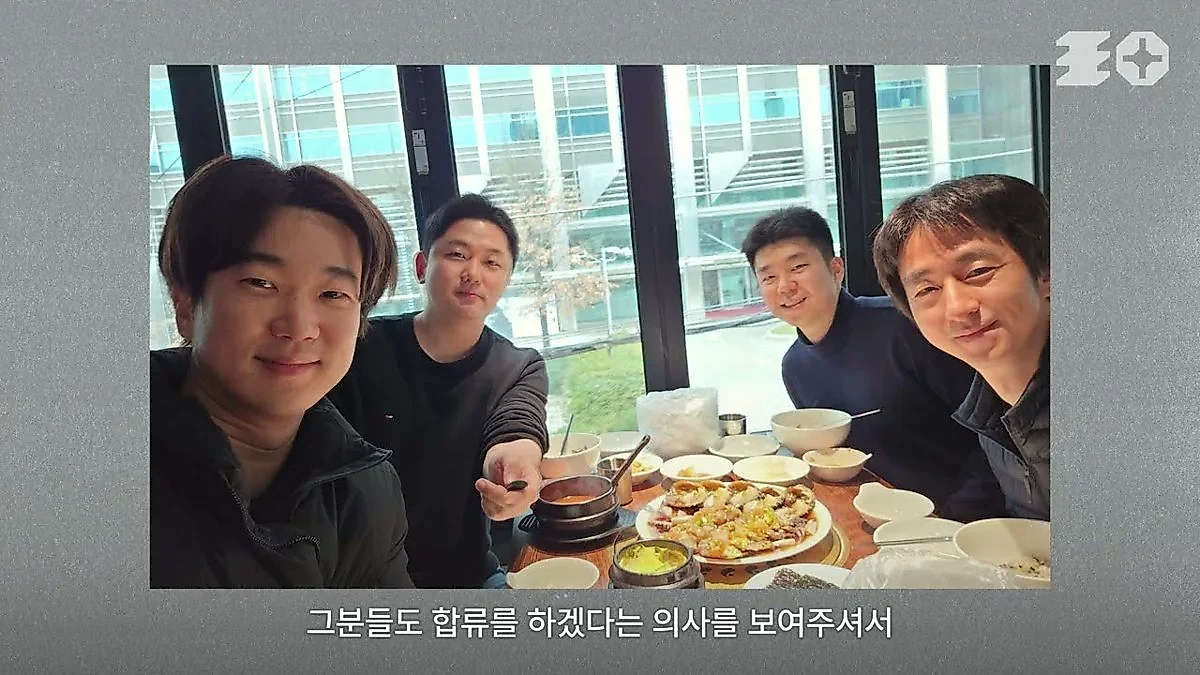
The results are appearing in numbers. In cases where the invoicing process was started through Cheonggus, long-term delinquencies exceeding one month decreased by an average of 83.3%. In a recent test conducted with one company, the system was fed 5,000 bad unpaid receivables that were 1 to 3 years old, achieving a result of recovering approximately 180 million won in one month without human intervention.
"The power of financial networks that cannot be replaced by AI"
With the recent advancement of AI technology, there are forecasts that "the era of SaaS (Software as a Service) is ending and AI will replace everything." Regarding this, Lee emphasizes that building networks with financial institutions is as core as technical implementation. He explains that collaboration with various payment companies and credit information companies, such as NICE Group and Hyosung Payments, is a barrier to entry that is difficult to follow with AI technology alone. While existing solutions focus on the efficiency of tracking unpaid status or managing financial accounting, Cheonggus differentiates itself by aiming at "eliminating unpaid receivables" itself.
Currently, Cheonggus is jointly developing an AI consultation solution using SKT's LLM (Large Language Model). This is a function where, when a customer points out an error in a tax invoice or requests to adjust the payment timing—such as saying, "I will pay when next month's salary comes in"—the AI responds based on contract data and tracks whether the payment is made. This is a task that automates the roles previously performed by consultants.
Lee clarified the goal of Cheonggus as "eliminating unpaid receivables." He stated, "We will focus on two things: making it easy for the receiver to receive and making the payer willing to pay, so that we become the team that best solves the unpaid receivables problem in Korea." He added his ambition to "create a world where every company that works and receives money later naturally uses invoices," aiming to form a culture where all companies can fully protect the value of their business.
Source: EO Korea (YouTube)



0Comments
Comments are currently disabled.