
GFT Ventures CEO warns against indiscriminate betting on robotics
Silicon Valley venture capitalist Eum Jae-hun of GFT Ventures warns that indiscriminate betting on robotics is risky due to high entry barriers and limited profit structures. He suggests that startups should focus on specialized niches rather than generalized robots to survive.
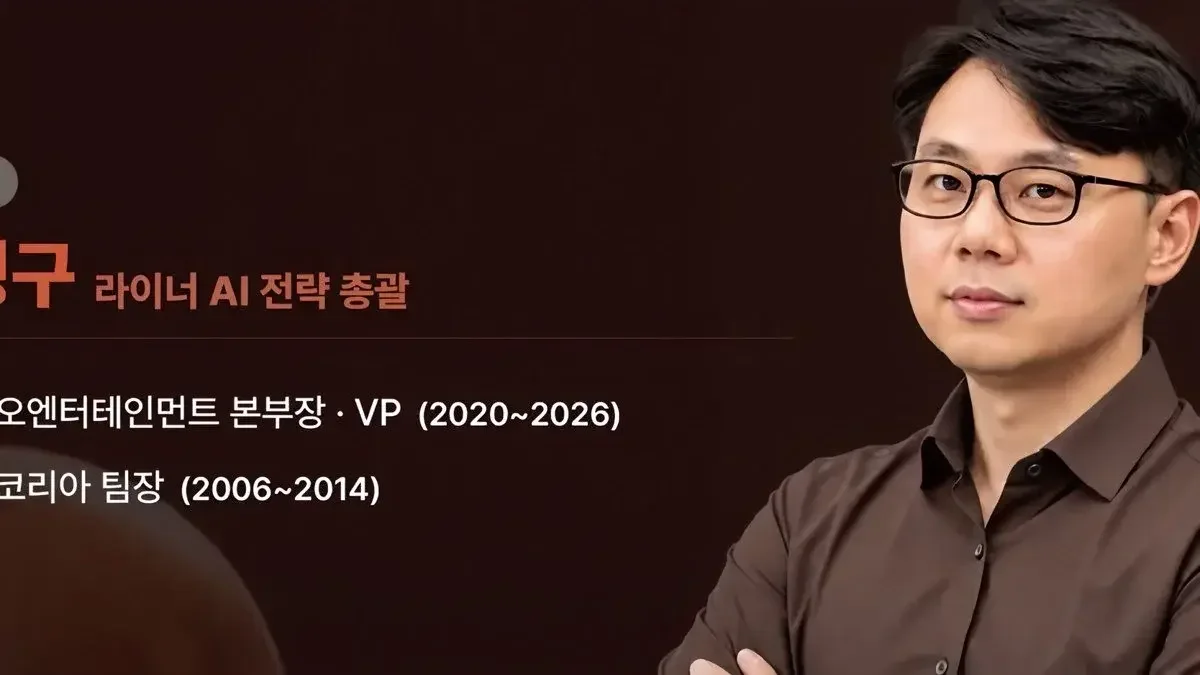
GFT Ventures CEO Eum Jae-hun warned that robotics investment is less profitable than software-based AI due to high hardware costs. Out of 22 investments made by the firm to date, only two have been in the robotics field, reflecting the market's high uncertainty.
As artificial intelligence (AI) technology advances rapidly, expectations for "Physical AI" and the robotics sector are rising. However, Eum Jae-hun, CEO of Silicon Valley-based venture capital firm GFT Ventures, has issued a warning against indiscriminate betting on the robotics field. Pointing to high entry barriers and the limitations of profit structures in the robotics industry, he presented realistic strategies for startups to survive.
"Autonomous driving startups wiped out... Generalized robots are not for startups"
CEO Eum Jae-hun analyzed that robotics investment is bound to be less profitable than software-based AI. Due to the nature of Physical AI, which includes hardware, hardware costs and service costs are added to the software. He revealed that out of the 22 investments GFT Ventures has made to date, only two have been in the robotics field, reflecting the high uncertainty of the robotics market.
Eum explained the limitations of startups by citing the autonomous driving industry. While companies like Tesla's FSD (Full Self-Driving), Waymo, and Lux lead the market, they are all supported by large corporations with massive capital. "Autonomous driving is just one of the many skills a robot performs," he said. "To complete that one skill, nearly 20 years of time and astronomical data training and mapping costs were required."
Ultimately, it is his judgment that startups aiming for Generalized Robots will find it difficult to survive without mergers and acquisitions (M&A) by large corporations. This is because if the market dips even once, a startup without support from a parent company will inevitably perish. In fact, the case of Cruise, which was acquired by GM and struggled after failing to commercialize, demonstrates the harsh reality of the robotics market.
"Must target specific fields first"... The reason for noting Anywhere Robotics
Eum stated that instead of generalized robots that perform all tasks, he prefers models that specialize in specific fields and achieve commercialization first. This aligns with the strategy used by Amazon, which first dominated the specific category of "books" before expanding its market. He identified Anywhere Robotics as a company executing this strategy.
Anywhere Robotics was founded by personnel from the Japanese global robotics company FANUC, and its strength lies in its understanding of the high quality standards (Industrial grade) required for industrial robots. "Many robotics startups try to learn how to make a gun without knowing what level of quality is required in actual industrial sites," Eum said, highly evaluating the expertise of this team, which possesses abundant field experience.
In particular, through its relationship with FANUC, the company possesses the unique capability to custom build robots, much like how Samsung Electronics or Apple creates custom devices, despite being a startup. Eum explained, "They accurately strike the areas where the customers' pain points are greatest."
"Logistics and factory automation are more realistic than home humanoids"
He maintained a realistic view regarding the future market of robotics. Regarding the recently trending home humanoid robots, Eum pointed out, "The image of washing dishes in a video is just an accelerated scene; realistically, if a robot cannot properly place a single dish, a service call occurs immediately and profits vanish." He noted that the home sector is a very difficult area for robots to respond to due to its high-mix, low-volume production structure.
The practical opportunities he is watching are "Last Mile" and "large-scale manufacturing plants." He saw the fields of heavy labor inside logistics containers or the final stages of processes, such as inspection and packaging—tasks that people dislike or find dangerous—as promising. While stating, "There is no robot that can yet beat the accuracy of a human hand," he predicted that robot adoption will occur most rapidly in fields where labor supply is difficult and the risk of accidents is high.
Finally, he defined the evolution of AI agents as a change in interface. His analysis is that Meta and OpenAI presenting friendly interfaces is more of a sales strategy to reduce user resistance rather than a technical leap. Eum added, "Ultimately, everyone will have a personalized AI assistant," and noted that to resolve future data privacy issues, the "On-device" method, which processes data on the device itself rather than in the cloud, will become important.
Source: original video (YouTube)


0Comments
Comments are currently disabled.