
RLWRLD CEO calls for South Korea-Japan alliance to lead Physical AI
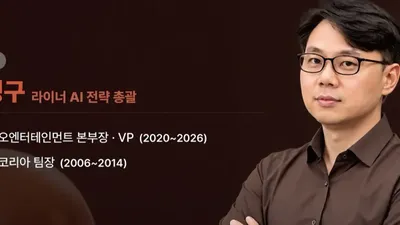
RLWRLD CEO Ryu Jung-hee predicts that the industrial data held by South Korea and Japan will be the key to winning the upcoming Physical AI competition.

RLWRLD CEO Ryu Jung-hee predicts the arrival of the AI agent era in 2027, proposing a South Korea-Japan alliance to secure industrial field data. Ryu aims to counter US and China by targeting service and logistics sectors facing labor shortages due to the population cliff.
The artificial intelligence (AI) paradigm is shifting beyond Large Language Models (LLM) toward "Physical AI," which possesses a physical presence. Ryu Jung-hee, CEO of RLWRLD, predicted that the "data" from industrial sites held by South Korea and Japan will become the core key to the future competition for AI supremacy.
A conversation with CEO Ryu Jung-hee reported by T Times TV covered the arrival of the AI agent era in 2027, the technical challenges facing Physical AI in response, and the strategic direction South Korean companies should take. Ryu emphasized that while it has been difficult for South Korea to stand out in the LLM field, there is a chance for success in the Physical AI field, which is rich in data capturing the skilled movements of manufacturing and service sites.
"Data is the blood, sweat, and tears of factories"... Building an East Asia block through a South Korea-Japan alliance
Ryu defined the source of Physical AI competitiveness as "field data." Unlike LLMs that learn from text on the internet, Physical AI requires physical data of robots touching and moving objects in real environments. Ryu analyzed that South Korea and Japan, which have developed industries but suffer from labor shortages due to the population cliff, are the optimal locations for this data battle, stating, "Physical AI is the blood, sweat, and tears data of the factory."
In particular, he emphasized strategic cooperation with Japan. Pointing to the severe labor shortage in service and logistics sites due to changing population structures, Ryu noted, "If you go to a convenience store in Japan, it is common to see cases where none of the workers are Japanese." He presented a specific blueprint to form an "East Asia block" that unites South Korea and Japan to counter the AI blocks of the United States and China, stating, "We must bring Japan into our alliance and penetrate industrial sites, logistics centers, and hotels."
To achieve this, RLWRLD adopted a strategy of involving approximately 20 global companies as shareholders from the early stages. This move is intended not just to secure funds, but to secure access to the actual industrial site data that robots must learn. Ryu explained, "Making important industrial groups our allies is essential to obtaining data access rights."
"Must capture the fingertip sensations of experts"... Overcoming the limits of teleoperation data
Ryu's core argument is that the "quality" of data is more important than the "quantity." He sharply criticized the limitations of "teleoperation" data, one of the existing robotics learning methods. Data collected through teleoperation has a "reality gap," where differences occur between actual human movement and the data due to errors during the manipulation process, and it suffers from unnatural movements and slow speeds.
Ryu particularly emphasized the need for expert data collection, stressing the "naturalness" of data. For example, he argued that if one needs to teach a hotelier the sophisticated movement of folding a napkin, data created by a low-skilled part-time worker via remote manipulation cannot implement hotel-level quality. Accordingly, RLWRLD is directly developing and using a "data capture pipeline" that captures the movements performed by on-site experts in real-time, including 3D motion and tactile information from the fingertips.
Ryu stated that while data collection companies focus simply on increasing numbers, they are useless if they cannot meet the precise formats desired by model companies. He revealed that RLWRLD is expanding the ecosystem by transferring standard protocols to global data collection companies based on its directly developed technological prowess.
Service and logistics before manufacturing... 'Pick and Place' is the key task
The analysis also suggested that the field where demand for Physical AI will explode first will be service and logistics sites rather than manufacturing plants. Ryu predicted that the service and logistics sectors in East Asia, which are experiencing a population cliff, will be the largest source of demand, noting, "If a manufacturing plant lacks manpower, it can move the factory itself overseas, but service industries like hotels or convenience stores cannot move due to locality."
The core technology in this field is "Pick and Place," the repetitive task of picking up and placing objects. Ryu explained the importance of "motion module" technology, which predicts the future position of a moving object on a conveyor belt, and "Physics Stream" technology, which determines whether contact with an object has occurred, noting, "Unexpectedly, many robotics models have difficulty grasping moving objects."
Defining RLWRLD's goal as a "Deploy post-frontier lab" that creates technology ready for immediate deployment on-site, Ryu said, "The company that knows the field best can make good models." He explained that true competitiveness in the Physical AI era lies in possessing the technological power to overcome variables in actual industrial sites, rather than research that remains only in simulation environments.
Source: original video (YouTube)


0Comments
Comments are currently disabled.